Review
. 2018 Feb 14:5:12.
doi: 10.3389/fnut.2018.00012. eCollection 2018.

Biofortified Crops Generated by Breeding, Agronomy, and Transgenic Approaches Are Improving Lives of Millions of People around the World

Affiliations
Review

Biofortified Crops Generated by Breeding, Agronomy, and Transgenic Approaches Are Improving Lives of Millions of People around the World

Monika Garg et al. Front Nutr. .

Abstract

Biofortification is an upcoming, promising, cost-effective, and sustainable technique of delivering micronutrients to a population that has limited access to diverse diets and other micronutrient interventions. Unfortunately, major food crops are poor sources of micronutrients required for normal human growth. The manuscript deals in all aspects of crop biofortification which includes-breeding, agronomy, and genetic modification. It tries to summarize all the biofortification research that has been conducted on different crops. Success stories of biofortification include lysine and tryptophan rich quality protein maize (World food prize 2000), Vitamin A rich orange sweet potato (World food prize 2016); generated by crop breeding, oleic acid, and stearidonic acid soybean enrichment; through genetic transformation and selenium, iodine, and zinc supplementation. The biofortified food crops, especially cereals, legumes, vegetables, and fruits, are providing sufficient levels of micronutrients to targeted populations. Although a greater emphasis is being laid on transgenic research, the success rate and acceptability of breeding is much higher. Besides the challenges biofortified crops hold a bright future to address the malnutrition challenge.

Keywords: agronomic; biofortification; breeding; malnutrition; transgenic.


Figures
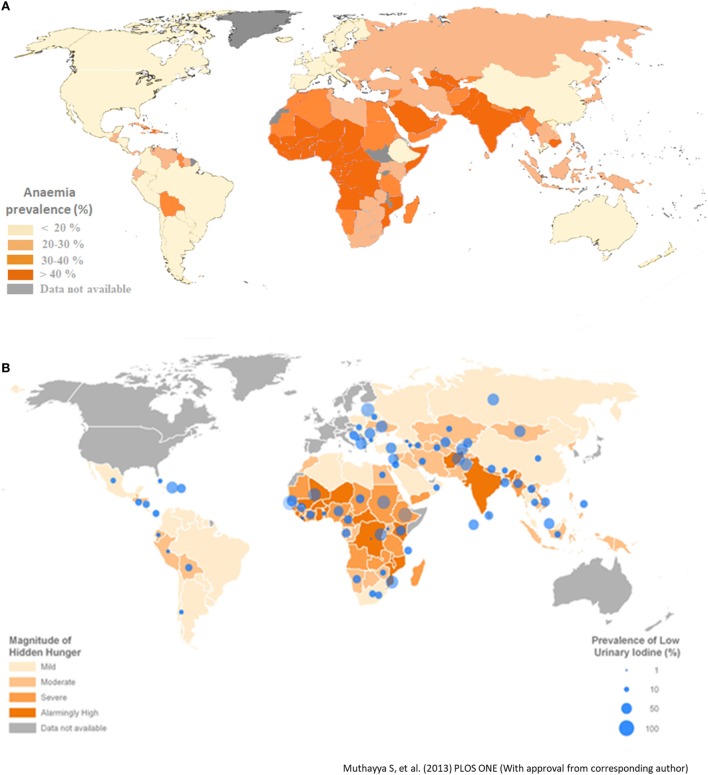
Figure 1
Figure 1
(A) Prevalence of anemia in different parts of the world. Developing countries in Africa and Asia have high prevalence of anemia [Data from Stevens et al. (30)]. (B) Global map representing hidden hunger index and low urinary iodine concentration (3).
Figure 2
Figure 2
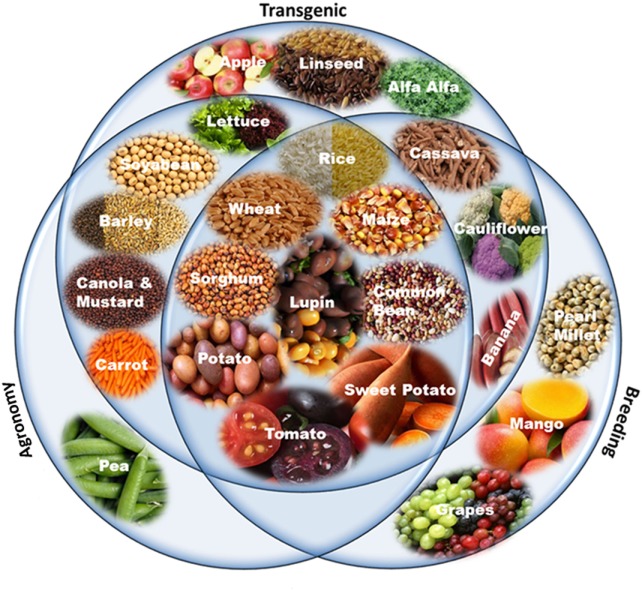
Biofortified crops generated by different approaches: transgenic, agronomic, and breeding. Staple cereals, most common vegetables, beans, and fruits have been targeted by all three approaches. Some crops have been targeted by only one or two approaches depending on its significance and prevalence in the daily human diet.
Figure 3
Figure 3
Representation of reported biofortified crops by transgenic, agronomic, and breeding means. (A) Comparison of transgenic and breeding approaches of biofortification in terms of relative research and release of commercial crops. While higher emphasis is being laid on transgenic-based biofortification, success rate in terms of cultivar release is higher for breeding-based approach. (B) Percentage of different crops biofortified by different approaches. Cereals have been biofortified in largest number by all three biofortification approaches. Legumes and vegetables have also been targeted by all the approaches in almost equal percentage. Transgenic approach covers highest number of crops. Oilseed crops have been mainly targeted by transgenic approaches due to limited genetic variability.
Figure 4
Figure 4
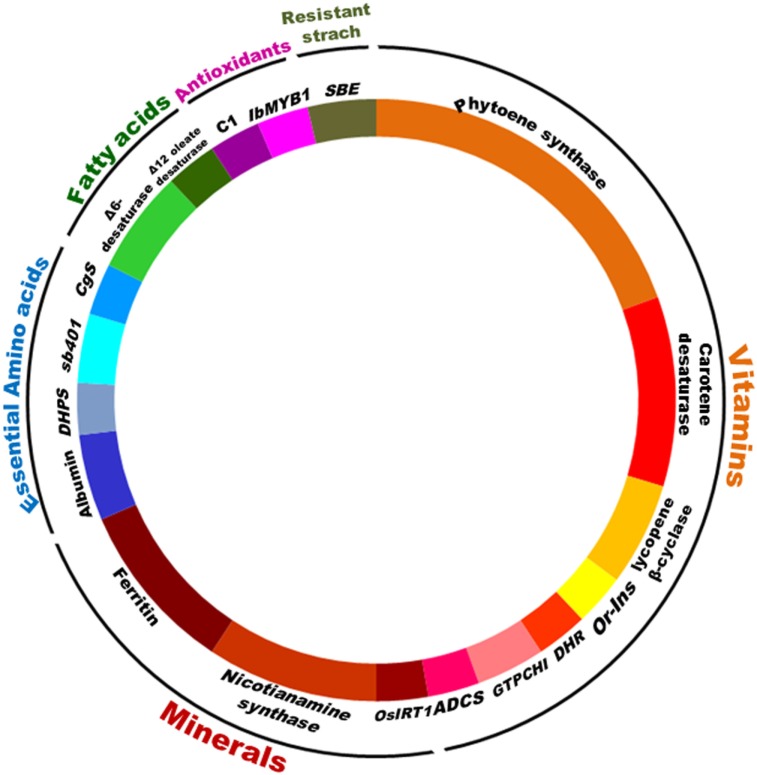
Utilization of different genes for biofortification by transgenic means. Large numbers of genes have been utilized for crop biofortification. Transgenic-based approach has advantages that a useful gene once discovered, can be utilized for targeting multiple crops. Some important genes like phytoene synthase, carotene desaturase, nicotinamide synthase, and ferritin have been utilized in multiple events including multiple crops.

References

    1. McGuire S. FAO, IFAD, and WFP. The state of food insecurity in the world 2015: meeting the 2015 international hunger targets: taking stock of uneven progress. Rome: FAO. Adv Nutr (2015) 6(5):623–4. 10.3945/an.115.009936 - DOI - PMC - PubMed
    1. Hodge J. Hidden hunger: approaches to tackling micronutrient deficiencies. In: Gillespie S, Hodge J, Yosef S, Pandya-Lorch R, editors. Nourishing Millions: Stories of Change in Nutrition. Washington: International Food Policy Research Institute (IFPRI) (2016). p. 35–43.
    1. Muthayya A, Rah JH, Sugimoto JD, Roos FF, Kraemer K, Black RE. The global hidden hunger indices and maps: an advocacy tool for action. PLoS One (2013) 8(6):e67860. 10.1371/journal.pone.0067860 - DOI - PMC - PubMed
    1. Gould J. Nutrition: a world of insecurity. Nat Outlook (2017) 544:S7. 10.1038/544S6a - DOI
    1. Khush GS, Lee S, Cho JI, Jeon JS. Biofortification of crops for reducing malnutrition. Plant Biotechnol Rep (2012) 6:195–202. 10.1007/s11816-012-0216-5 - DOI

LinkOut - more resources