


European Society of Urogenital Radiology (ESUR) Guidelines: MR Imaging of Leiomyomas
- PMID: 29492599
- PMCID: PMC6028852
- DOI: 10.1007/s00330-017-5157-5
European Society of Urogenital Radiology (ESUR) Guidelines: MR Imaging of Leiomyomas
Abstract
Objective: The aim of the Female Pelvic Imaging Working Group of the European Society of Urogenital Radiology (ESUR) was to develop imaging guidelines for MR work-up in patients with known or suspected uterine leiomyomas.
Methods: Guidelines for imaging uterine leiomyomas were defined based on a survey distributed to all members of the working group, an expert consensus meeting at European Congress of Radiology (ECR) 2017 and a critical review of the literature.
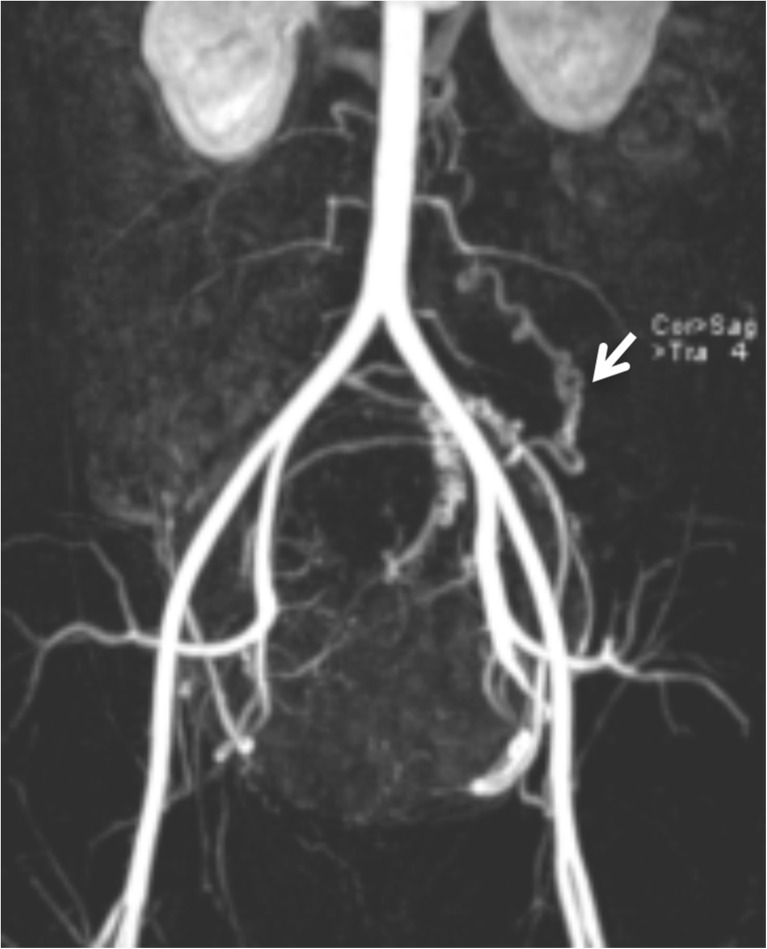
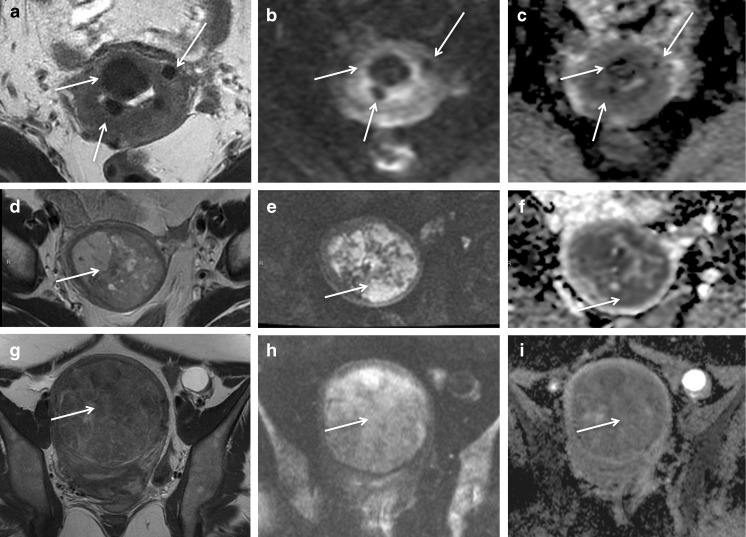
Results: The 25 returned questionnaires as well as the expert consensus meeting have shown reasonable homogeneity of practice among institutions. Expert consensus and literature review lead to an optimized MRI protocol to image uterine leiomyomas. Recommendations include indications for imaging, patient preparation, MR protocols and reporting criteria. The incremental value of functional imaging (DWI, DCE) is highlighted and the role of MR angiography discussed.
Conclusions: MRI offers an outstanding and reproducible map of the size, site and distribution of leiomyomas. A standardised imaging protocol and method of reporting ensures that the salient features are recognised. These imaging guidelines are based on the current practice among expert radiologists in the field of female pelvic imaging and also incorporate essentials of the current published MR literature of uterine leiomyomas.
Key points: • MRI allows comprehensive mapping of size and distribution of leiomyomas. • Basic MRI comprise T2W and T1W sequences centered to the uterus. • Standardized reporting ensures pivotal information on leiomyomas, the uterus and differential diagnosis. • MRI aids in differentiation of leiomyomas from other benign and malignant entities, including leiomyosarcoma.
Keywords: Genital diseases female; Guideline; Leiomyoma; Magnetic resonance imaging; Uterus.
Conflict of interest statement
Guarantor
The scientific guarantor of this publication is Professor Rosemarie Forstner, Salzburg, Austria
Conflict of interest
The authors of this manuscript declare no relationships with any companies, whose products or services may be related to the subject matter of the article.
Statistics and biometry
No complex statistical methods were necessary for this paper.
Informed consent
Written informed consent was not required for this study because no patient sensitive data were used
Ethical approval
Institutional Review Board approval was not required because the results are based on a survey only.
Methodology
• prospective
• observational
• multicentre study
Figures
References
Publication types
MeSH terms
Grants and funding
LinkOut - more resources
Full Text Sources
Other Literature Sources
Medical
Molecular Biology Databases
