


Risk assessment of deoxynivalenol in high-risk area of China by human biomonitoring using an improved high throughput UPLC-MS/MS method
- PMID: 29497102
- PMCID: PMC5832810
- DOI: 10.1038/s41598-018-22206-y
Risk assessment of deoxynivalenol in high-risk area of China by human biomonitoring using an improved high throughput UPLC-MS/MS method
Abstract
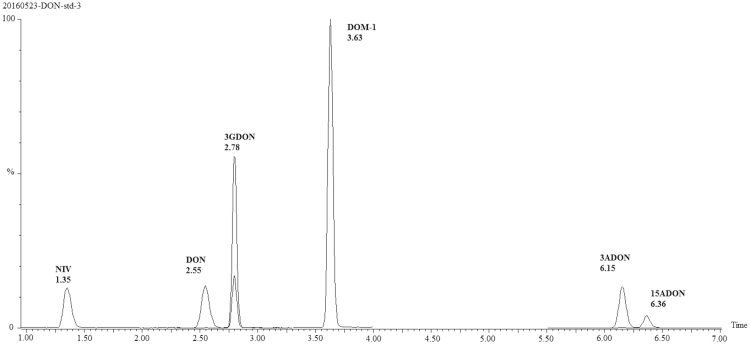
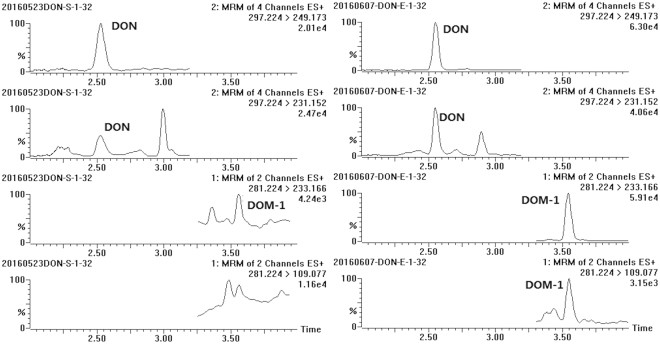
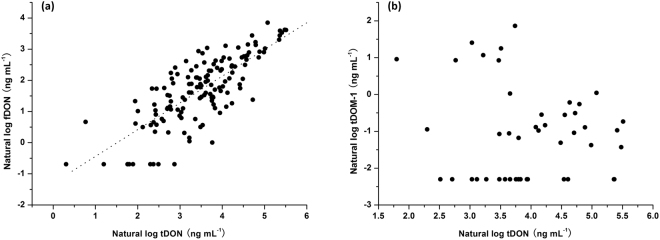
A risk assessment of deoxynivalenol (DON) was recently conducted for the residents in Henan province, China, where wheat as the staple food are highly consumed. A high-throughput sensitive UPLC-MS/MS method following 96-well μElution solid-phase extraction (SPE) were developed and validated for the determination of DON biomarkers in human urine. Isotope labelled internal standard, 13C-DON, was used for accurate quantification. Urinary samples collected from 151 healthy Chinese aged 2-78 years were processed with and without enzyme hydrolysis to determine total and free biomarkers, respectively. DON, and de-epoxy-deoxynivalenol (DOM-1) to a lesser extent, can be frequently detected in these samples both with and without enzyme hydrolysis. Free DOM-1 was detected at low level in human urine for the first time. Total DON was detected in all samples with a mean concentration at 47.6 ng mL-1. The mean and median probable daily intakes (PDI) for the whole participants, estimated to be 1.61 μg/kg bw and 1.10 μg/kg bw, both exceeded the PMTDI (1 μg/kg bw/day), indicating a potential risk for the residents in this area, especially for children and adolescents.
Conflict of interest statement
The authors declare no competing interests.
Figures
References
-
- WHO. WHO Technical Report Series. Evaluation of certain contaminants in food. 72nd Report of the Joint FAO/WHO Expert Committee on Food Additives (JECFA), Geneva, Switzerland (2011).
-
- FAO. Worldwide regulations for mycotoxins in food and feed in 2003. FAO Food and Nutrition paper No. 81. Food and Agriculture Organization of the United Nations, Rome, Italy (2004).
Publication types
MeSH terms
Substances
LinkOut - more resources
Full Text Sources
Other Literature Sources
