. 2018 Feb 23;4(1):00080-2017.
doi: 10.1183/23120541.00080-2017. eCollection 2018 Jan.

Factors influencing readthrough therapy for frequent cystic fibrosis premature termination codons

Affiliations

Factors influencing readthrough therapy for frequent cystic fibrosis premature termination codons

Iwona Pranke et al. ERJ Open Res. .

Abstract

Premature termination codons (PTCs) are generally associated with severe forms of genetic diseases. Readthrough of in-frame PTCs using small molecules is a promising therapeutic approach. Nonetheless, the outcome of preclinical studies has been low and variable. Treatment efficacy depends on: 1) the level of drug-induced readthrough, 2) the amount of target transcripts, and 3) the activity of the recoded protein. The aim of the present study was to identify, in the cystic fibrosis transmembrane conductance regulator (CFTR) model, recoded channels from readthrough therapy that may be enhanced using CFTR modulators. First, drug-induced readthrough of 15 PTCs was measured using a dual reporter system under basal conditions and in response to gentamicin and negamycin. Secondly, exon skipping associated with these PTCs was evaluated with a minigene system. Finally, incorporated amino acids were identified by mass spectrometry and the function of the predicted recoded CFTR channels corresponding to these 15 PTCs was measured. Nonfunctional channels were subjected to CFTR-directed ivacaftor-lumacaftor treatments. The results demonstrated that CFTR modulators increased activity of recoded channels, which could also be confirmed in cells derived from a patient. In conclusion, this work will provide a framework to adapt treatments to the patient's genotype by identifying the most efficient molecule for each PTC and the recoded channels needing co-therapies to rescue channel function.


Conflict of interest statement

Conflict of interest: None declared.

Figures
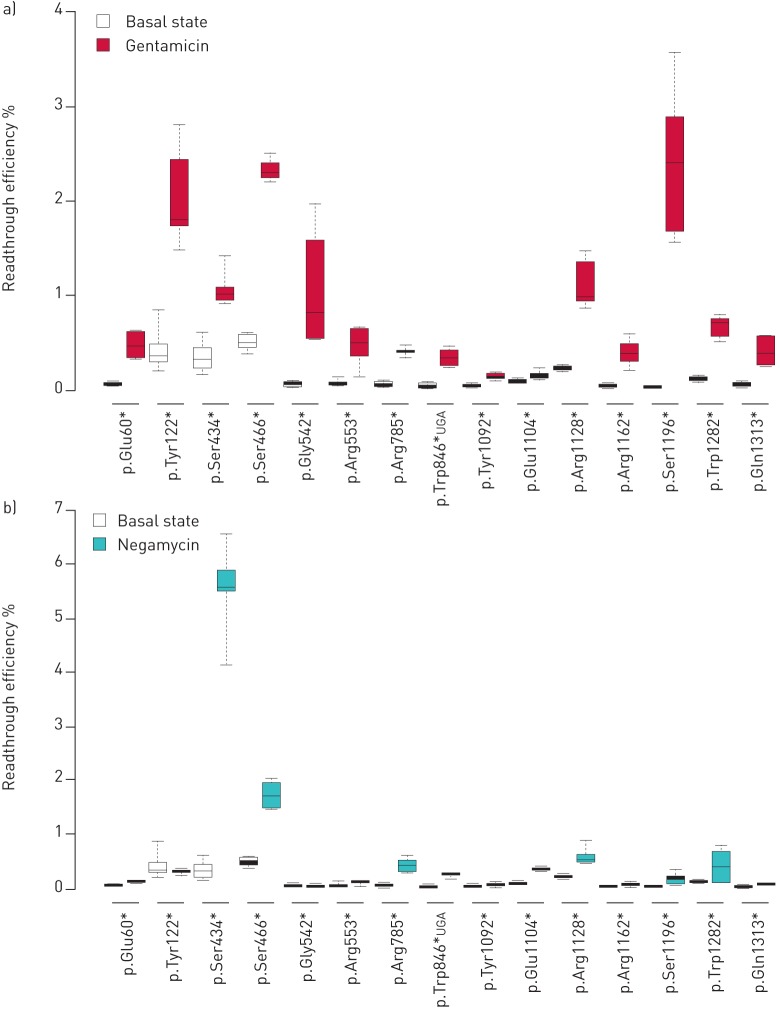
FIGURE 1
FIGURE 1
Readthrough levels measured for the indicated cystic fibrosis transmembrane conductance regulator (CFTR) premature termination codon mutations, at basal state and after incubation with a) gentamicin or b) negamycin. Central lines show the medians; box limits indicate the 25th and 75th percentiles as determined by R software; whiskers extend 1.5 times the interquartile range from the 25th and 75th percentiles; n>5 for all samples.
FIGURE 2
FIGURE 2
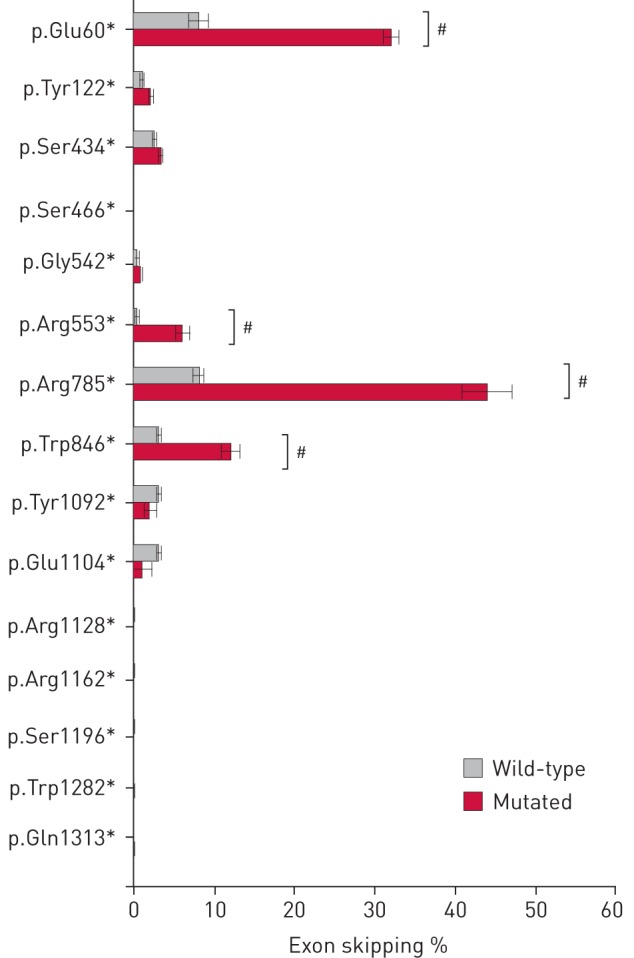
In vitro quantification of exon skipping associated with 15 premature termination codons using minigenes. The percentage of exon skipping measured by reverse transcriptase-PCR with minigenes containing wild-type exons or indicated mutated exons is shown. #: significant increased exon skipping (p<0.001, unpaired t-test, n=5–10).
FIGURE 3
FIGURE 3
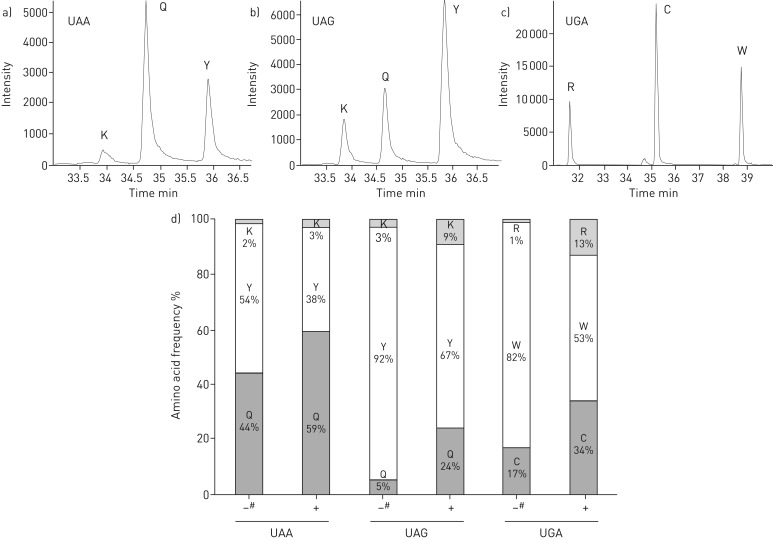
Quantification of readthrough peptides in the presence of paromomycin. a–c) Mass spectrometry extracted-ion chromatograms of readthrough peptides for UAA, UAG and UGA stop codons. d) Relative frequencies of the readthrough amino acids incorporated at UAA, UAG and UGA in the presence (+) and absence (−) of paromomycin. Quantifications were performed as described in the Materials and methods section. #: data previously obtained by Blanchet et al. [16] in the same conditions.
FIGURE 4
FIGURE 4
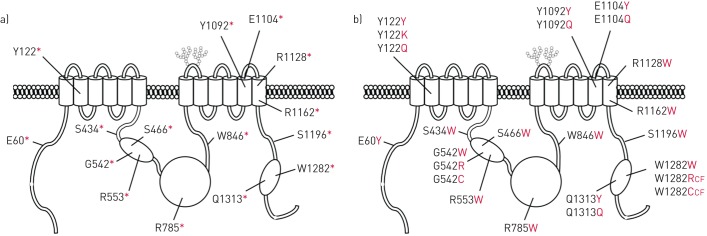
Representation of the 15 selected premature termination codons (PTCs) and their corresponding recoded major protein. Position of a) the 15 selected PTCs and b) corresponding recoded major amino acids. For the most studied p.Tyr122*, p.Gly542*, and p.Trp1282*, both major and minor recoded proteins are indicated. CF: known cystic fibrosis-causing mutations.
FIGURE 5
FIGURE 5
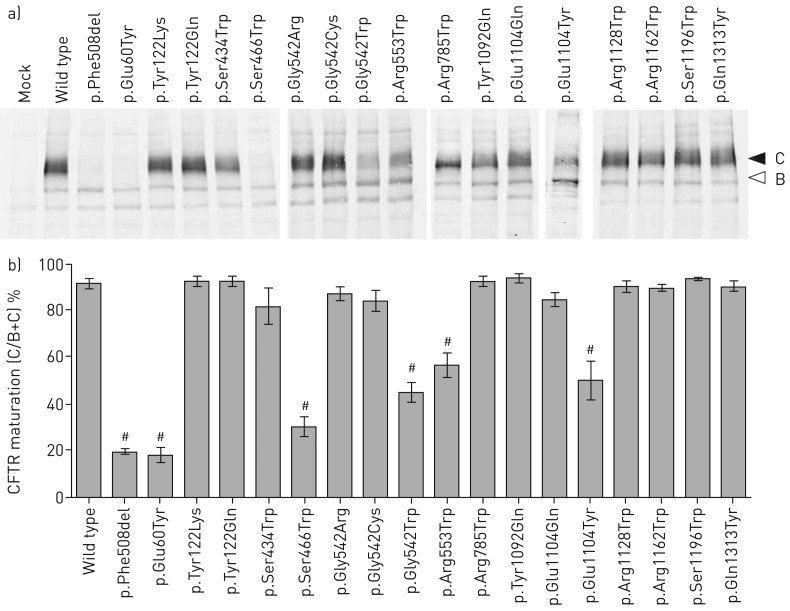
Maturation of recoded cystic fibrosis transmembrane conductance regulator (CFTR) channels. a) Representative Western blot obtained from HEK293 cells expressing the indicated construct. CFTR bands C and B are indicated. b) CFTR maturation as measured using the C/(B+C) ratio under control conditions. #: significant difference compared with wild-type control conditions (p<0.01, ANOVA followed by a Fisher test).
FIGURE 6
FIGURE 6
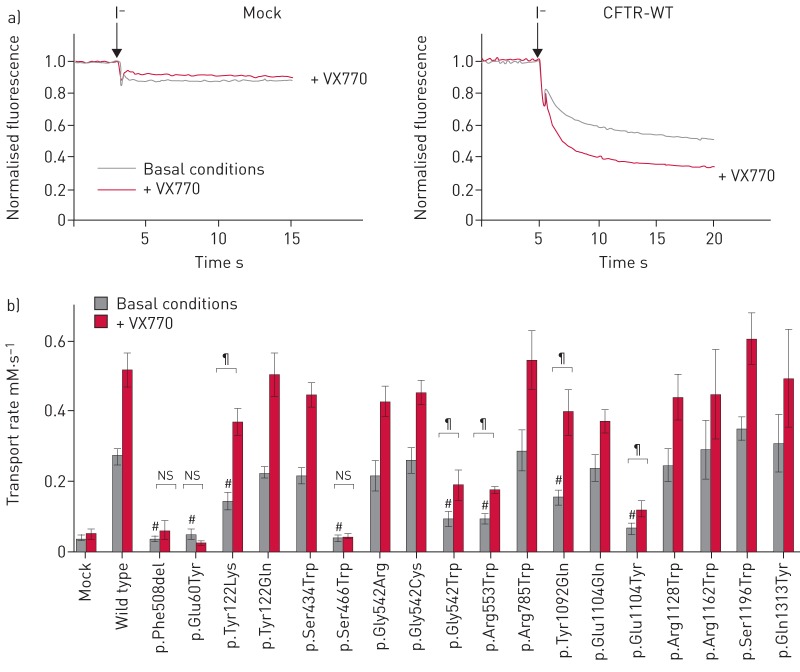
Function of recoded cystic fibrosis transmembrane conductance regulator (CFTR) channels. a) Representative recordings obtained from HEK293 cells expressing the indicated construct (mock or CFTR-WT) before and after addition of iodide-containing PBS (injection indicated with an arrow), and with and without the CFTR potentiator VX770. b) Transport rates measured under basal conditions and in the presence of the CFTR potentiator VX770. #: significant difference compared with wild-type control conditions (p<0.01, ANOVA followed by a Fisher test); : significant effect of VX770 (p<0.01, unpaired t-test); ns: nonsignificant effect of VX770.
FIGURE 7
FIGURE 7
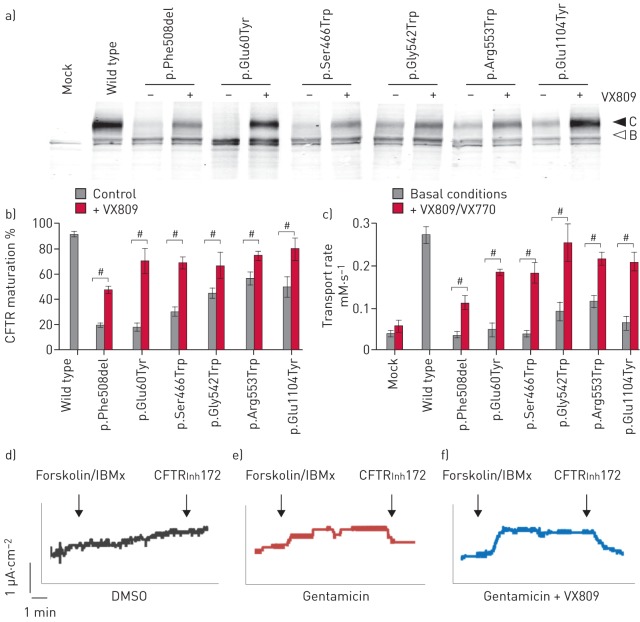
Rescue of misfolded recoded cystic fibrosis transmembrane conductance regulator (CFTR) channels. a) Representative Western blot obtained from HEK293 cells expressing the indicated mutation under basal conditions or after VX809 treatment (3 μM, 24 h). CFTR bands C and B are indicated. b) CFTR maturation of the indicated construct as measured using the C/(B+C) ratio under control conditions and after incubation with the corrector VX809. c) Transport rates measured under basal conditions and in presence of the corrector/potentiator combination (VX809/VX770). #: significant effect of treatment (p<0.01, unpaired t-test). d–f) Short-circuit current measurements of primary nasal epithelial cells (p.Gly542*/p.Gly542*) treated with d) dimethyl sulfoxide (DMSO) vehicle, e) gentamicin at a concentration of 1 mg·mL−1 for 2 days, or f) gentamicin (1 mg·mL−1) with VX809 (3 μM). IBMx: 3-isobutyl-1-methylxanthine; CFTRInh172: CFTR inhibitor.

References

    1. Kellermayer R. Translational readthrough induction of pathogenic nonsense mutations. Eur J Med Genet 2006; 49: 445–450. - PubMed
    1. Maquat LE. When cells stop making sense: effects of nonsense codons on RNA metabolism in vertebrate cells. RNA 1995; 1: 453–465. - PMC - PubMed
    1. Sterne-Weiler T, Howard J, Mort M, et al. . Loss of exon identity is a common mechanism of human inherited disease. Genome Res 2011; 21: 1563–1571. - PMC - PubMed
    1. Lee HL, Dougherty JP. Pharmaceutical therapies to recode nonsense mutations in inherited diseases. Pharmacol Ther 2012; 136: 227–266. - PubMed
    1. Sermet-Gaudelus I, Renouil M, Fajac A, et al. . In vitro prediction of stop-codon suppression by intravenous gentamicin in patients with cystic fibrosis: a pilot study. BMC Med 2007; 5: 5. - PMC - PubMed