


Simvastatin reduces circulating oxysterol levels in men with hypercholesterolaemia
- PMID: 29501047
- PMCID: PMC5952874
- DOI: 10.1016/j.redox.2018.02.014
Simvastatin reduces circulating oxysterol levels in men with hypercholesterolaemia
Abstract
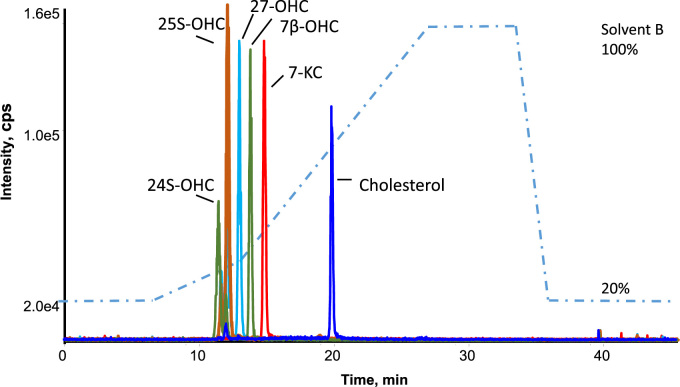
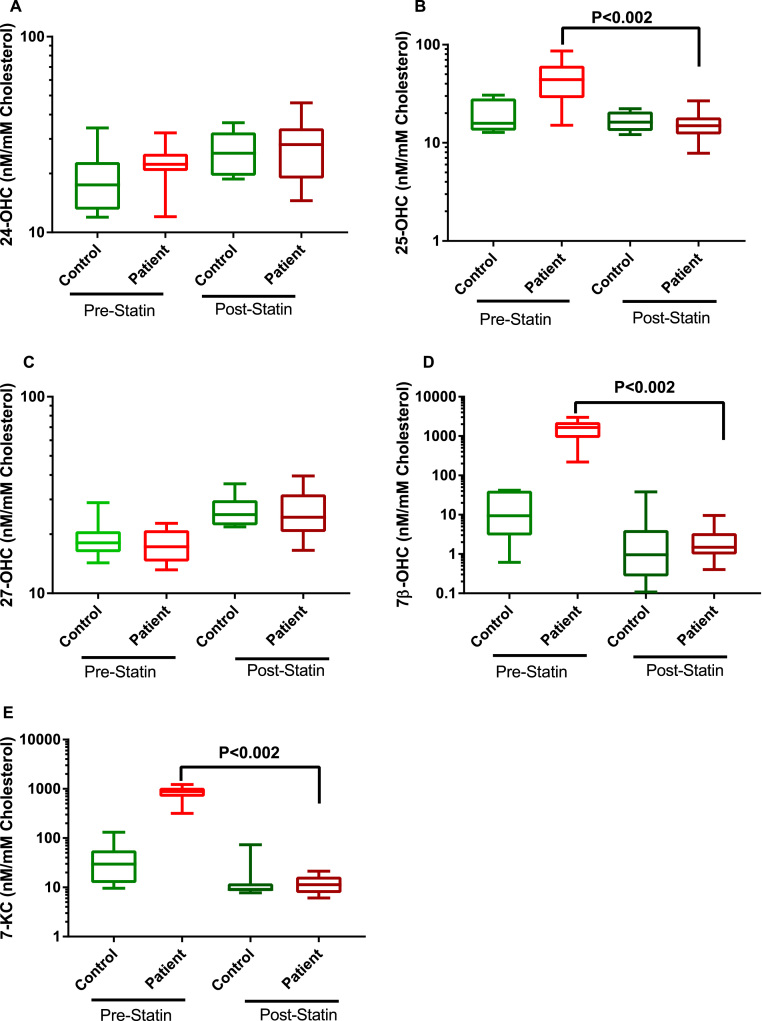
Oxysterols (OHC) are biologically active cholesterol metabolites circulating in plasma that may be formed enzymatically (e.g. 24S-OHC, 25-OHC and 27-OHC) or by autoxidative mechanisms (e.g. 7-ketocholesterol, 7β-OHC and 25-OHC). Oxysterols are more soluble than cholesterol and are reported to exert inflammatory, cytoprotective and apoptotic effects according to concentration and species. Esterified oxysterols have been analysed in people with dementia and cardiovascular diseases although there is no consistent relationship between oxysterol esters and disease. However, oxysterol esters are held in lipoprotein core and may not relate to the concentration and activity of plasma free oxysterols. Methodological limitations have challenged the analysis of free oxysterols to date. We have developed a fast, sensitive and specific quantitative LC-MS/MS, multiple reaction monitoring (MRM) method to target five oxysterols in human plasma with analyte recoveries between 72% and 82% and sensitivities between 5 and 135 pg/ml. A novel method was used to investigate the hypothesis that simvastatin may reduce the concentrations of specific plasma free oxysterols in hypercholesterolaemia. Twenty healthy male volunteers were recruited (aged 41-63 years); ten were asymptomatic with high plasma cholesterol > 6.5 mM and ten were healthy with normal plasma cholesterol (< 6.5 mM). Simvastatin (40 mg/day) was prescribed to those with hypercholesterolaemia. Plasma samples were taken from both groups at baseline and after three months. Simvastatin reduced plasma cholesterol by ~35% (p < 0.05) at the end of three months. Oxysterols generated by autoxidation (but not enzymatically) were elevated up to 45 fold in hypercholesterolaemic midlife men. Plasma oxysterols were restored to those of healthy controls after simvastatin intervention suggesting that autoxidation is either prevented by simvastatin directly or that autoxidation is less prevalent when plasma cholesterol concentrations are within the normal range.
Keywords: Dementia; Hydroxycholesterol; Mass spectrometry; Statin; Vascular disease.
Copyright © 2018 The Authors. Published by Elsevier B.V. All rights reserved.
Figures
References
-
- Perna L., Mons U., Rujescu D., Kliegel M., Brenner H. Apolipoprotein E e4 and cognitive function: a modifiable association results from two independent cohort studies. Dement. Geriatr. Cogn. Disord. 2016;41(1–2):35–45. - PubMed
-
- Alonso A., Jacobs D.R., Jr., Menotti A., Nissinen A., Dontas A., Kafatos A. Cardiovascular risk factors and dementia mortality: 40 years of follow-up in the Seven Countries Study. J. Neurol. Sci. 2009;280(1–2):79–83. - PubMed
-
- Kivipelto M., Ngandu T., Laatikainen T., Winblad B., Soininen H., Tuomilehto J. Risk score for the prediction of dementia risk in 20 years among middle aged people: a longitudinal, population-based study. Lancet Neurol. 2006;5(9):735–741. - PubMed
-
- Polidori M.C., Pientka L., Mecocci P. A review of the major vascular risk factors related to Alzheimer's disease. J. Alzheimer's. Dis.: JAD. 2012;32(3):521–530. - PubMed
Publication types
MeSH terms
Substances
Grants and funding
LinkOut - more resources
Full Text Sources
Other Literature Sources
Medical
