


Evaluation of triclosan in the Hershberger and H295R steroidogenesis assays
- PMID: 29501854
- PMCID: PMC6713194
- DOI: 10.1016/j.toxlet.2018.03.001
Evaluation of triclosan in the Hershberger and H295R steroidogenesis assays
Abstract
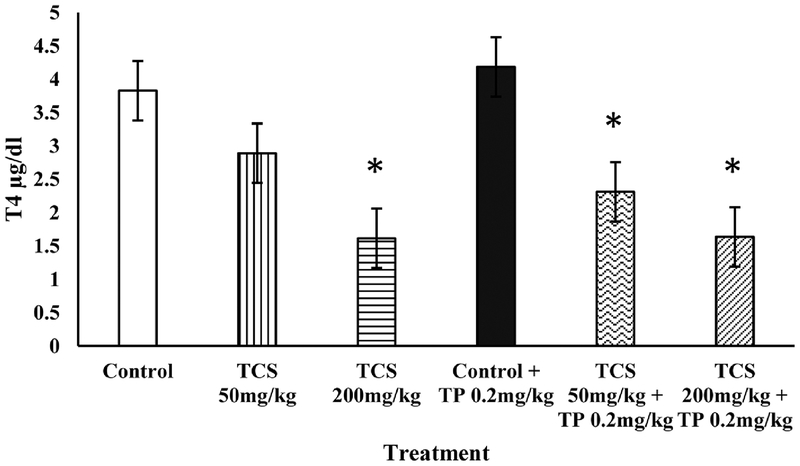
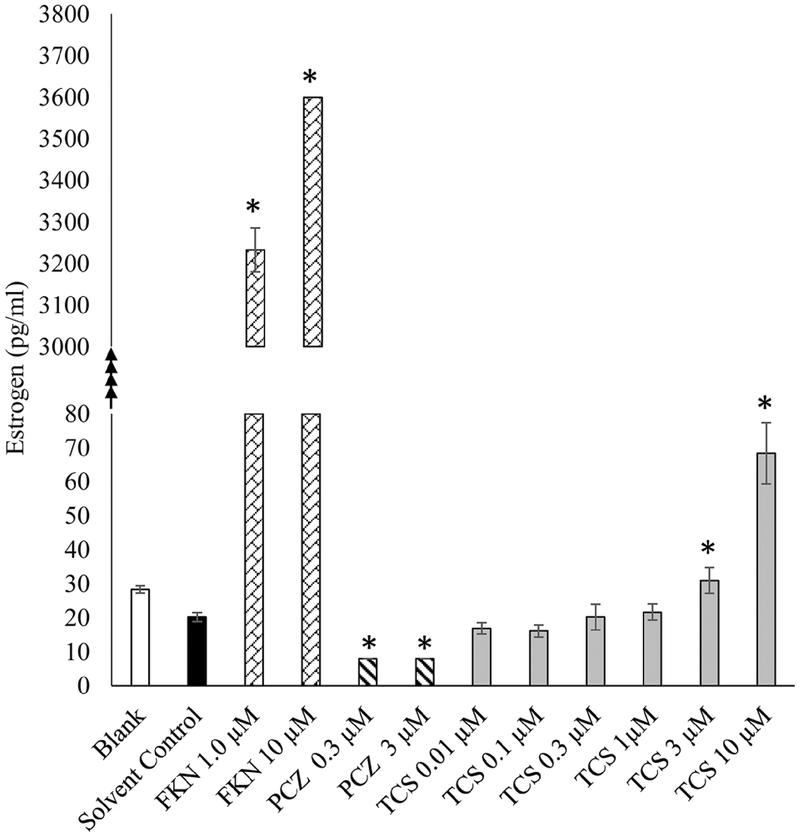
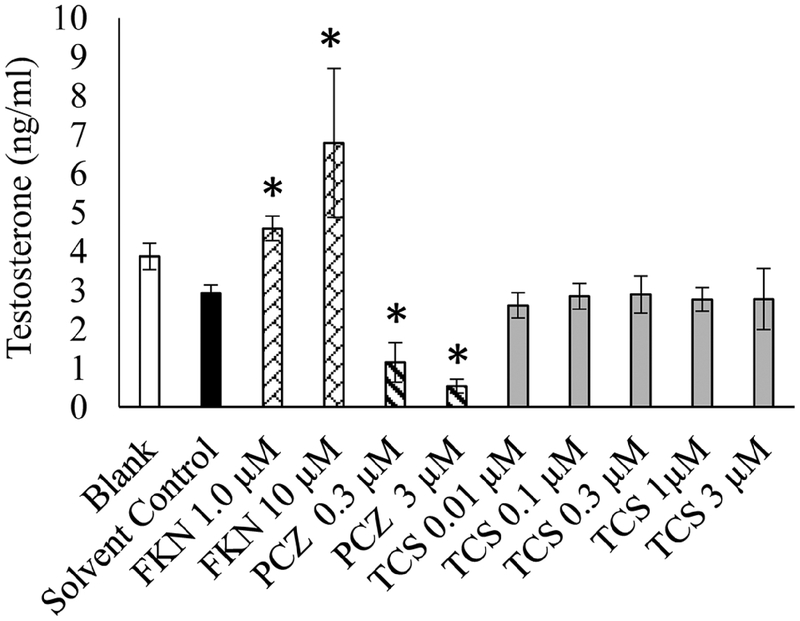
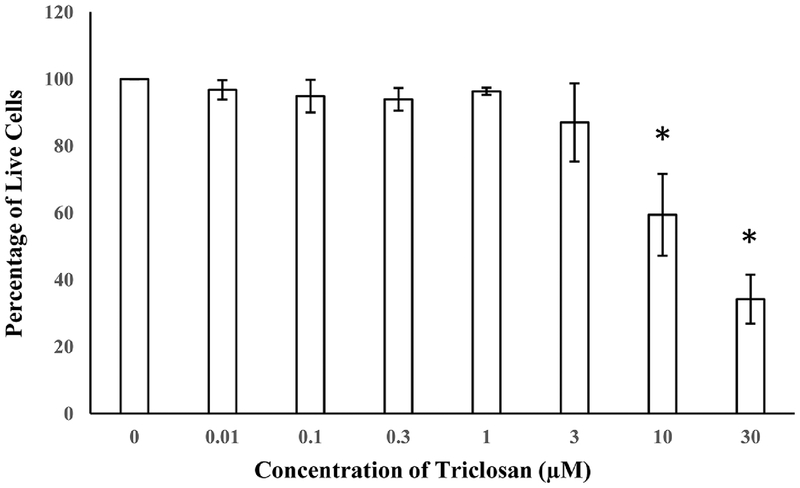
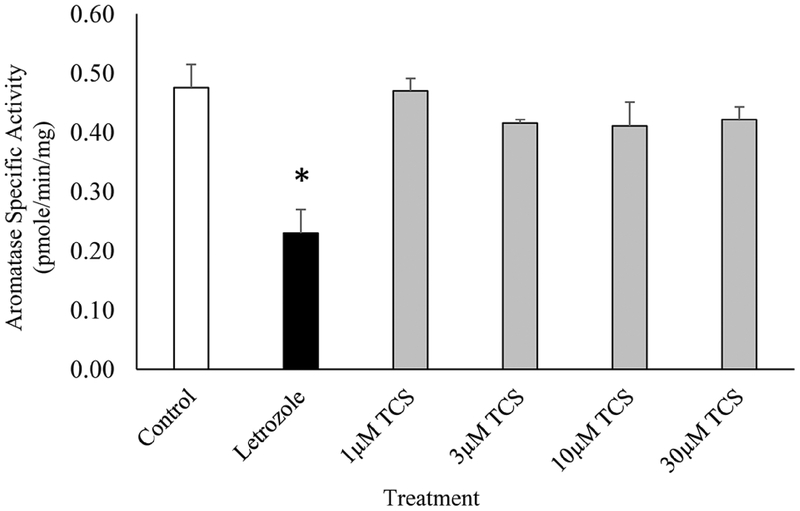
Triclosan (TCS) is an antibacterial widely used in personal care products that exhibits endocrine disrupting activity in several species, with reports of altered thyroid, estrogen and androgen signaling pathways. To evaluate the androgenic mode of action, TCS was evaluated for androgen receptor mediated effects in the Hershberger assay and for altered androgen synthesis in the H295R steroidogenesis assay. In the Hershberger assay, castrated males were dosed by oral gavage for 10 days with corn oil (vehicle) or TCS (50 or 200 mg/kg/day) in the presence or absence of testosterone proprionate (TP, 0.2 mg/kg/day) prior to assessing accessory sex tissues (ASTs) weights. TCS alone or in combination with TP did not alter androgen dependent AST weights. Assessment of serum thyroxine (T4) demonstrated a significant dose-dependent decrease by TCS (50 or 200 mg/kg/day) co-administered with TP and TCS (200 mg/kg) without TP, but no differences in liver or thyroid weights. In the H295R assay, TCS from 0.01 to 10 μM had no effect on testosterone production but TCS at 3 μM and above did induce a significant increase in estrogen production. At 10 μM, TCS produced significant cytotoxicity which confounded the interpretation of the estrogenic effect at that concentration. Thus, TCS had no effect on androgen synthesis or activity in the models used, but did enhance estrogen production and suppress serum T4.
Keywords: Endocrine disruptor; H295R; Hershberger; Steroidogenesis; Triclosan.
Published by Elsevier B.V.
Figures
References
-
- Adolfsson-Erici M, Pettersson M, Parkkonen J, Sturve J, 2002. Triclosan: a commonly used bactericide found in human milk and in the aquatic environment in Sweden. Chemosphere 46, 1485–1489. - PubMed
-
- Axelstad M, Boberg J, Vinggaard AM, Christiansen S, Hass U, 2013. Triclosan exposure reduces thyroxine levels in pregnant and lactating rat dams and in directly exposed offspring. Food Chem. Toxicol 59, 534–540. - PubMed
-
- Christen V, Crettaz P, Oberli-Schrammli A, Fent K, 2010. Some flame retardants and the antimicrobials triclosan and triclocarban enhance the androgenic activity in vitro. Chemosphere 81, 1245–1252. - PubMed
MeSH terms
Substances
Grants and funding
LinkOut - more resources
Full Text Sources
Other Literature Sources
