


No laughing matter: subacute degeneration of the spinal cord due to nitrous oxide inhalation
- PMID: 29502317
- PMCID: PMC5937900
- DOI: 10.1007/s00415-018-8801-3
No laughing matter: subacute degeneration of the spinal cord due to nitrous oxide inhalation
Abstract
Background: Whilst the dangers of 'legal highs' have been widely publicised in the media, very few cases of the neurological syndrome associated with the inhalation of nitrous oxide (N2O) have been reported. Here we set out to raise awareness of subacute degeneration of the spinal cord arising from recreational N2O use so that formal surveillance programs and public health interventions can be designed.
Methods: Case series documenting the clinical and investigational features of ten consecutive cases of subacute degeneration of the spinal cord presenting to a hospital with a tertiary neurosciences service in East London.
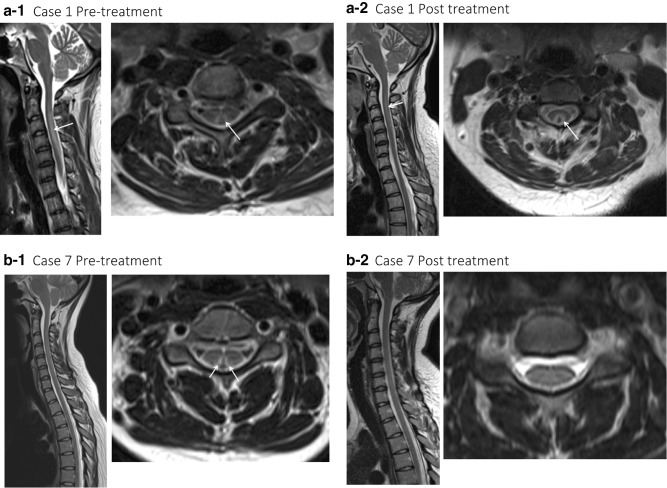
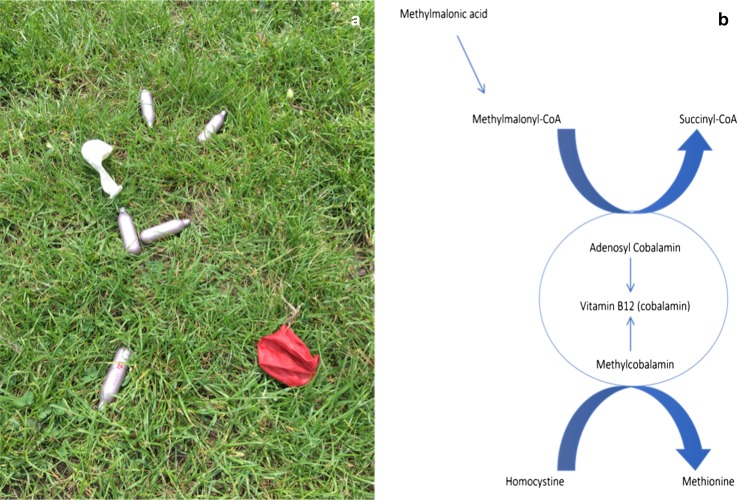
Results: Sensory disturbance in the lower (± upper) limbs was the commonest presenting feature, along with gait abnormalities and sensory ataxia. MRI imaging of the spine showed the characteristic features of dorsal column hyperintensity on T2 weighted sequences. Serum B12 levels may be normal because subacute degeneration of the spinal cord in this situation is triggered by functional rather than absolute B12 deficiency.
Discussion: A high index of suspicion is required to prompt appropriate investigation, make the diagnosis and commence treatment early. This is the largest reported series of patients with subacute degeneration of the spinal cord induced by recreational use of N2O. However, the number of patients admitted to hospital likely represents the 'tip of the iceberg', with many less severe presentations remaining undetected. After raising awareness, attention should focus on measuring the extent of the problem, the groups affected, and devising ways to prevent potentially long-term neurological damage.
Keywords: Hydroxocobalamin; Myelopathy; Subacute degeneration of the spinal cord; Vitamin B12.
Conflict of interest statement
Conflicts of interest
None of the authors have any conflict of interest to disclose.
Financial disclosure
No authors have any financial disclosures.
Transparency declaration
The lead author affirms that the manuscript is an honest, accurate, and transparent account of the study being reported; that no important aspects of the study have been omitted; and that any discrepancies from the study as planned have been explained.
Data sharing
No additional data available.
Ethical statement
This is a retrospective study describing the presentation and management of clinical cases. Individual patient consent has proved a significant issue in this case series in that many were not contactable to consent (contact details changed, no next of kin, no GP information). Such are the risks to young people using nitrous oxide, we felt that fully anonymising all information would allow for presentation of important clinical data whilst being impossible to identify any individual case.
Figures
References
-
- Winstock A, Barratt M, Ferris J, Maie L (2017) Global overview and highlights. Global Drugs Survey, London, UK. Retrieved from https://www.globaldrugsurvey.com/wp-content/-themes/globaldrugsurvey/res.... Accessed 26 Feb 2018
MeSH terms
Substances
LinkOut - more resources
Full Text Sources
Other Literature Sources
Medical
