Review
. 2018;14(4):37.
doi: 10.1007/s11306-018-1335-y. Epub 2018 Feb 27.

From correlation to causation: analysis of metabolomics data using systems biology approaches

Affiliations
Review

From correlation to causation: analysis of metabolomics data using systems biology approaches

Antonio Rosato et al. Metabolomics. 2018.

Abstract

Introduction: Metabolomics is a well-established tool in systems biology, especially in the top-down approach. Metabolomics experiments often results in discovery studies that provide intriguing biological hypotheses but rarely offer mechanistic explanation of such findings. In this light, the interpretation of metabolomics data can be boosted by deploying systems biology approaches.

Objectives: This review aims to provide an overview of systems biology approaches that are relevant to metabolomics and to discuss some successful applications of these methods.

Methods: We review the most recent applications of systems biology tools in the field of metabolomics, such as network inference and analysis, metabolic modelling and pathways analysis.

Results: We offer an ample overview of systems biology tools that can be applied to address metabolomics problems. The characteristics and application results of these tools are discussed also in a comparative manner.

Conclusions: Systems biology-enhanced analysis of metabolomics data can provide insights into the molecular mechanisms originating the observed metabolic profiles and enhance the scientific impact of metabolomics studies.

Keywords: Association network; Correlation network; Enrichment analysis; Network analysis; Pathway.


Conflict of interest statement

Compliance with ethical standardsAll authors declare that they have no conflict of interest.This article does not contain any studies with human participants or animals performed by any of the authors.

Figures
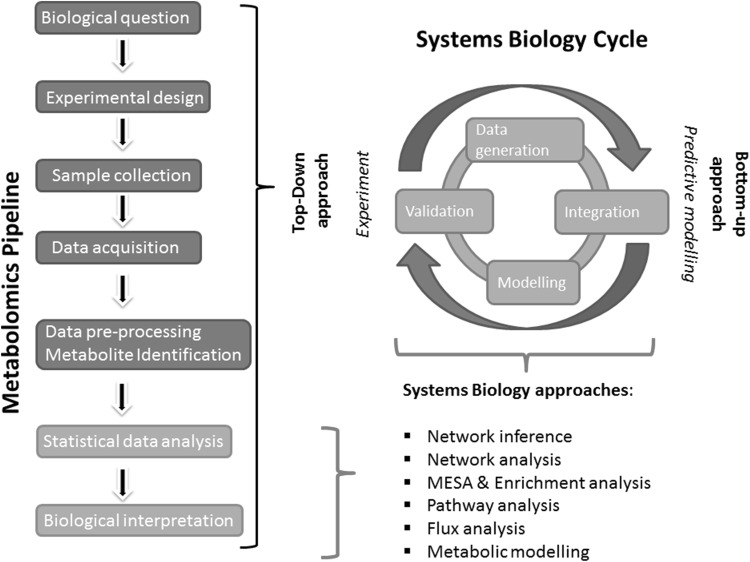
Fig. 1
Fig. 1
Relationship between the systems biology cycle and the metabolomics pipeline
Fig. 2
Fig. 2
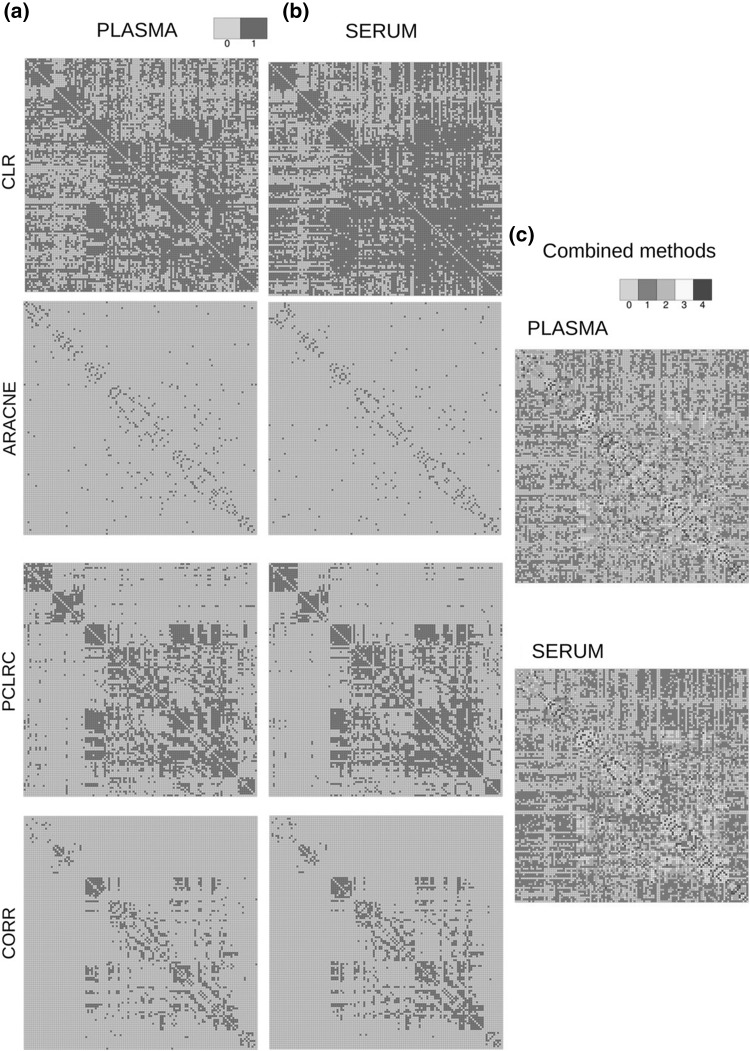
Association network of 133 blood metabolites measured using MS/MS on 2139 subjects. a Plasma metabolites association networks obtained using the four different methods. b Serum metabolites association networks obtained using the four different methods. c Consensus association network for serum and plasma. CLR context likelihood of relatedness, ARACNE algorithm for the reconstruction of accurate cellular networks, PCLRC probabilistic context likelihood of relatedness on correlations, CORR Pearson’s correlation). Reproduced with permission from Suarez-Diez et al. (2017). Copyright (2017) American Chemical Society
Fig. 3
Fig. 3
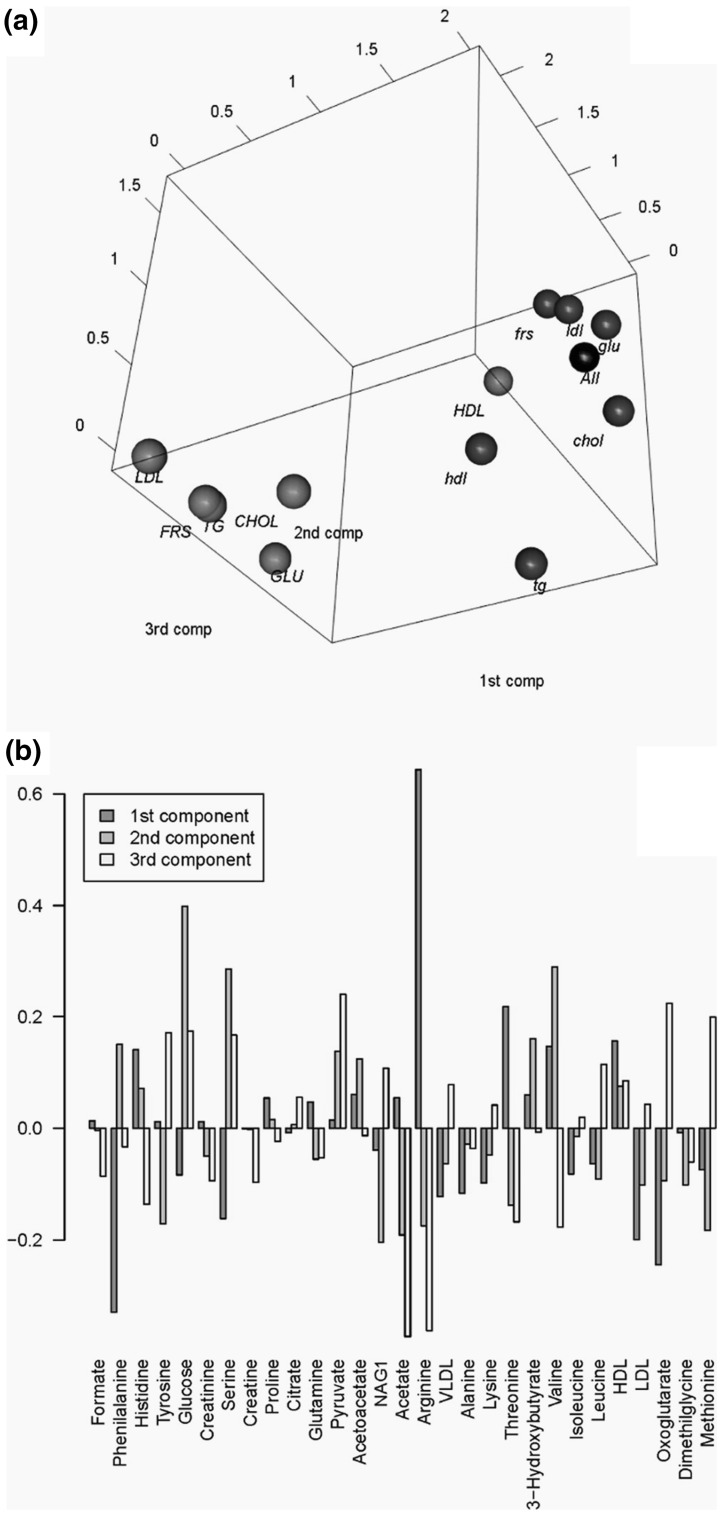
a Weight plot and b loadings plot of the INDSCAL model for the metabolite correlation network obtained using the PCLCR method. Each dot represents a network that corresponds to a given cardiovascular (CVD) risk parameter. Blue dots indicate low latent CVD risk, while red indicate high latent CVD risk. The associated CVD risk parameters are indicated in upper case for high risk and lower case for low risk. A reference network (indicated as “All”, black ball), built using all the subjects in the study, is given as reference. Reproduced with permission from Saccenti et al. (2014). Copyright (2014) American Chemical Society
Fig. 4
Fig. 4
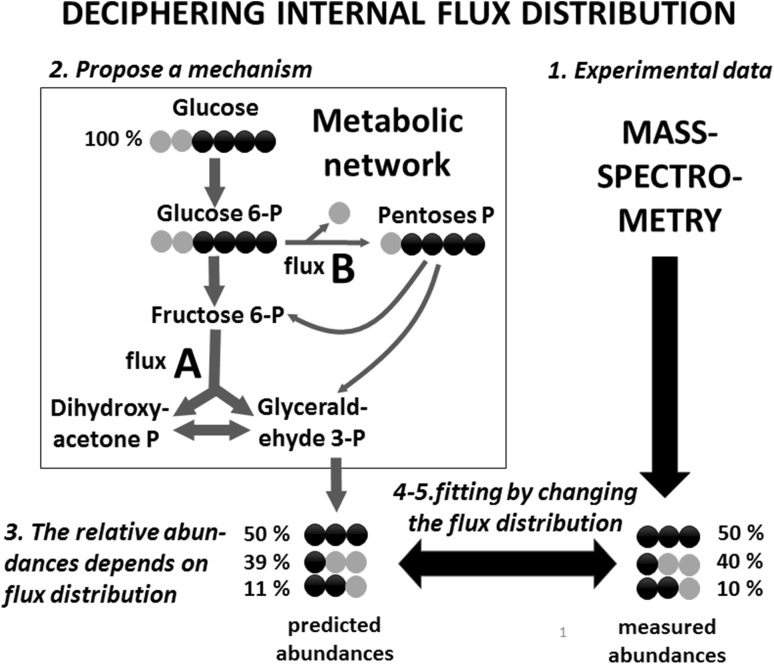
Overview of metabolic flux modelling using stable isotope resolved metabolomics data
Fig. 5
Fig. 5
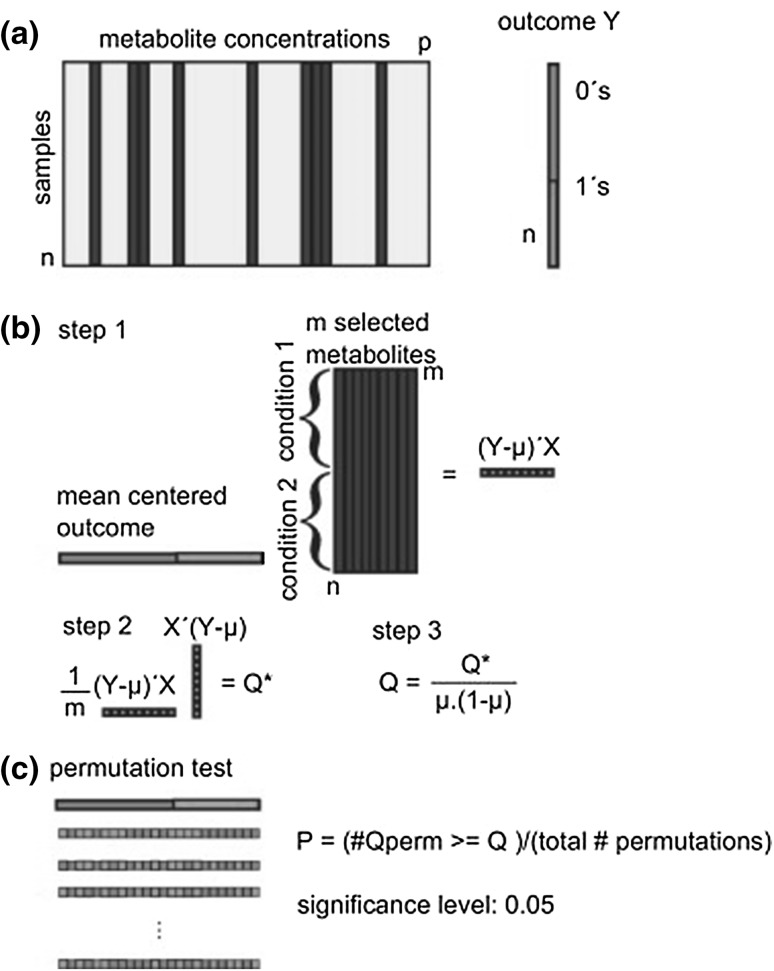
Overview of the Global test. a From the autoscaled data matrix, m metabolites belonging to the same pathway are selected. A binary outcome is defined, coded 0 and 1, for instance healthy versus disease. b A score statistic Q is calculated from the mean centered outcome and the matrix of selected metabolites. c The significance of the relation between the group of metabolites (pathway) and the outcome is determined by performing a permutation test. Reproduced with permission from Hendrickx et al. (2012); Copyright (2012) Elsevier B. V

References

    1. Aggio RB, Ruggiero K, Villas-Bôas SG. Pathway Activity Profiling (PAPi): From the metabolite profile to the metabolic pathway activity. Bioinformatics. 2010;26:2969–2976. doi: 10.1093/bioinformatics/btq567. - DOI - PubMed
    1. Alekseev AE, et al. Restrictions in ATP diffusion within sarcomeres can provoke ATP-depleted zones impairing exercise capacity in chronic obstructive pulmonary disease. Biochimica et Biophysica Acta (BBA)-General Subjects. 2016;1860:2269–2278. doi: 10.1016/j.bbagen.2016.04.018. - DOI - PubMed
    1. Andreozzi S, Miskovic L, Hatzimanikatis V. iSCHRUNK–in silico approach to characterization and reduction of uncertainty in the kinetic models of genome-scale metabolic networks. Metabolic Engineering. 2016;33:158–168. doi: 10.1016/j.ymben.2015.10.002. - DOI - PubMed
    1. Assfalg M, et al. Evidence of different metabolic phenotypes in humans. Proceedings of the National Academy of Sciences of the United States of America. 2008;105:1420–1424. doi: 10.1073/pnas.0705685105. - DOI - PMC - PubMed
    1. Barupal DK, et al. MetaMapp: Mapping and visualizing metabolomic data by integrating information from biochemical pathways and chemical and mass spectral similarity. BMC Bioinformatics. 2012;13:99. doi: 10.1186/1471-2105-13-99. - DOI - PMC - PubMed

LinkOut - more resources