Clinicopathological and immunological characteristics and outcome of concomitant coeliac disease and non-alcoholic fatty liver disease in adults: a large prospective longitudinal study
- PMID: 29503733
- PMCID: PMC5808634
- DOI: 10.1136/bmjgast-2017-000150
Clinicopathological and immunological characteristics and outcome of concomitant coeliac disease and non-alcoholic fatty liver disease in adults: a large prospective longitudinal study
Abstract
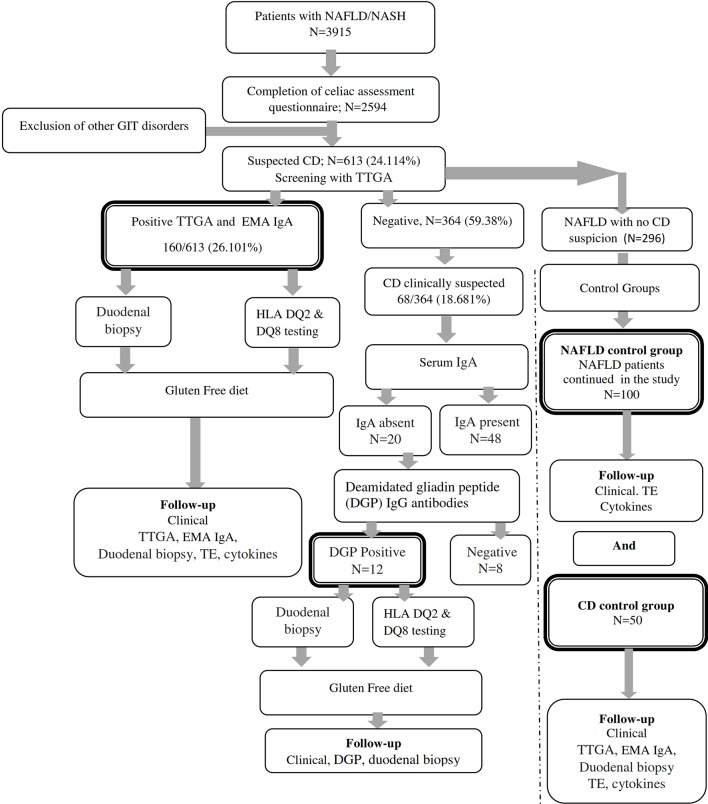
Objective: Concomitant non-alcoholic fatty liver disease (NAFLD) and coeliac disease (CD) have not been adequately studied. This study investigated the frequency of CD among NAFLD patients and the clinicopathological and immunological patterns and outcome of concomitant NAFLD and CD.
Design: This prospective longitudinal study screened patients with NAFLD for CD (tissue transglutaminase antibodies (TTGA); anti-TTGA and antiendomysial antibodies (EMA)). Patients with concomitant NAFLD and CD and patients with either NAFLD or CD were enrolled and followed. Duodenal biopsy, transient elastography, tumour necrosis factor (TNF)-alpha, transforming growth factor-beta, interleukins (ILs) 1, 6, 10, 15 and 17, folic acid and vitamins B12 and D were performed at baseline and 1 year after gluten-free diet (GFD).
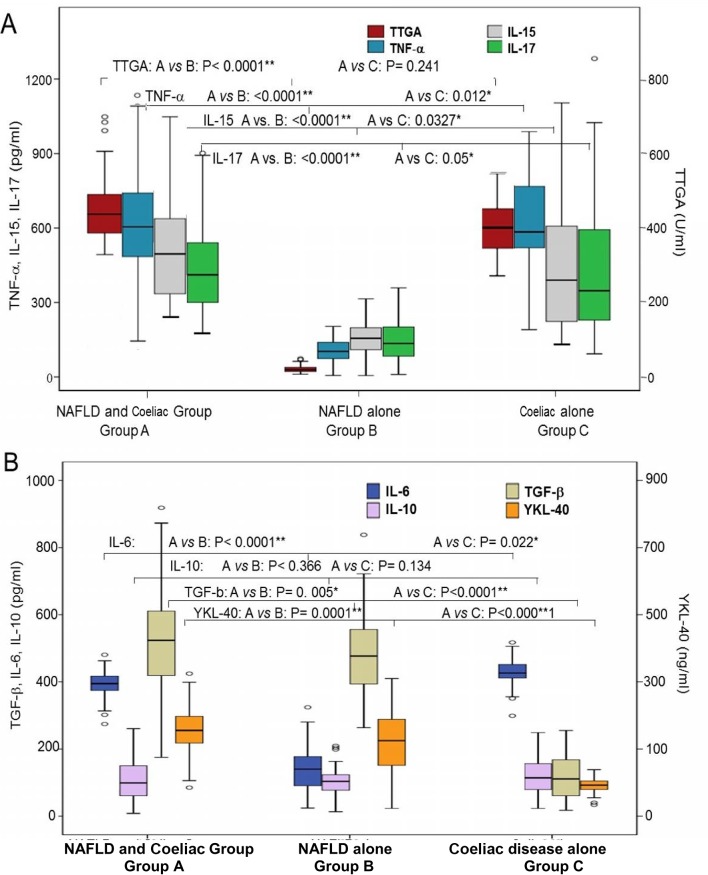
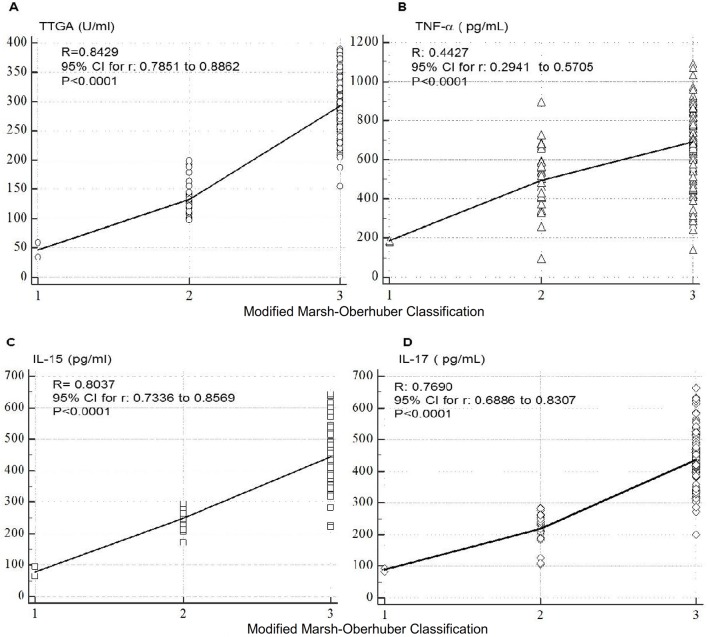
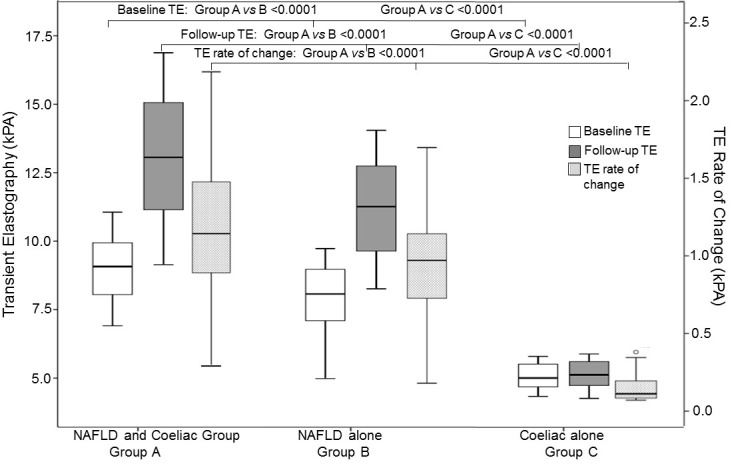
Results: CD was confirmed in 7.2% of patients with NAFLD. Refractory anaemia and nutritional deficiencies were frequent in patients with concomitant NAFLD and CD who had advanced intestinal and hepatic lesions, higher levels of TNF-α, IL-15 and IL-17 compared with patients with CD and NAFLD. Patients concomittant CD and NAFLD showed clinical response to GFD, but intestinal histological improvement was suboptimal. Combining EMA-IgA or anti-TTGA with either IL-15 or IL-17 enhances the prognostic performance of both tests in predicting histological response to GFD.
Conclusion: Concomitant NAFLD and CD is not uncommon. Recurrent abdominal symptoms, refractory anaemia, nutritional deficiencies in patients with NAFLD warrant screening for CD. The study has important clinical implications since failure in diagnosing CD in patients with NAFLD patients results in marked intestinal and hepatic damage and suboptimal response to GFD that can be alleviated by early diagnosis and initiation of GFD.
Keywords: celiac disease; cytokines; gluten free diet; nonalcoholic steatohepatitis; small intestinal biopsy.
Conflict of interest statement
Competing interests: None declared.
Figures
References
-
- Bedossa P. Pathology of non-alcoholic fatty liver disease. Liver Int 2017;37(Suppl 1):85–9. doi:10.1111/liv.13301 - DOI - PubMed
-
- Vuppalanchi R, Chalasani N. Nonalcoholic fatty liver disease and non-alcoholic steatohepatitis: selected practical issues in their evaluation and management. Hepatology 2009;49:306–17. doi:10.1002/hep.22603 - DOI - PMC - PubMed
-
- Bellentani S. The epidemiology of non-alcoholic fatty liver disease. Liver Int 2017;37(Suppl 1):81–4. doi:10.1111/liv.13299 - DOI - PubMed
-
- Younossi ZM, Koenig AB, Abdelatif D, et al. . Global epidemiology of nonalcoholic fatty liver disease-Meta-analytic assessment of prevalence, incidence, and outcomes. Hepatology 2016;64:73–84. doi:10.1002/hep.28431 - DOI - PubMed
-
- Bedogni G, Miglioli L, Masutti F, et al. . Prevalence of and risk factors for nonalcoholic fatty liver disease: the Dionysos nutrition and liver study. Hepatology 2005;42:44–52. doi:10.1002/hep.20734 - DOI - PubMed
LinkOut - more resources
Full Text Sources
Research Materials
Miscellaneous