


Metastatic Extramammary Paget's Disease: Pathogenesis and Novel Therapeutic Approach
- PMID: 29503810
- PMCID: PMC5820294
- DOI: 10.3389/fonc.2018.00038
Metastatic Extramammary Paget's Disease: Pathogenesis and Novel Therapeutic Approach
Erratum in
-
Corrigendum: Metastatic Extramammary Paget's Disease: Pathogenesis and Novel Therapeutic Approach.Front Oncol. 2018 Mar 12;8:47. doi: 10.3389/fonc.2018.00047. eCollection 2018. Front Oncol. 2018. PMID: 29569629 Free PMC article.
Abstract
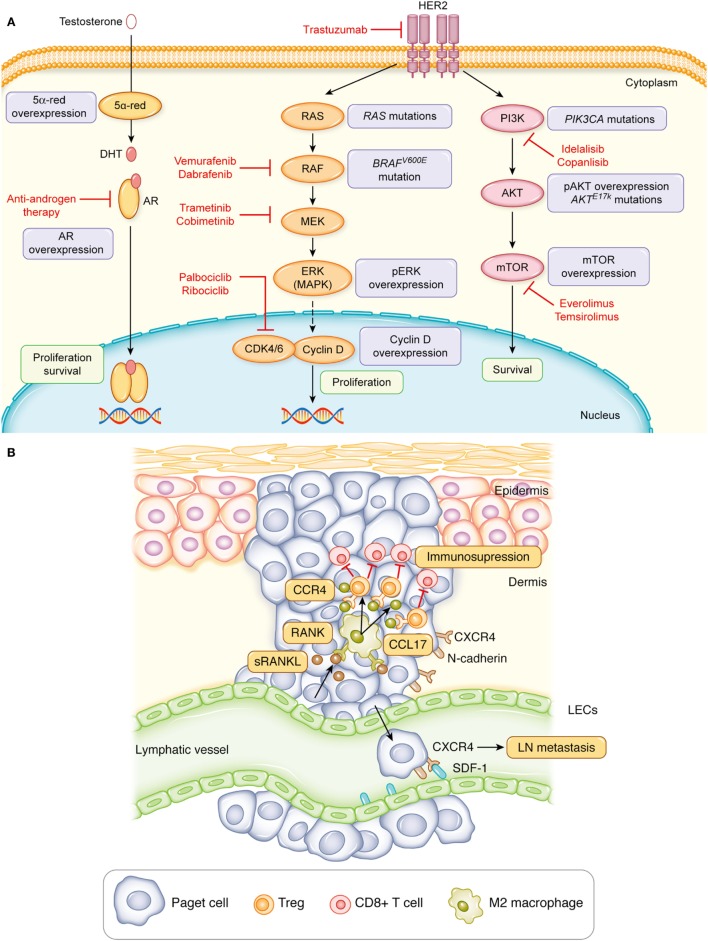
Extramammary Paget's disease (EMPD) is a rare, slow-growing, cutaneous adenocarcinoma that usually originates in the anogenital area and axillae outside the mammary glands. EMPD mostly progresses slowly and is often diagnosed as carcinoma in situ; however, upon becoming invasive, it promptly and frequently metastasizes to regional lymph nodes, leading to subsequent distant metastasis. To date, several chemotherapy regimens have been used to treat metastatic EMPD; however, they present limited effect and patients with distant metastasis exhibit a poor prognosis. Recently, basic and translational investigative research has elucidated factors and molecular mechanisms underlying the promotion of metastasis, which can lead to targeted therapy-based emerging treatment strategies. Here, we aim to discuss current therapies and their limitations; advancements in illustrating mechanisms promoting invasion, migration, and proliferation of EMPD tumor cells; and future therapeutic approaches for metastatic EMPD that may enhance clinical outcomes.
Keywords: CD163+M2 macrophage; CXCR4–stromal cell-derived factor-1 axis; HER2–PI3K/ERK signaling; anti-PD-1 antibody; lymphangiogenesis; metastatic extramammary Paget’s disease; mismatch-repair deficient; receptor activator of nuclear factor kappa-B ligand–RANK signaling.
Figures
References
Publication types
LinkOut - more resources
Full Text Sources
Other Literature Sources
Research Materials
Miscellaneous
