


Unleashing the therapeutic potential of oncolytic viruses
- PMID: 29504947
- PMCID: PMC5873873
- DOI: 10.1172/JCI120303
Unleashing the therapeutic potential of oncolytic viruses
Abstract
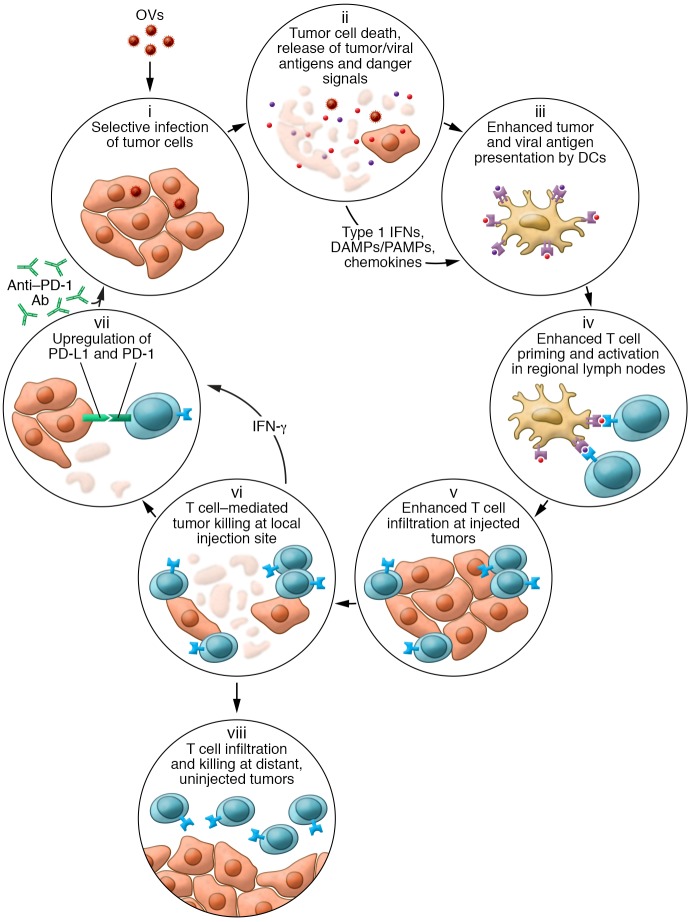
Oncolytic viruses (OVs) are a versatile new class of therapeutic agents based on native or genetically modified viruses that selectively replicate in tumor cells and can express therapeutic transgenes designed to target cells within the tumor microenvironment and/or host immunity. To date, however, confirmation of the underlying mechanism of action and an understanding of innate and acquired drug resistance for most OVs have been limited. In this issue of the JCI, Zamarin et al. report a comprehensive analysis of an oncolytic Newcastle disease virus (NDV) using both murine melanoma tumor models and human tumor explants to explore how the virus promotes tumor eradication and details of the mechanisms involved. These findings have implications for the optimization of oncolytic immunotherapy, at least that based on NDV, and further confirm that specific combinatorial approaches are promising for clinical development.
Conflict of interest statement
Figures
Comment on
-
PD-L1 in tumor microenvironment mediates resistance to oncolytic immunotherapy.J Clin Invest. 2018 Apr 2;128(4):1413-1428. doi: 10.1172/JCI98047. Epub 2018 Mar 5. J Clin Invest. 2018. PMID: 29504948 Free PMC article.
References
-
- Kaufman HL, Kim DW, DeRaffele G, Mitcham J, Coffin RS, Kim-Schulze S. Local and distant immunity induced by intralesional vaccination with an oncolytic herpes virus encoding GM-CSF in patients with stage IIIc and IV melanoma. Ann Surg Oncol. 2010;17(3):718–730. doi: 10.1245/s10434-009-0809-6. - DOI - PubMed
-
- Chesney J, et al. Randomized, open-label phase 2 study evaluating the efficacy and safety of Talimogene laherparepvec in combination with ipilimumab in patients with advanced, unresectable melanoma. J Clin Oncol. doi: 10.1200/JCO.2017.73.7379. [published online ahead of print October 5, 2017]. https://doi.org/10.1200/JCO.2017.73.7379. - DOI - PMC - PubMed
Publication types
MeSH terms
Substances
LinkOut - more resources
Full Text Sources
Other Literature Sources
