


Interventions for eye movement disorders due to acquired brain injury
- PMID: 29505103
- PMCID: PMC6494416
- DOI: 10.1002/14651858.CD011290.pub2
Interventions for eye movement disorders due to acquired brain injury
Abstract
Background: Acquired brain injury can cause eye movement disorders which may include: strabismus, gaze deficits and nystagmus, causing visual symptoms of double, blurred or 'juddery' vision and reading difficulties. A wide range of interventions exist that have potential to alleviate or ameliorate these symptoms. There is a need to evaluate the effectiveness of these interventions and the timing of their implementation.
Objectives: We aimed to assess the effectiveness of any intervention and determine the effect of timing of intervention in the treatment of strabismus, gaze deficits and nystagmus due to acquired brain injury. We considered restitutive, substitutive, compensatory or pharmacological interventions separately and compared them to control, placebo, alternative treatment or no treatment for improving ocular alignment or motility (or both).
Search methods: We searched the Cochrane Central Register of Controlled Trials (CENTRAL) (containing the Cochrane Eyes and Vision Trials Register) (2017, Issue 5), MEDLINE Ovid, Embase Ovid, CINAHL EBSCO, AMED Ovid, PsycINFO Ovid, Dissertations & Theses (PQDT) database, PsycBITE (Psychological Database for Brain Impairment Treatment Efficacy), ISRCTN registry, ClinicalTrials.gov, Health Services Research Projects in Progress (HSRProj), National Eye Institute Clinical Studies Database and the World Health Organization (WHO) International Clinical Trials Registry Platform (ICTRP). The databases were last searched on 26 June 2017. No date or language restrictions were used in the electronic searches for trials. We manually searched the Australian Orthoptic Journal, British and Irish Orthoptic Journal, and ESA, ISA and IOA conference proceedings. We contacted researchers active in this field for information about further published or unpublished studies.
Selection criteria: We included randomised controlled trials (RCTs) of any intervention for ocular alignment or motility deficits (or both) due to acquired brain injury.
Data collection and analysis: Two review authors independently selected studies and extracted data. We used standard methods expected by Cochrane. We employed the GRADE approach to interpret findings and assess the quality of the evidence.
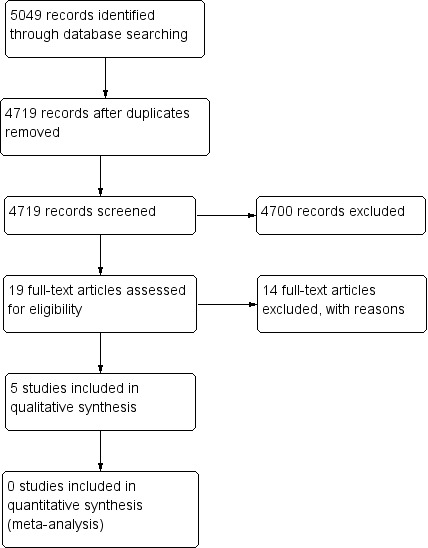
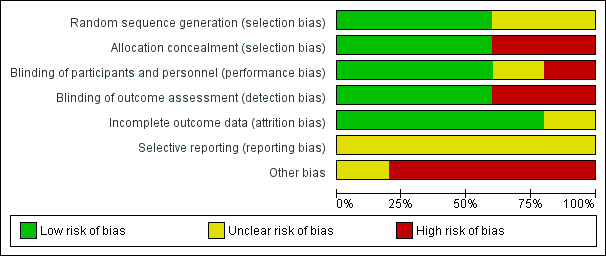
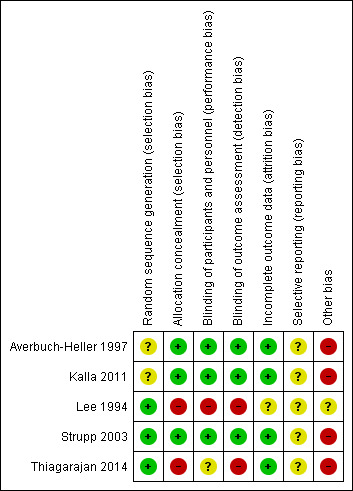
Main results: We found five RCTs (116 participants) that were eligible for inclusion. These trials included conditions of acquired nystagmus, sixth cranial nerve palsy and traumatic brain injury-induced ocular motility defects. We did not identify any relevant studies of restitutive interventions.We identified one UK-based trial of a substitutive intervention, in which botulinum toxin was compared with observation in 47 people with acute sixth nerve palsy. At four months after entry into the trial, people given botulinum toxin were more likely to make a full recovery (reduction in angle of deviation within 10 prism dioptres), compared with observation (risk ratio 1.19, 95% CI 0.96 to 1.48; low-certainty evidence). These same participants also achieved binocular single vision. In the injection group only, there were 2 cases of transient ptosis out of 22 participants (9%), and 4 participants out of 22 (18%) with transient vertical deviation; a total complication rate of 24% per injection and 27% per participant. All adverse events recovered. We judged the certainty of evidence as low, downgrading for risk of bias and imprecision. It was not possible to mask investigators or participants to allocation, and the follow-up between groups varied.We identified one USA-based cross-over trial of a compensatory intervention. Oculomotor rehabilitation was compared with sham training in 12 people with mild traumatic brain injury, at least one year after the injury. We judged the evidence from this study to be very low-certainty. The study was small, data for the sham training group were not fully reported, and it was unclear if a cross-over study design was appropriate as this is an intervention with potential to have a permanent effect.We identified three cross-over studies of pharmacological interventions for acquired nystagmus, which took place in Germany and the USA. These studies investigated two classes of pharmacological interventions: GABAergic drugs (gabapentin, baclofen) and aminopyridines (4-aminopyridines (AP), 3,4-diaminopyridine (DAP)). We judged the evidence from all three studies as very low-certainty because of small numbers of participants (which led to imprecision) and risk of bias (they were cross-over studies which did not report data in a way that permitted estimation of effect size).One study compared gabapentin (up to 900 mg/day) with baclofen (up to 30 mg/day) in 21 people with pendular and jerk nystagmus. The follow-up period was two weeks. This study provides very low-certainty evidence that gabapentin may work better than baclofen in improving ocular motility and reducing participant-reported symptoms (oscillopsia). These effects may be different in pendular and jerk nystagmus, but without formal subgroup analysis it is unclear if the difference between the two types of nystagmus was chance finding. Quality of life was not reported. Ten participants with pendular nystagmus chose to continue treatment with gabapentin, and one with baclofen. Two participants with jerk nystagmus chose to continue treatment with gabapentin, and one with baclofen. Drug intolerance was reported in one person receiving gabapentin and in four participants receiving baclofen. Increased ataxia was reported in three participants receiving gabapentin and two participants receiving baclofen.One study compared a single dose of 3,4-DAP (20 mg) with placebo in 17 people with downbeat nystagmus. Assessments were made 30 minutes after taking the drug. This study provides very low-certainty evidence that 3,4-DAP may reduce the mean peak slow-phase velocity, with less oscillopsia, in people with downbeat nystagmus. Three participants reported transient side effects of minor perioral/distal paraesthesia.One study compared a single dose of 4-AP with a single dose of 3,4-DAP (both 10 mg doses) in eight people with downbeat nystagmus. Assessments were made 45 and 90 minutes after drug administration. This study provides very low-certainty evidence that both 3,4-DAP and 4-AP may reduce the mean slow-phase velocity in people with downbeat nystagmus. This effect may be stronger with 4-AP.
Authors' conclusions: The included studies provide insufficient evidence to inform decisions about treatments specifically for eye movement disorders that occur following acquired brain injury. No information was obtained on the cost of treatment or measures of participant satisfaction relating to treatment options and effectiveness. It was possible to describe the outcome of treatment in each trial and ascertain the occurrence of adverse events.
Conflict of interest statement
Fiona Rowe is an National Institute of Health Research (NIHR) Research Fellow and has received funding from the NIHR to support research relating to visual problems after stroke (including this Cochrane Review).
The work presented here represents the view of the authors and not necessarily those of the funding bodies.
Figures
Update of
References
References to studies included in this review
Averbuch‐Heller 1997 {published data only}
-
- Averbuch‐Heller L, Tusa RJ, Fuhry L, Rottach KG, Ganser GL, Heide W, et al. A double‐blind controlled study of Gabapentin and Baclofen as treatment for acquired nystagmus. Annals of Neurology 1997;41(6):818‐25. - PubMed
Kalla 2011 {published data only}
-
- Kalla R, Spiegel R, Claassen J, Bardins S, Hahn A, Schneider E, et al. Comparison of 10‐mg doses of 4‐aminopyridine and 3,4‐diaminopyridine for the treatment of downbeat nystagmus. Journal of Neuro‐Ophthalmology 2011;31(4):320‐5. - PubMed
Lee 1994 {published data only}
-
- Lee J, Harris S, Cohen J, Cooper K, MacEwen C, Jones S. Results of a prospective randomised trial of botulinum toxin therapy in acute unilateral sixth nerve palsy. Journal of Pediatric Ophthalmology and Strabismus 1994;31(5):283‐6. - PubMed
Strupp 2003 {published data only}
-
- Strupp M, Schuler O, Krafczyk S, Jahn K, Schautzer F, Buttner U, et al. Treatment of downbeat nystagmus with 3,4‐diaminopyridine: a placebo‐controlled study. Neurology 2003;61(2):165‐70. - PubMed
Thiagarajan 2014 {published data only}
-
- Thiagarajan P, Ciuffreda KJ, Capo‐Aponte JE, Ludlam DP, Kapoor N. Oculomotor neurorehabilitation for reading in mild traumatic brain injury (mTBI): an integrative approach. Neuro Rehabilitation 2014;34(1):129‐46. - PubMed
References to studies excluded from this review
Barton 1994 {published data only}
-
- Barton JJS, Huaman AG, Sharpe JA. Muscarinic antagonists in the treatment of acquired pendular and downbeat nystagmus: a double‐blind, randomised trial of three intravenous drugs. Annals of Neurology 1994;35(3):319‐25. - PubMed
Cifu 2014 {published data only}
-
- Cifu DX, Hoke KW, Wetzel PA, Wares JR, Gitchel G, Carne W. Effects of hyperbaric oxygen on eye tracking abnormalities in males after mild traumatic brain injury. Journal of Rehabilitation Research and Development 2014;51(7):1047‐56. - PubMed
Claassen 2013 {published data only}
-
- Claassen J, Spiegel R, Kalla R, Faldon M, Kennard C, Danchaivijitr C, et al. A randomised double‐blind, cross‐over trial of 4‐aminopyridine for downbeat nystagmus ‐ effects on slowphase eye velocity, postural stability, locomotion and symptoms. Journal of Neurology, Neurosurgery and Psychiatry 2013;84(12):1392‐9. - PubMed
Clement 2007 {published data only}
-
- Clement G, Deguine O, Bourg M, Pavy‐LeTraon A. Effects of vestibular training on motion sickness, nystagmus and subjective vertical. Journal of Vestibular Research 2007;17(5‐6):227‐37. - PubMed
Dai 2003 {published data only}
-
- Dai M, Kunin M, Raphan T, Cohen B. The relation of motion sickness to the spatial‐temporal properties of velocity storage. Experimental Brain Research 2003;151(2):173‐89. - PubMed
Feil 2013 {published data only}
-
- Feil K, Claassen J, Bardins S, Teufel J, Krafczyk S, Schneider E, et al. Effect of chlorzoxazone in patients with downbeat nystagmus. Neurology 2013;81(13):1152‐8. - PubMed
Gur 1992 {published data only}
-
- Gur S, Ron S. Training in oculomotor tracking: occupational health aspects. Israel Journal of Medical Science 1992;28(8‐9):622‐8. - PubMed
Leigh 1991 {published data only}
-
- Leigh RJ, Burnstine TH, Ruff RL, Kasmer RJ. Effect of anticholinergic agents upon acquired nystagmus:A double‐blind study of trihexyphenidyl and tridihexethyl chloride. Neurology 1991;41(11):1737‐41. - PubMed
Leivo 1996 {published data only}
-
- Leivo S, Hernesniemi J, Luukkonen M, Vapalahti M. Early surgery improves the cure of aneurysm‐induced oculomotor palsy. Surgical Neurology 1996;45(5):430‐4. - PubMed
Lorenz 2006 {published data only}
-
- Lorenz D, Hagen K, Ufer M, Cascorbi I, Deuschl G, Volkmann J. No benefit of 3,4‐diaminopyridine in essential tremor: a placebo‐controlled cross‐over study. Neurology 2006;66(11):1753‐5. - PubMed
Metz 1988 {published data only}
-
- Metz HS, Mazow M. Botulinum toxin treatment of acute sixth and third nerve palsy. Graefe's Archives of Clinical and Experimental Ophthalmology 1988;226(2):141‐4. - PubMed
Sharpe 2005 {published data only}
-
- Sharpe JA. Palsies and repair of gaze: some lessons in ocular motor learning. Neuro‐Ophthalmology Japan 2005;22:125‐45.
Strupp 2008 {published data only}
-
- Strupp M, Kalla R, Glasauer S, Wagner J, Hufner K, Jahn K, et al. Aminopyridines for the treatment of cerebellar and ocular motor disorders. Progress in Brain Research 2008;171:535‐41. - PubMed
Zampieri 2009 {published data only}
-
- Zampieri C, DiFabio RP. Improvement of gaze control after balance d eye movement training in patients with progressive supranuclear palsy: a quasi‐randomised controlled trial. Archives of Physical and Medical Rehabilitation 2009;90(2):263‐70. - PubMed
Additional references
Choudhuri 2007
-
- Choudhuri I, Sarvananthan N, Gottlob I. Survey of management of acquired nystagmus in the United Kingdom. Eye 2007;21(9):1194‐7. - PubMed
Ciuffreda 2007
-
- Ciuffreda KJ, Kapoor N, Rutner D, Suchoff IB, Han ME, Craig S. Occurrence of oculomotor dysfunctions in acquired brain injury: a retrospective analysis. Optometry 2007;78(4):155‐61. - PubMed
Craig 2008
-
- Craig P, Dieppe P, MacIntyre S, Michie S, Nazareth I, Petticrew M. Developing and evaluating complex interventions: new guidance. Medical Research Council 2008.
Deeks 2011
-
- Deeks JJ, Higgins JP, Altman DG editor(s). Chapter 9: Analysing data and undertaking meta‐analyses.In: Higgins JP, Green S, editor(s). Cochrane Handbook for Systematic Reviews of Interventions Version 5.1.0 (updated March 2011). The Cochrane Collaboration, 2011. Available from handbook.cochrane.org.
Fowler 1996
-
- Fowler MS, Wade DT, Richardson AJ, Stein JF. Squints and diplopia seen after brain damage. Neurology 1996;243(1):86‐90. - PubMed
Freeman 1988
-
- Freeman CF, Rudge NB. Cerebrovascular accident and the orthoptist. British Orthoptic Journal 1988;45:8‐18.
Glanville 2006
GRADEpro 2014 [Computer program]
-
- GRADE Working Group, McMaster University. GRADEpro GDT. Version accessed 12 February 2017. Hamilton (ON): GRADE Working Group, McMaster University, 2014.
Gunton 2012
-
- Gunton KB, Brown A. Prism use in adult diplopia. Current Opinion in Ophthalmology 2012;23(5):400‐4. - PubMed
Guyatt 2008
Haller 2014
-
- Haller T, Furr BA. Fresnel prism use among orthoptists. American Orthoptic Journal 2014;64:71‐5. - PubMed
Hepworth 2016
-
- Hepworth L, Rowe FJ. Visual impairment following stroke – the impact on quality of life: a systematic review. Ophthalmology Research: an International Journal 2016;5(2):1‐15.
Higgins 2011a
-
- Higgins JP, Deeks JJ editor(s). Chapter 7: Selecting studies and collecting data. In: Higgins JP, Green S, editor(s). Cochrane Handbook for Systematic Reviews of Interventions Version 5.1.0 (updated March 2011). The Cochrane Collaboration, 2011. Available from handbook.cochrane.org.
Higgins 2011b
-
- Higgins JP, Altman DG, Sterne JAC, editor(s). Chapter 8: Assessing risk of bias in included studies. In: Higgins JP, Green S, editor(s). Cochrane Handbook for Systematic Reviews of Interventions Version 5.1.0 (updated March 2011). The Cochrane Collaboration, 2011. Available from handbook.cochrane.org.
Higgins 2011c
-
- Higgins JP, Deeks JJ, Altman DG editor(s). Chapter 16: Special topics in statistics. In: Higgins JP, Green S, editor(s). Cochrane Handbook for Systematic Reviews of Interventions Version 5.1.0 (updated March 2011). The Cochrane Collaboration, 2011. Available from handbook.cochrane.org.
Issaho 2017
-
- Issaho DC, Carvalho FR, Tabuse MK, Carrijo‐Carvalho LC, Freitas D. The use of botulinum toxin to treat infantile esotropia: a systematic review with meta‐analysis. Investigative Ophthalmology and Visual Science 2017;58(12):5468‐76. - PubMed
Jones 2006
-
- Jones SA, Shinton RA. Improving outcome in stroke patients with visual problems. Age and Ageing 2006;35(6):560‐5. - PubMed
Kerkhoff 1999
-
- Kerkhoff G. Restorative and compensatory therapy approaches in cerebral blindness ‐ a review. Restorative Neurology and Neuroscience 1999;15(2‐3):255‐71. - PubMed
Kerkhoff 2000
MacIntosh 2003
-
- MacIntosh C. Stroke re‐visited: visual problems following stroke and their effect on rehabilitation. British Orthoptic Journal 2003;60:10‐4.
Mahan 2017
-
- Mahan M, Engel JM. The resurgence of botulinum toxin injection for strabismus in children. Current Opinion in Ophthalmology 2017;28(5):460‐4. - PubMed
Moher 2009
Murad 2017
Pedersen 1981
-
- Pedersen RA, Troost BT. Abnormalities of gaze in cerebrovascular disease. Stroke 1981;12(2):251‐4. - PubMed
Pierrot‐Deseilligny 2011
-
- Pierrot‐Deseilligny C. Nuclear, internuclear, and supranuclear ocular motor disorders. Handbook of Clinical Neurology 2011;102:319‐31. - PubMed
Pigassou 1972
-
- Pigassou R. The functional treatment of strabismus. Canadian Journal of Ophthalmology 1972;7(3):331‐5. - PubMed
Pollock 2011
Review Manager 2014 [Computer program]
-
- Nordic Cochrane Centre, The Cochrane Collaboration. Review Manager 5 (RevMan 5). Version 5.3. Copenhagen: Nordic Cochrane Centre, The Cochrane Collaboration, 2014.
Rowe 2003
-
- Rowe FJ. Supranuclear and internuclear control of eye movements. A review. British Orthoptic Journal 2003;60:2‐9.
Rowe 2008
-
- Rowe FJ, VIS Group UK. The spectrum of nystagmus following cerebro‐vascular accident. British and Irish Orthoptic Journal 2008;5:22‐5.
Rowe 2009
-
- Rowe FJ, Brand D, Jackson CA, Price A, Walker L, Harrison S, et al. Visual impairment following stroke : do stroke patients require vision assessment?. Age and Ageing 2009;38(2):188‐93. - PubMed
Rowe 2010
-
- Rowe FJ, VIS Group UK. The profile of strabismus in stroke survivors. Eye 2010;24(4):682‐5. - PubMed
Rowe 2011a
-
- Rowe FJ, Wright D, Brand D, Jackson C, Price A, Walker L, et al. Reading impairment following stroke: ocular and non ocular causes. International Journal of Stroke 2011;6(5):404‐11. - PubMed
Rowe 2011b
Rowe 2013a
Rowe 2013b
-
- Rowe FJ, VIS Group UK. Symptoms of stroke related visual impairment. Strabismus 2013;21(2):150‐4. - PubMed
Thurtell 2010
-
- Thurtell MJ, Leigh J. Therapy for nystagmus. Journal of Neuro‐Ophthalmology 2010;30(4):361‐71. - PubMed
References to other published versions of this review
Publication types
MeSH terms
Substances
Grants and funding
LinkOut - more resources
Full Text Sources
Other Literature Sources
Medical
