


Aberrations and clinical significance of BRAF in malignant melanoma: A series of 60 cases in Chinese Uyghur
- PMID: 29505523
- PMCID: PMC5943096
- DOI: 10.1097/MD.0000000000009509
Aberrations and clinical significance of BRAF in malignant melanoma: A series of 60 cases in Chinese Uyghur
Abstract
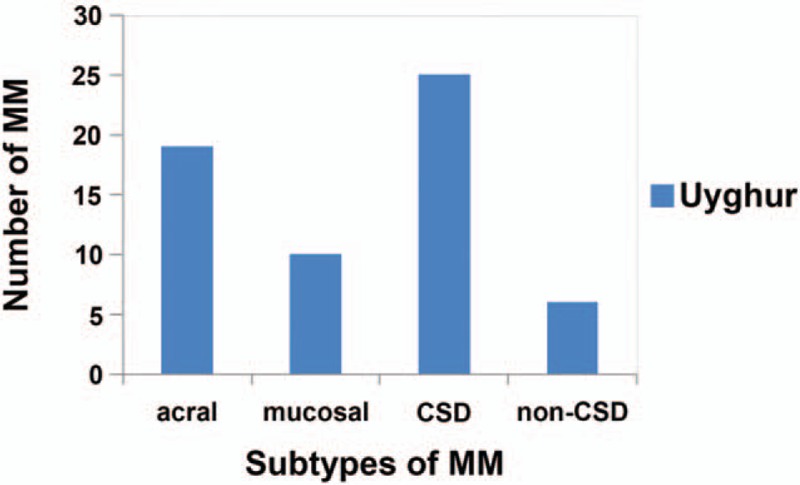
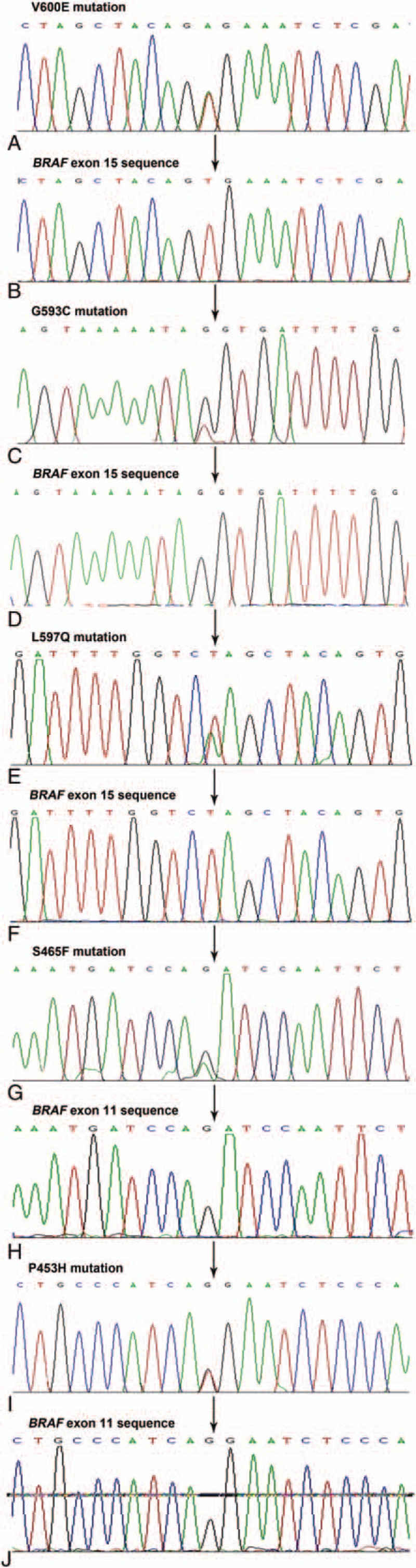
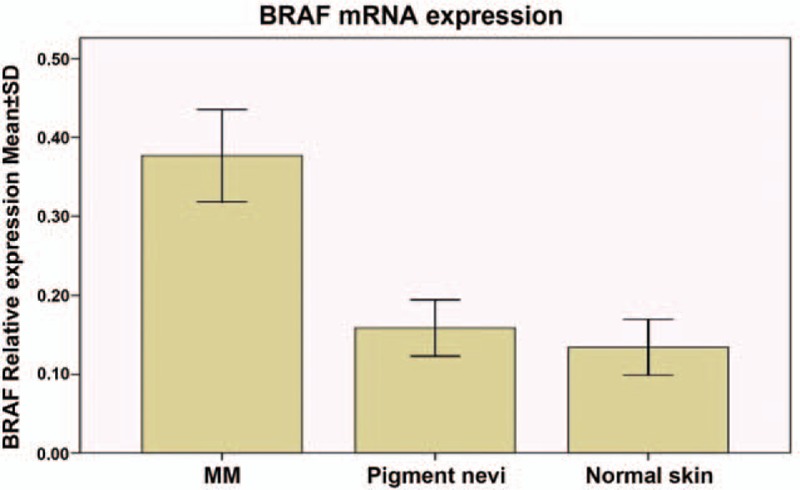
Malignant melanoma (MM) is a highly malignant melanocytic tumor, it occurs mostly in the skin, the mucous membrane close to the skin, but also in the tunicae rhagoides and the pia mater. The Uyghur is the largest ethnic group living in the Xinjiang Uyghur Autonomous Region of China, accounting for 46% of the total population of 20 million. Large-scale studies on MMs in Asian countries are limited. This study aimed to investigate BRAF mRNA expression and mutations in Chinese Uyghur patients with MMs and to identify the clinical features associated with these parameters.Formalin-fixed, paraffin wax-embedded tumor sections from 60 MMs were analyzed for BRAF expression using reverse transcription polymerase chain reaction (RT-PCR). Exons 11 and 15 of BRAF were analyzed for the presence of mutations using PCR and DNA sequencing. Sixty MMs were followed by mobile phone for survival analysis.BRAF mRNA expression was higher in MMs than in pigmented moles and normal skin tissues. Fourteen of 60 MMs had BRAF mutations. The frequency of BRAF mutations was significantly higher in patients younger than 60 years (10/28, 4/32, P = .02). A significant difference was observed in the frequency of BRAF mutations among specimens of mucosal, acral, chronic sun-induced damage (CSD), and non-CSD MMs (2/10, 3/19, 8/25, 1/6, P = .002). No significant association was found among BRAF mutations, sex, ulceration, or lymph node metastasis. MMs lymph node metastasis (hazard ratio 2.54 [95% confidence interval 1.062 - 6.066], P = .01) affected survival.This study indicated that BRAF mutations and expression might serve as independent adverse prognostic factors in melanoma.
Copyright © 2017 The Authors. Published by Wolters Kluwer Health, Inc. All rights reserved.
Conflict of interest statement
The authors state that they have no conflicts of interest.
Figures
References
-
- Curtin JA, Fridlyand J, Kageshita T, et al. Distinct sets of genetic alterations in melanoma. N Engl J Med 2005;353:2135–47. - PubMed
-
- Curtin JA, Busam K, Pinkel D, et al. Somatic activation of KIT in distinct subtypes of melanoma. J Clin Oncol 2006;24:4340–6. - PubMed
-
- Byrd-Miles K, Toombs EL, Peck GL. Skin cancer in individuals of African, Asian, Latin-American, and American-Indian descent: differences in incidence, clinical presentation, and survival compared to Caucasians. J Drugs Dermatol 2007;6:10–6. - PubMed
-
- Ishihara K, Saida T, Otsuka F, et al. Statistical profiles of malignant melanoma and other skin cancers in Japan: 2007 update. Int J Clin Oncol 2008;13:33–41. - PubMed
-
- Lang J, MacKie RM. Prevalence of exon 15 BRAF mutations in primary melanoma of the superficial spreading, nodular, acral, and lentigo maligna subtypes. J Invest Dermatol 2005;125:575–9. - PubMed
MeSH terms
Substances
LinkOut - more resources
Full Text Sources
Other Literature Sources
Medical
Research Materials
