


A case of an infant suspected as IMAGE syndrome who were finally diagnosed with MIRAGE syndrome by targeted Mendelian exome sequencing
- PMID: 29506479
- PMCID: PMC5836387
- DOI: 10.1186/s12881-018-0546-4
A case of an infant suspected as IMAGE syndrome who were finally diagnosed with MIRAGE syndrome by targeted Mendelian exome sequencing
Abstract
Background: Adrenal hypoplasia is a rare congenital disorder, which can be classified into a non-syndromic form, without extra-adrenal features, and a syndromic form, with such features. Despite biochemical and molecular genetic evaluation, etiologic diagnosis cannot be performed in many patients with adrenal hypoplasia.
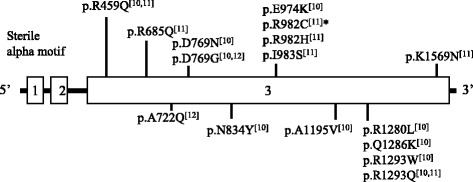
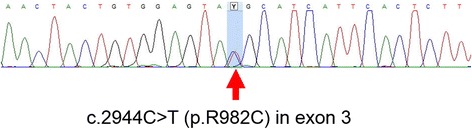
Case presentation: The patient in this case was a boy born at 31 weeks of gestation with a weight of 882 g (< 3rd percentile) to non-consanguineous parents. Genital examination showed micropenis and bilateral cryptorchidism. On the third day of life, he manifested hypotension with high urine output, hyponatremia, hyperkalemia, hypernatriuria, high plasma adrenocorticotropic hormone level, and high plasma renin activity, suggesting acute adrenal insufficiency. The serum 17α-hydroxyprogesterone level was normal. Adrenal insufficiency improved following administration of hydrocortisone and 9α-fludrocortisone, but the patient died of recurrent infection at 4 months of age. He was suspected as IMAGE (Intrauterine growth restriction, Metaphyseal dysplasia, Adrenal hypoplasia congenita, and Genital anomalies) syndrome. However, no mutation in CDKN1C was identified. Targeted exome sequencing using the TruSight One Sequencing Panel (Illumina) identified a heterozygous mutation of c.2944C > T (p.R982C) in exon 3 in SAMD9.
Conclusion: This report describes the first Korean case of MIRAGE syndrome. The patient presented with severe primary adrenal insufficiency, intrauterine growth retardation, and recurrent infection. SAMD9 mutation should be considered in patients who present with adrenal hypoplasia and extra-adrenal phenotypes.
Keywords: Congenital adrenal hypoplasia; MIRAGE syndrome; SAMD9.
Conflict of interest statement
Ethics approval and consent to participate
This study was approved by the Institutional Review Board and Ethics Committee of Asan Medical Center. Written, informed consent to participate was obtained for all participants, or their guardians, before blood samples were drawn.
Consent for publication
Written consent was obtained from the parents of patient for the publication, including child’s data.
Competing interests
The authors declare that they have no competing interests.
Publisher’s Note
Springer Nature remains neutral with regard to jurisdictional claims in published maps and institutional affiliations.
Figures
References
Publication types
MeSH terms
Substances
Supplementary concepts
LinkOut - more resources
Full Text Sources
Other Literature Sources
