


Promises and limitations of human intracranial electroencephalography
- PMID: 29507407
- PMCID: PMC6476542
- DOI: 10.1038/s41593-018-0108-2
Promises and limitations of human intracranial electroencephalography
Abstract
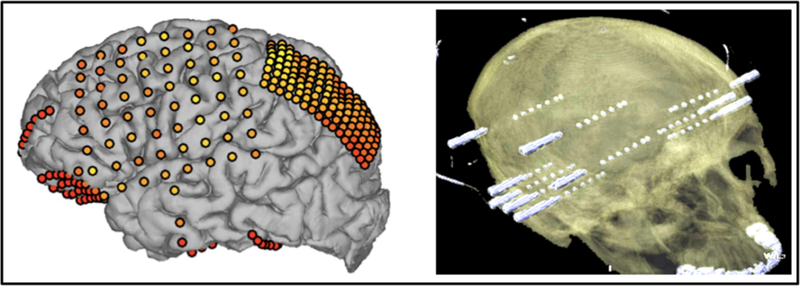
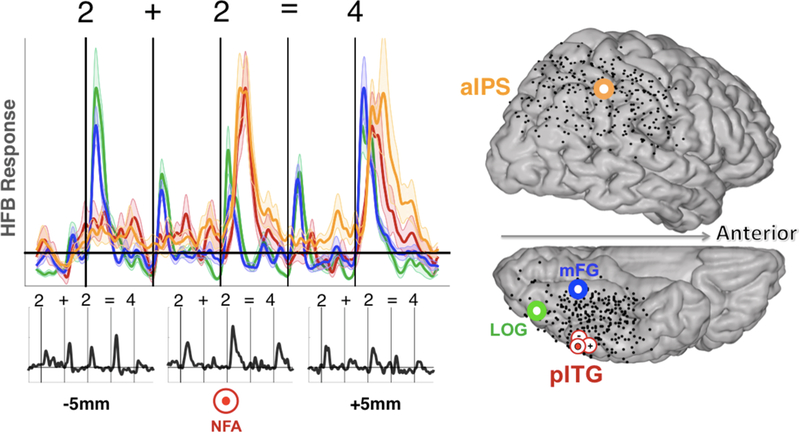
Intracranial electroencephalography (iEEG), also known as electrocorticography when using subdural grid electrodes or stereotactic EEG when using depth electrodes, is blossoming in various fields of human neuroscience. In this article, we highlight the potentials of iEEG in exploring functions of the human brain while also considering its limitations. The iEEG signal provides anatomically precise information about the selective engagement of neuronal populations at the millimeter scale and the temporal dynamics of their engagement at the millisecond scale. If several nodes of a given network are monitored simultaneously with implanted electrodes, the iEEG signals can also reveal information about functional interactions within and across networks during different stages of neural computation. As such, human iEEG can complement other methods of neuroscience beyond simply replicating what is already known, or can be known, from noninvasive lines of research in humans or from invasive recordings in nonhuman mammalian brains.
Figures
References
-
- Caton R The electric currents of the brain. . Br. Med. J. 2 (1875).
-
- Beck A Determination of Localization in the Brain and Spinal Cord by Means of Electrical Phenomena. Polsk Akad Um, 186–232 (1891).
-
- Berger H öber das Elektroenkephalogramm des Menschen. Archiv fÅr psychiatrie und Nervenkrankheiten 87, 527–570 (1929).
-
- Engel J Jr. Surgery for seizures. N. Engl. J. Med. 334, 647–652 (1996). - PubMed
Publication types
MeSH terms
Grants and funding
LinkOut - more resources
Full Text Sources
Other Literature Sources
Medical
Research Materials
