


Heterogeneous Effects of Birth Spacing on Neonatal Mortality Risks in Bangladesh
- PMID: 29508949
- PMCID: PMC5947260
- DOI: 10.1111/sifp.12048
Heterogeneous Effects of Birth Spacing on Neonatal Mortality Risks in Bangladesh
Abstract
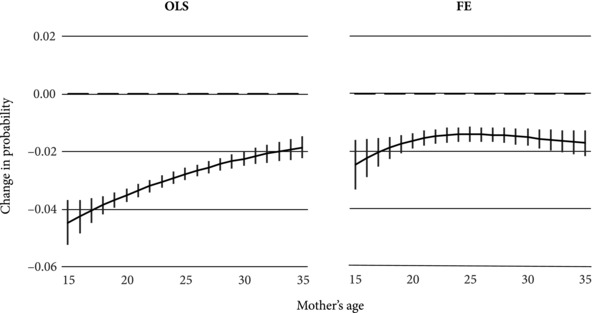
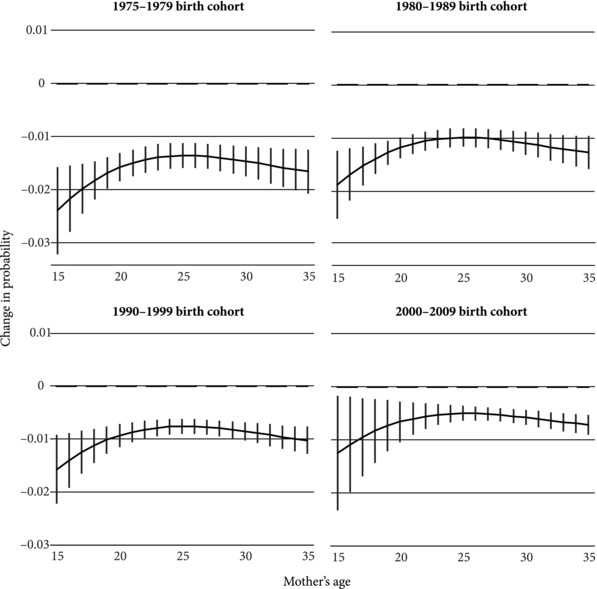
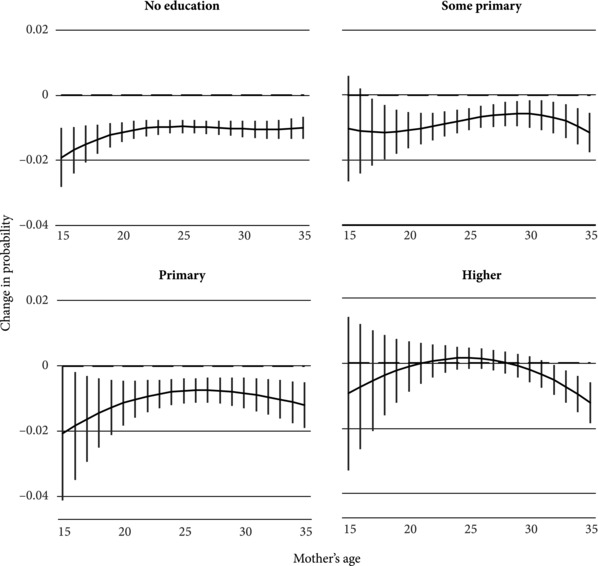
The negative relationship between birth interval length and neonatal mortality risks is well documented, but heterogeneity in this relationship has been largely ignored. Using the Bangladesh Maternal Mortality and Health Care Survey 2010, this study investigates how the effect of birth interval length on neonatal mortality risks varies by maternal age at birth and maternal education. There is significant variation in the effect of interval length on neonatal mortality along these dimensions. Young mothers and those with little education, both of which make up a large share of the Bangladeshi population, can disproportionately benefit from longer intervals. Because these results were obtained from within-family models, they are not due to unobservable heterogeneity between mothers. Targeting women with these characteristics may lead to significant improvements in neonatal mortality rates, but there are significant challenges in reaching them.
© 2018 The Population Council, Inc.
Figures
References
-
- Ahmed, Saifuddin et al. 2015. “The effect of integrating family planning with a maternal and newborn health program on postpartum contraceptive use and optimal birth spacing in rural Bangladesh,” Studies in Family Planning 46(3): 297–312. - PubMed
-
- Amin, Sajeda . 1997. “The poverty–purdah trap in rural Bangladesh: Implications for women's roles in the family,” Development and Change 28(2): 213–233.
-
- Bangladesh Bureau of Statistics . 2015. Report on Bangladesh sample Vital Statistics . Dhaka.
Publication types
MeSH terms
LinkOut - more resources
Full Text Sources
Other Literature Sources
