


A new measure of child vocal reciprocity in children with autism spectrum disorder
- PMID: 29509308
- PMCID: PMC6026061
- DOI: 10.1002/aur.1942
A new measure of child vocal reciprocity in children with autism spectrum disorder
Abstract
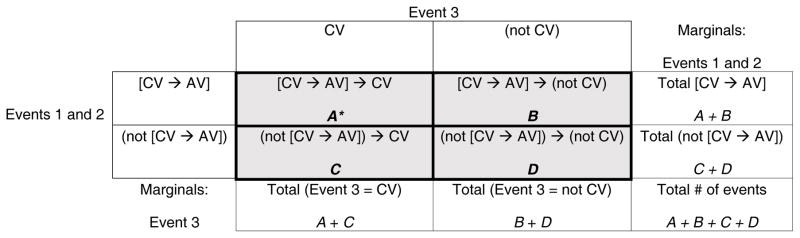
Children's vocal development occurs in the context of reciprocal exchanges with a communication partner who models "speechlike" productions. We propose a new measure of child vocal reciprocity, which we define as the degree to which an adult vocal response increases the probability of an immediately following child vocal response. Vocal reciprocity is likely to be associated with the speechlikeness of vocal communication in young children with autism spectrum disorder (ASD). Two studies were conducted to test the utility of the new measure. The first used simulated vocal samples with randomly sequenced child and adult vocalizations to test the accuracy of the proposed index of child vocal reciprocity. The second was an empirical study of 21 children with ASD who were preverbal or in the early stages of language development. Daylong vocal samples collected in the natural environment were computer analyzed to derive the proposed index of child vocal reciprocity, which was highly stable when derived from two daylong vocal samples and was associated with speechlikeness of vocal communication. This association was significant even when controlling for chance probability of child vocalizations to adult vocal responses, probability of adult vocalizations, or probability of child vocalizations. A valid measure of children's vocal reciprocity might eventually improve our ability to predict which children are on track to develop useful speech and/or are most likely to respond to language intervention. A link to a free, publicly-available software program to derive the new measure of child vocal reciprocity is provided. Autism Res 2018, 11: 903-915. © 2018 International Society for Autism Research, Wiley Periodicals, Inc.
Lay summary: Children and adults often engage in back-and-forth vocal exchanges. The extent to which they do so is believed to support children's early speech and language development. Two studies tested a new measure of child vocal reciprocity using computer-generated and real-life vocal samples of young children with autism collected in natural settings. The results provide initial evidence of accuracy, test-retest reliability, and validity of the new measure of child vocal reciprocity. A sound measure of children's vocal reciprocity might improve our ability to predict which children are on track to develop useful speech and/or are most likely to respond to language intervention. A free, publicly-available software program and manuals are provided.
Keywords: LENA; autism; automated vocal analysis; preschool; preverbal; reciprocity; vocalizations.
© 2018 International Society for Autism Research, Wiley Periodicals, Inc.
Figures
References
-
- American Psychiatric Association. Diagnostic and statistical manual of mental disorders. 4. Washington, DC: Author; 2000. text rev. ed.
-
- Bakeman R, Gottman JM. Observing interaction: An introduction to sequential analysis. Cambridge: Cambridge University Press; 1997.
-
- Baranek GT. Autism during infancy: A retrospective video analysis of sensory-motor and social behaviors at 9–12 months of age. Journal of Autism and Developmental Disorders. 1999;29:213–224. - PubMed
-
- Brundin K, Rödholm M, Larsson K. Vocal communication between parents and infants. Early Human Development. 1988;16:35–53. - PubMed
-
- Crocker L, Algina J. Introduction to classical and modern test theory. Fort Worth, TX: Harcourt; 1986.
Publication types
MeSH terms
Grants and funding
LinkOut - more resources
Full Text Sources
Other Literature Sources
Medical
