


Genomic risk variants at 3q22.3 are associated with keloids in a Chinese Han population
- PMID: 29511450
- PMCID: PMC5835821
Genomic risk variants at 3q22.3 are associated with keloids in a Chinese Han population
Abstract
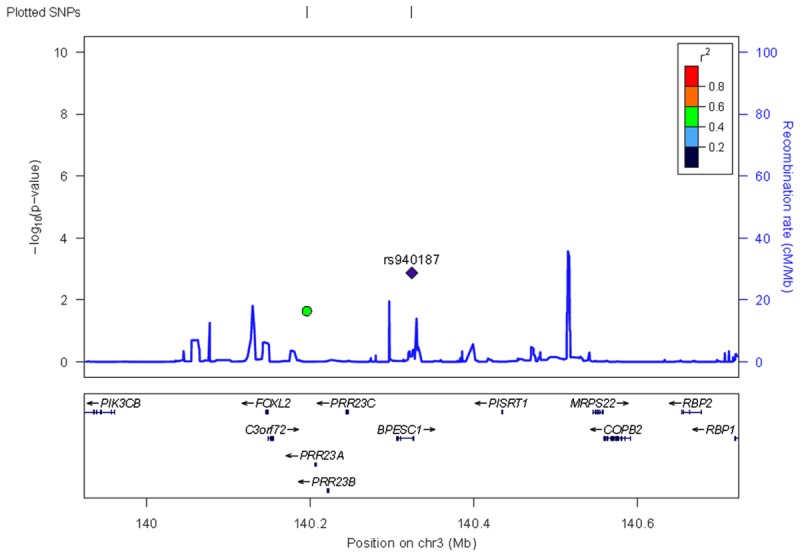
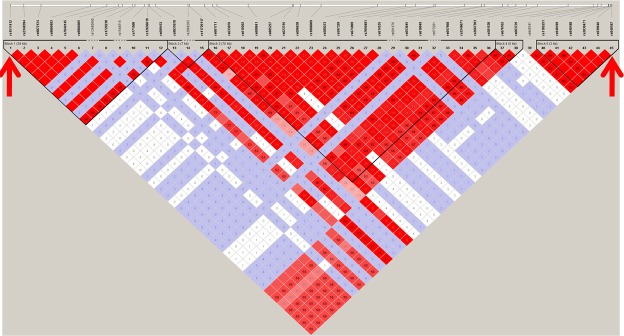
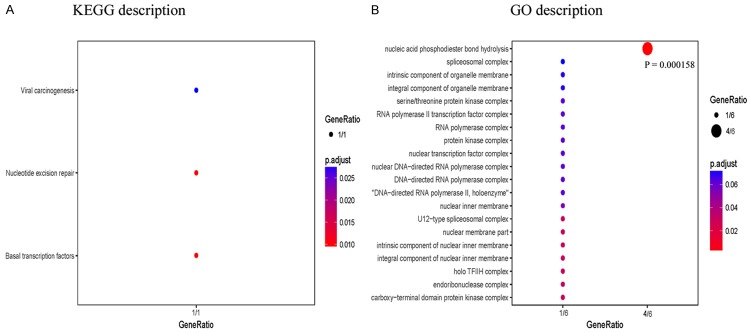
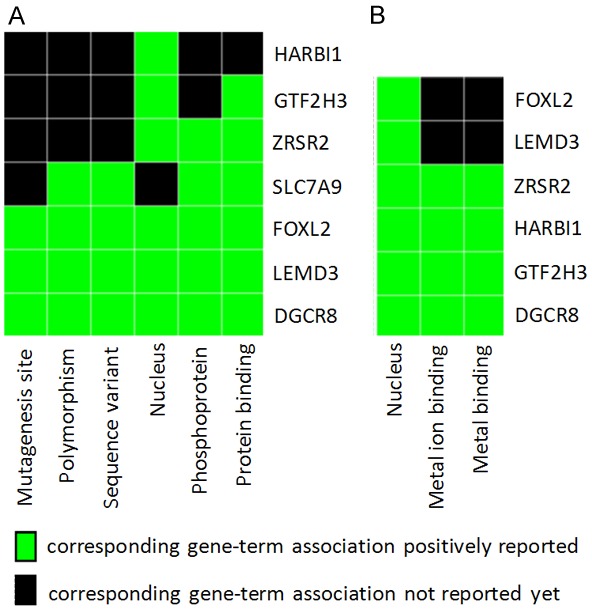
A keloid is the process of skin healing, collagen synthesis and metabolism of the loss of normal control in a sustained hyperactive state, resulting in excessive proliferation of collagen fibers. A large-scale genome-wide association study (GWAS) has identified multiple single nucleotide polymorphisms (SNPs) in the 3q22.3 loci that are associated with keloids in a Japanese population. However, the associations of SNPs in 3q22.3 with keloids were not confirmed in a selected Chinese population by a replication study. Thus, in the present study, the relationships between keloids and 3q22.3 were assessed in another independent Chinese Han population, including 309 keloid patients and 1080 control subjects. The results displayed that rs940187 was associated with keloids (OR=1.88, 95% CI 1.27-2.78, P=1.35E-3) and remained significant after Bonferroni's correction for multiple testing, while rs1511412 showed only a trend association (OR=2.23, 95% CI 1.09-4.55, P=0.02) with keloids. In addition, we subsequently checked the annotation datasets for rs940187 with eQTLs and obtained two hits, trans-proteins SLC7A9 and LEMD3, with significant P values less than 1e-4. In summary, genomic risk variants at 3q22.3 are associated with keloids in a Chinese Han population and contribute to the development and deterioration of the keloids, together with environmental factors.
Keywords: Keloids; SNP; association.
Conflict of interest statement
None.
Figures
References
-
- Thompson LD. Skin keloid. Ear Nose Throat J. 2004;83:519. - PubMed
-
- Rockwell WB, Cohen IK, Ehrlich HP. Keloids and hypertrophic scars: a comprehensive review. Plast Reconstr Surg. 1989;84:827–837. - PubMed
-
- Sobanko JF, Sarwer DB, Zvargulis Z, Miller CJ. Importance of physical appearance in patients with skin cancer. Dermatol Surg. 2015;41:183–188. - PubMed
-
- Lu WS, Zheng XD, Yao XH, Zhang LF. Clinical and epidemiological analysis of keloids in Chinese patients. Arch Dermatol Res. 2015;307:109–114. - PubMed
LinkOut - more resources
Full Text Sources
Miscellaneous