


Evaluation of Cerebral White Matter in Prelingually Deaf Children Using Diffusion Tensor Imaging
- PMID: 29511689
- PMCID: PMC5817214
- DOI: 10.1155/2018/6795397
Evaluation of Cerebral White Matter in Prelingually Deaf Children Using Diffusion Tensor Imaging
Abstract
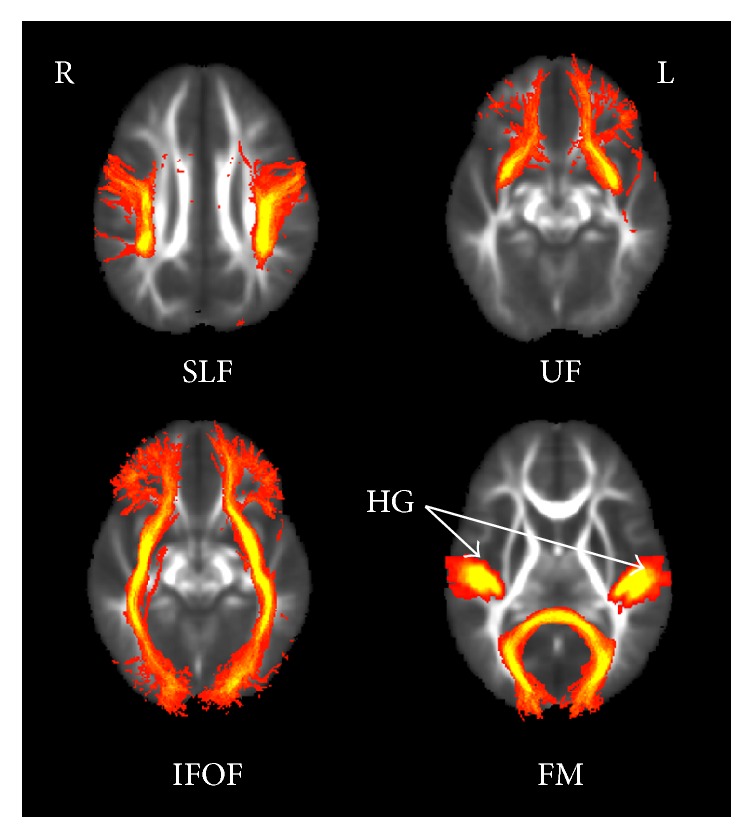
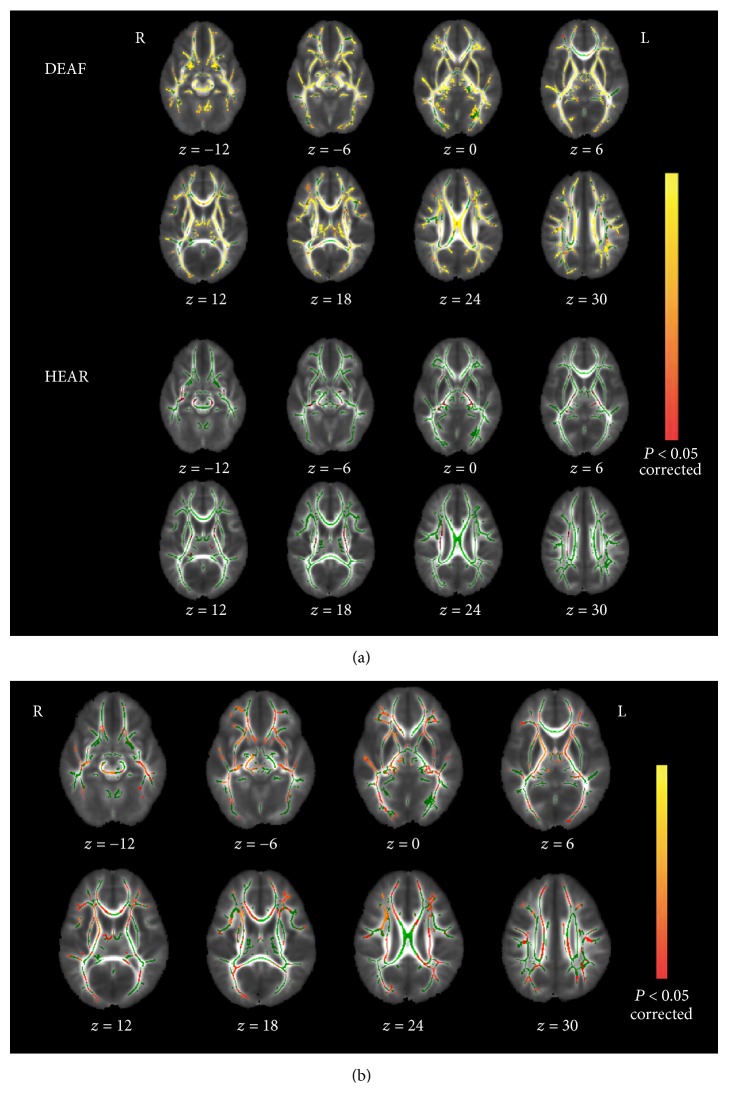
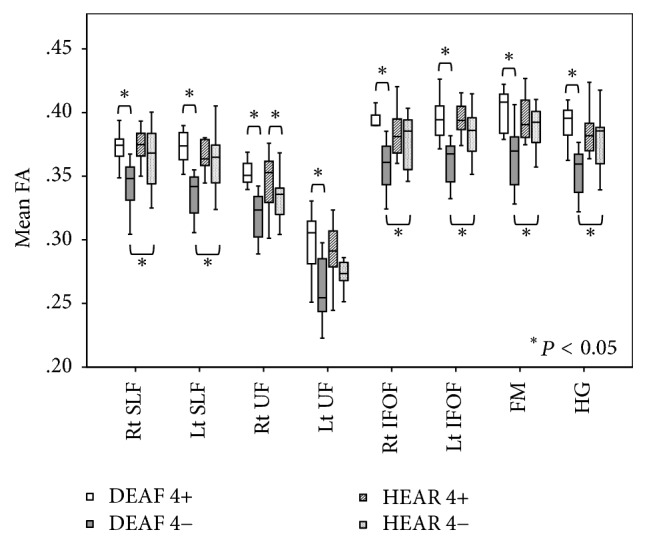
This study compared white matter development in prelingually deaf and normal-hearing children using a tract-based spatial statistics (TBSS) method. Diffusion tensor imaging (DTI) was performed in 21 prelingually deaf (DEAF group) and 20 normal-hearing (HEAR group) subjects aged from 1.7 to 7.7 years. Using TBSS, we evaluated the regions of significant difference in fractional anisotropy (FA) between the groups. Correlations between FA values and age in each group were also analyzed using voxel-wise correlation analyses on the TBSS skeleton. Lower FA values of the white matter tract of Heschl's gyrus, the inferior frontooccipital fasciculus, the uncinate fasciculus, the superior longitudinal fasciculus, and the forceps major were evident in the DEAF group compared with those in the HEAR group below 4 years of age, while the difference was not significant in older subjects. We also found that age-related development of the white matter tracts may continue until 8 years of age in deaf children. These results imply that development of the cerebral white matter tracts is delayed in prelingually deaf children.
Figures
References
-
- Campbell R., Macsweeney M., Woll B. Cochlear implantation (CI) for prelingual deafness: the relevance of studies of brain organization and the role of first language acquisition in considering outcome success. Frontiers in Human Neuroscience. 2014;8, article no. 834 doi: 10.3389/fnhum.2014.00834. - DOI - PMC - PubMed
-
- Nadol J. B. J. R., Shiao J. Y., Burgess B. J., et al. Histopathology of cochlear implants in humans. Ann Otol Rhinol Laryngol. 2001;110(9):883–891. - PubMed
MeSH terms
LinkOut - more resources
Full Text Sources
Other Literature Sources
Medical
