


Individual differences in regulatory mode moderate the effectiveness of a pilot mHealth trial for diabetes management among older veterans
- PMID: 29513683
- PMCID: PMC5841664
- DOI: 10.1371/journal.pone.0192807
Individual differences in regulatory mode moderate the effectiveness of a pilot mHealth trial for diabetes management among older veterans
Abstract
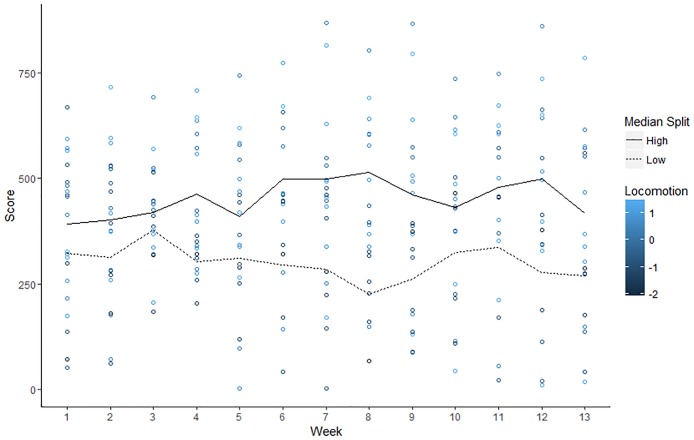
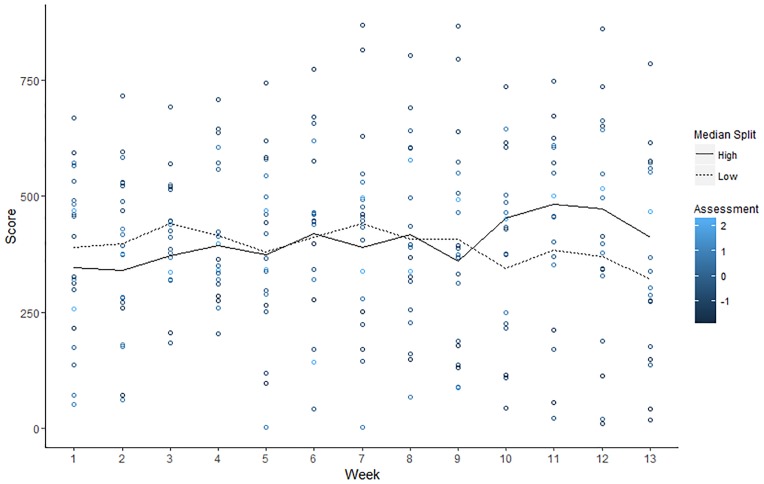
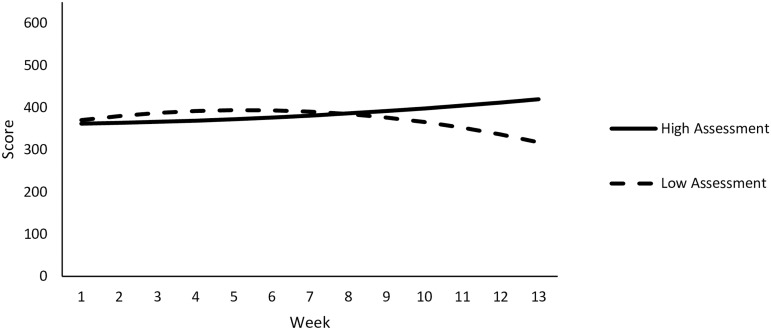
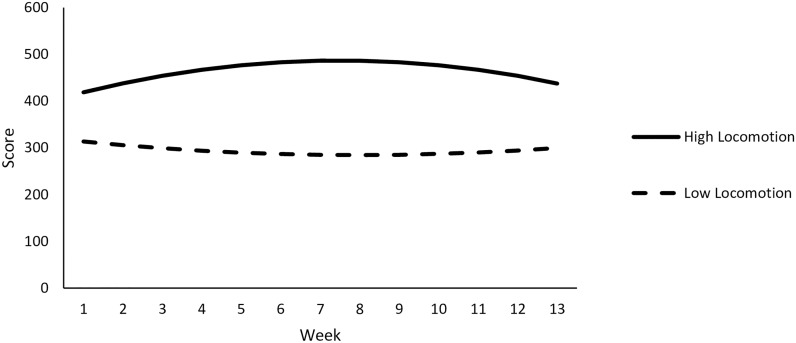
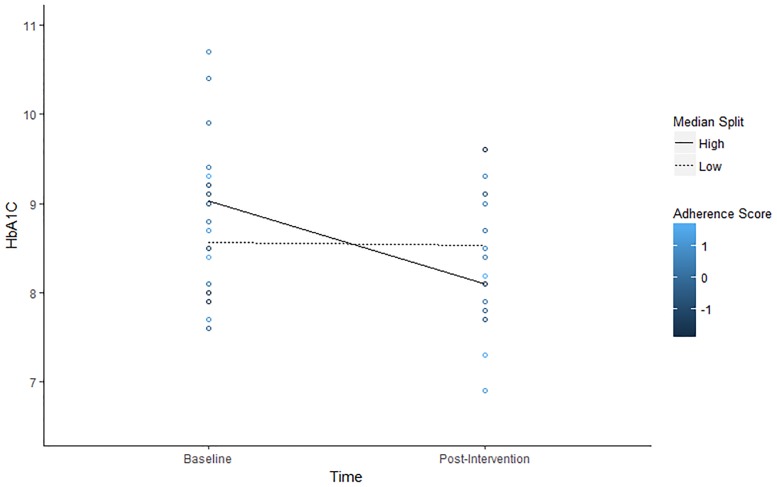
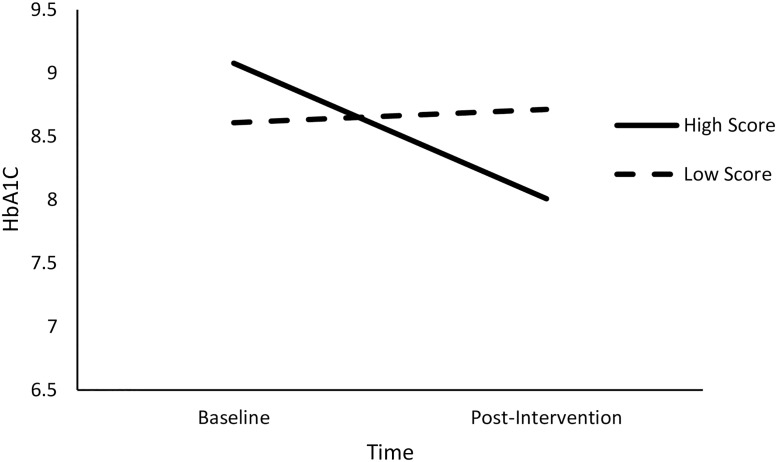
mHealth tools to help people manage chronic illnesses have surged in popularity, but evidence of their effectiveness remains mixed. The aim of this study was to address a gap in the mHealth and health psychology literatures by investigating how individual differences in psychological traits are associated with mHealth effectiveness. Drawing from regulatory mode theory, we tested the role of locomotion and assessment in explaining why mHealth tools are effective for some but not everyone. A 13-week pilot study investigated the effectiveness of an mHealth app in improving health behaviors among older veterans (n = 27) with poorly controlled Type 2 diabetes. We developed a gamified mHealth tool (DiaSocial) aimed at encouraging tracking of glucose control, exercise, nutrition, and medication adherence. Important individual differences in longitudinal trends of adherence, operationalized as points earned for healthy behavior, over the course of the 13-week study period were found. Specifically, low locomotion was associated with unchanging levels of adherence during the course of the study. In contrast, high locomotion was associated with generally stronger adherence although it exhibited a quadratic longitudinal trend. In addition, high assessment was associated with a marginal, positive trend in adherence over time while low assessment was associated with a marginal, negative trend. Next, we examined the relationship between greater adherence and improved clinical outcomes, finding that greater adherence was associated with greater reductions in glycated hemoglobin (HbA1c) levels. Findings from the pilot study suggest that mHealth technologies can help older adults improve their diabetes management, but a "one size fits all" approach may yield suboptimal outcomes.
Conflict of interest statement
Figures
References
-
- Centers of Disease Control and Prevention. National diabetes statistics report: Estimates of diabetes and its burden in the United States, 2014. 2014; http://www.cdc.gov/diabetes/pubs/statsreport14/national-diabetes-report-...
-
- Ahola AJ and Groop PH. Barriers to self-management of diabetes. Diabet Med. 2013;30: 413–420. doi: 10.1111/dme.12105 - DOI - PubMed
-
- Jerant AF, von Friederichs-Fitzwater MM, Moore M. Patients’ perceived barriers to active self-management of chronic conditions. Patient Educ Couns. 2005;57: 300–307. doi: 10.1016/j.pec.2004.08.004 - DOI - PubMed
-
- Kaplan RM, Stone AA. Bringing the laboratory and clinic to the community: mobile technologies for health promotion and disease prevention. Annu Rev Psychol. 2013;64: 471–498. doi: 10.1146/annurev-psych-113011-143736 - DOI - PubMed
-
- Vigersky RA. An overview of management issues in adult patients with type 2 diabetes mellitus. J Diabetes Sci Technol. 2011;5: 245–250. doi: 10.1177/193229681100500207 - DOI - PMC - PubMed
Publication types
MeSH terms
Substances
Grants and funding
LinkOut - more resources
Full Text Sources
Other Literature Sources
Medical
Miscellaneous
