


In ovo CpG DNA delivery increases innate and adaptive immune cells in respiratory, gastrointestinal and immune systems post-hatch correlating with lower infectious laryngotracheitis virus infection
- PMID: 29513732
- PMCID: PMC5841808
- DOI: 10.1371/journal.pone.0193964
In ovo CpG DNA delivery increases innate and adaptive immune cells in respiratory, gastrointestinal and immune systems post-hatch correlating with lower infectious laryngotracheitis virus infection
Abstract
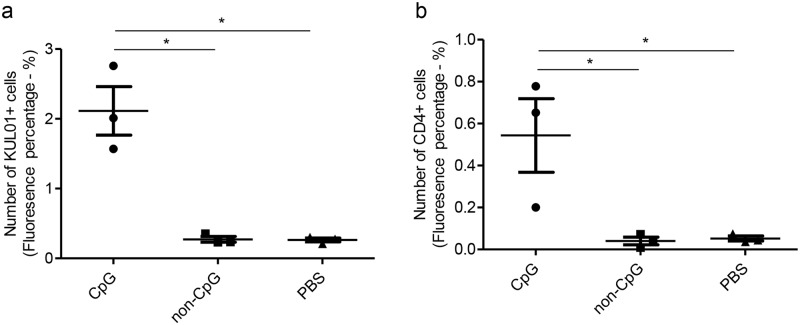
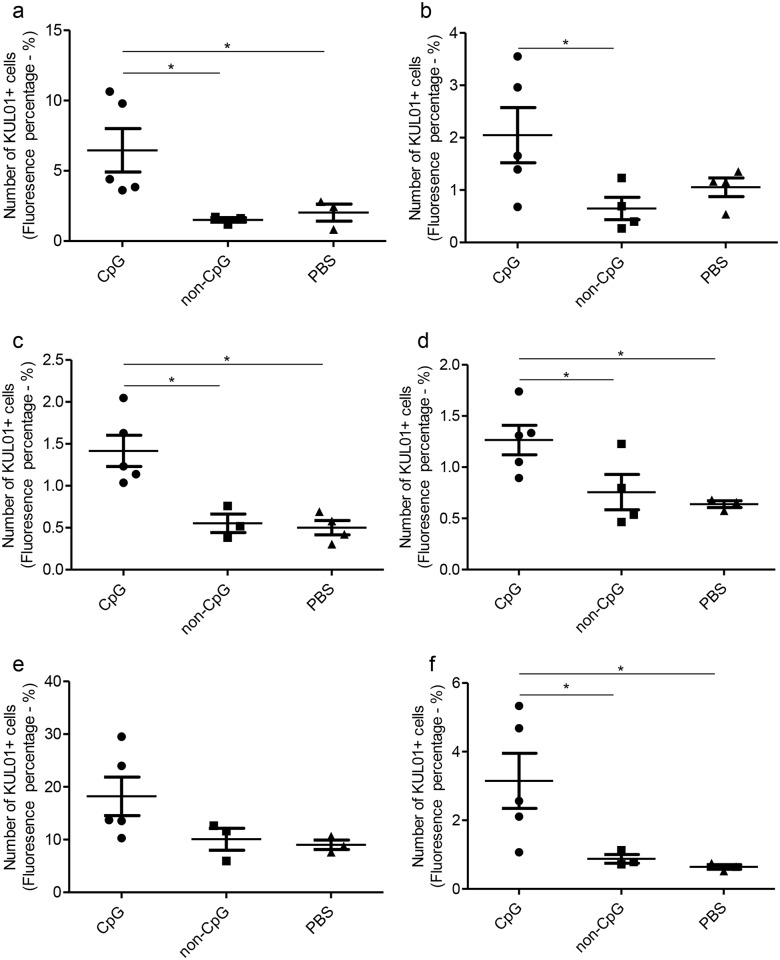
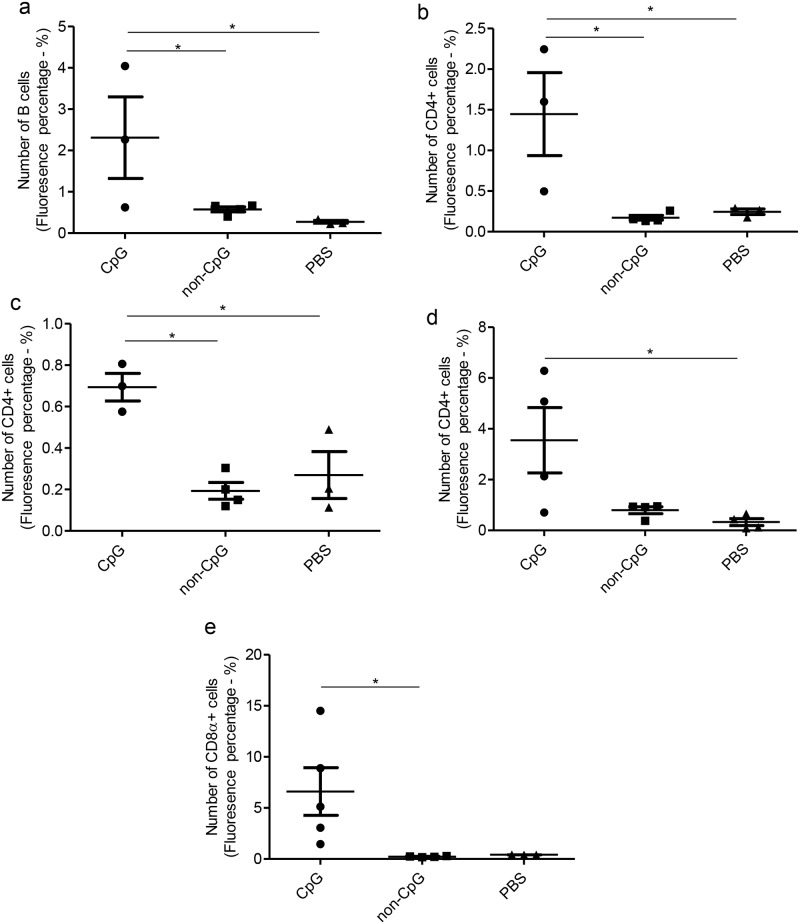
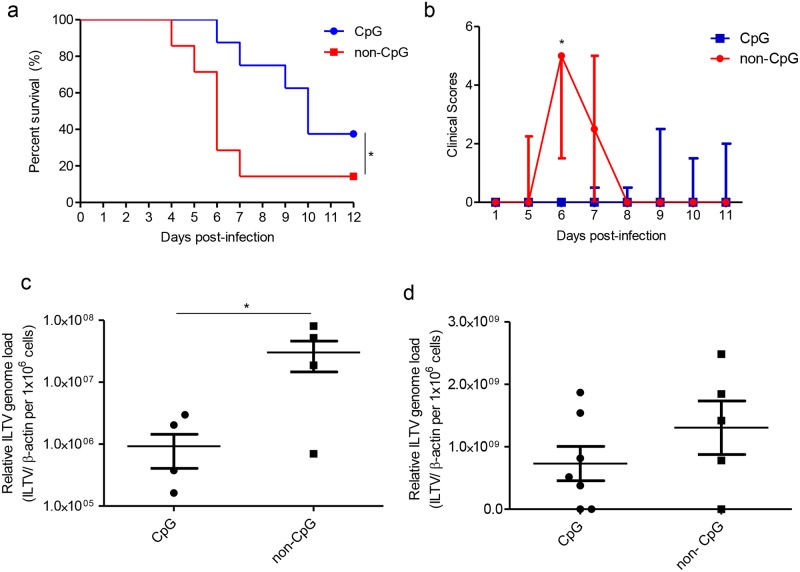
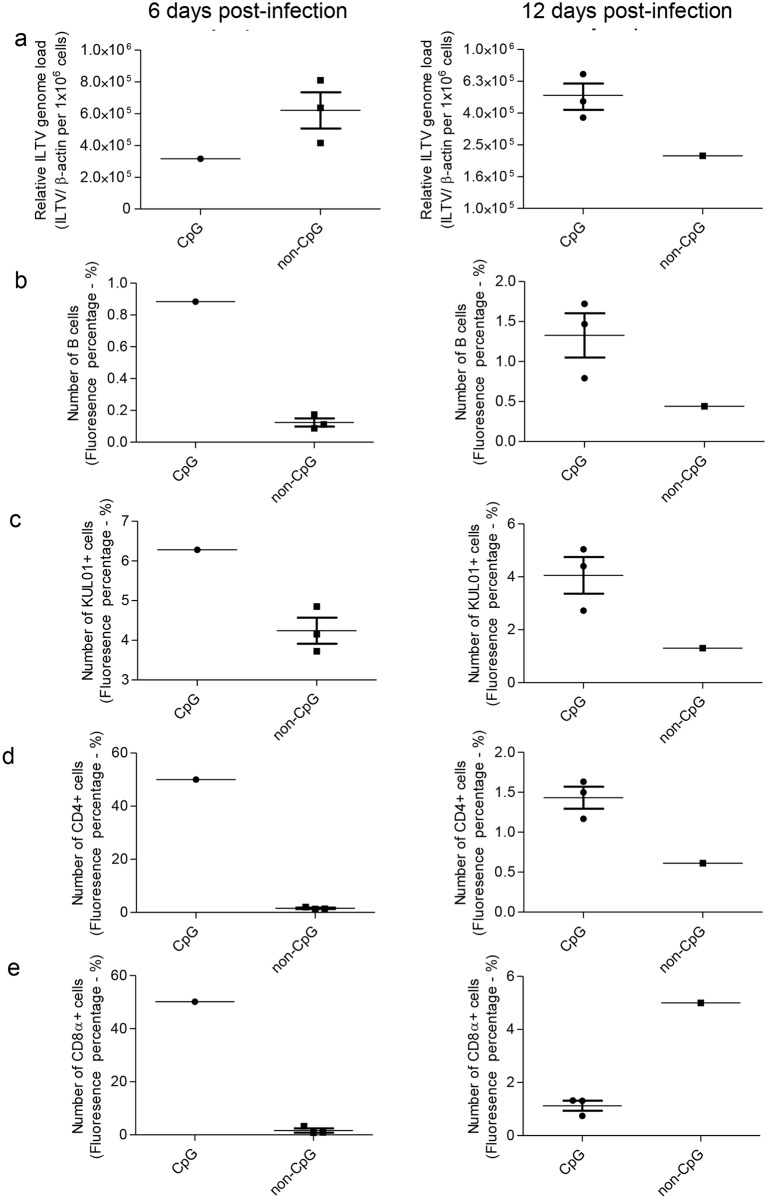
Cytosine-guanosine deoxynucleotides (CpG) DNA can be delivered in ovo at embryo day (ED)18 for the stimulation of toll-like receptor (TLR)21 signaling pathway that ultimately protects chickens against a number of bacterial and viral infections. There is a dearth of information understanding the mechanisms of protection induced by in ovo delivered CpG DNA. The objective of this study was to determine the immune cell changes post-hatch following in ovo delivery of the TLR21 ligand, CpG DNA. In order to quantify changes of percentage of KUL01+, IgM+ B, cluster of differentiation (CD)4+ and CD8α+ cells, trachea, lung, duodenum, large intestine, spleen and bursa of Fabricius were collected on day 1 post-hatch. We found increased recruitments of KUL01+ cells, in organs of these body systems post-hatch following in ovo delivery of CpG DNA. Although IgM+ B cells, CD4+ and CD8α+ cells were increased in lungs and immune system organs, these cells were not quantifiable from the trachea, duodenum and large intestine immediately following the hatch. Furthermore, when CpG DNA is delivered in ovo and subsequently infected with infectious laryngotracheitis virus (ILTV) post-hatch on day 1, CpG DNA reduces morbidity and mortality resulting from ILTV infection. This study provides insights into the mechanisms of host responses elicited following in ovo delivery of CpG DNA in avian species.
Conflict of interest statement
Figures
References
-
- Bode C, Zhao G, Steinhagen F, Kinjo T, Klinman DM. CpG DNA as a vaccine adjuvant. Expert review of vaccines. 2011;10(4):499–511. Epub 2011/04/22. doi: 10.1586/erv.10.174 . - DOI - PMC - PubMed
-
- Dalpke AH, Heeg K. CpG-DNA as immune response modifier. International journal of medical microbiology: IJMM. 2004;294(5):345–54. Epub 2004/11/10. doi: 10.1016/j.ijmm.2004.07.005 . - DOI - PubMed
-
- Krieg AM. Therapeutic potential of Toll-like receptor 9 activation. Nature reviews Drug discovery. 2006;5(6):471–84. Epub 2006/06/10. doi: 10.1038/nrd2059 . - DOI - PubMed
-
- Krieg AM, Yi AK, Matson S, Waldschmidt TJ, Bishop GA, Teasdale R, et al. CpG motifs in bacterial DNA trigger direct B-cell activation. Nature. 1995;374(6522):546–9. Epub 1995/04/06. doi: 10.1038/374546a0 . - DOI - PubMed
-
- Brownlie R, Zhu J, Allan B, Mutwiri GK, Babiuk LA, Potter A, et al. Chicken TLR21 acts as a functional homologue to mammalian TLR9 in the recognition of CpG oligodeoxynucleotides. Molecular immunology. 2009;46(15):3163–70. Epub 2009/07/04. doi: 10.1016/j.molimm.2009.06.002 . - DOI - PubMed
Publication types
MeSH terms
Substances
LinkOut - more resources
Full Text Sources
Other Literature Sources
Medical
Research Materials
