


CTX-M ESBL-producing Enterobacteriaceae: estimated prevalence in adults in England in 2014
- PMID: 29514211
- PMCID: PMC5909627
- DOI: 10.1093/jac/dky007
CTX-M ESBL-producing Enterobacteriaceae: estimated prevalence in adults in England in 2014
Abstract
Background: ESBL-producing Enterobacteriaceae (ESBLPE) are increasing in prevalence worldwide and are more difficult to treat than non-ESBLPE. Their prevalence in the UK general population is unknown, as the only previous UK ESBLPE faecal colonization study involved patients with diarrhoea.
Objectives: To estimate the prevalence of CTX-M ESBLPE faecal colonization in the general adult population of England in 2014, and investigate risk factors.
Methods: A stratified random sample of 58 337 registered patients from 16 general practices within four areas of England were invited to participate by returning faeces specimens and self-completed questionnaires. Specimens were tested for ESBLPE and carbapenemase-producing Enterobacteriaceae (CPE).
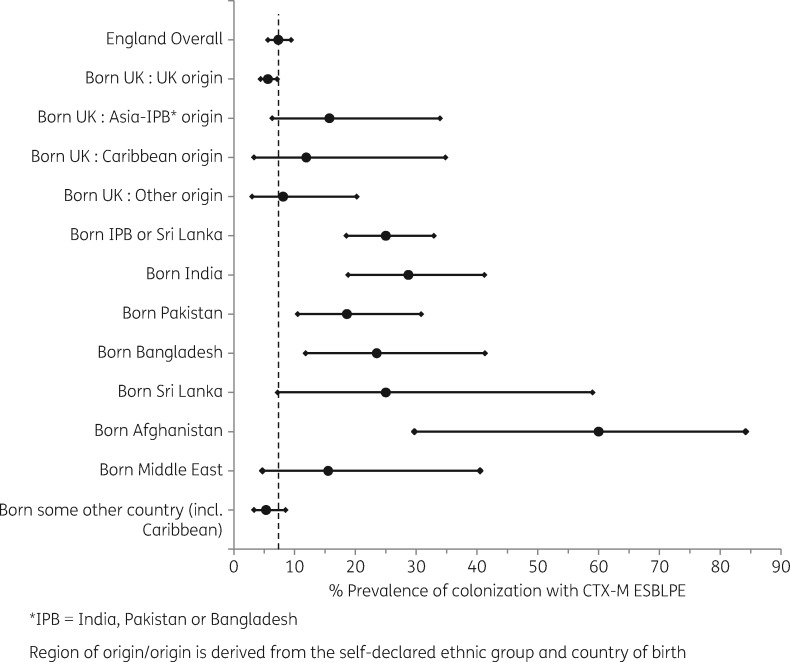
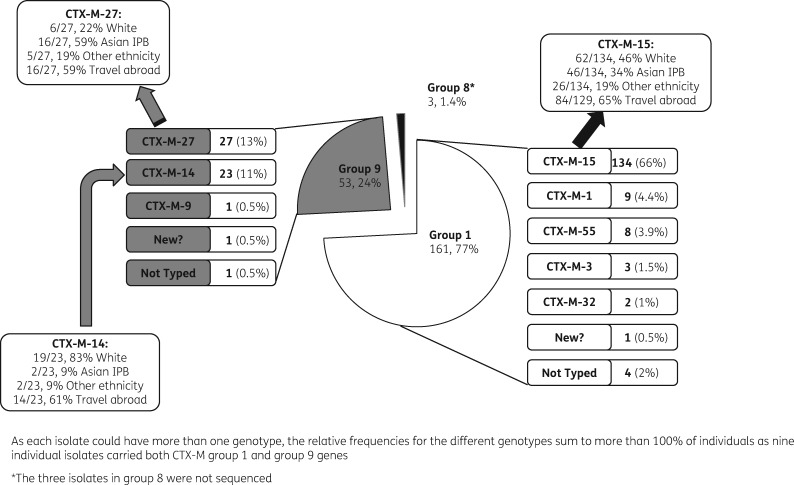
Results: 2430 individuals participated (4% of those invited). The estimated prevalence of colonization with CTX-M ESBLPE in England was 7.3% (95% CI 5.6%-9.4%) (Shropshire 774 participants, 4.9% colonization; Southampton City 740 participants, 9.2%; Newham 612 participants, 12.7%; Heart of Birmingham 234 individuals, 16.0%) and was particularly high in: those born in Afghanistan (10 participants, 60.0% colonization, 95% CI 29.7%-84.2%); those born on the Indian subcontinent (India, Pakistan, Bangladesh or Sri Lanka) (259 participants, 25.0% colonization, 95% CI 18.5%-32.9%); travellers to South Asia (India, Pakistan, Bangladesh, Sri Lanka or Nepal) in the last year (140 participants, 38.5% colonization, 95% CI 27.8%-50.5%); and healthcare domestics (8 participants, unweighted 37.5% colonization, 95% CI 8.5%-75.5%). Risk factors identified included: being born in the Indian subcontinent (aOR 5.4, 95% CI 3.0-9.7); travel to South Asia (aOR 2.9, 95% CI 1.8-4.8) or to Africa, China, South or Central America, South East or Pacific Asia or Afghanistan (aOR 2.6, 95% CI 1.7-4.1) in the last year; and working as a healthcare domestic (aOR 6.2, 95% CI 1.3-31). None of the 48 participants who took co-amoxiclav in the last year was colonized with CTX-M ESBLPE. blaCTX-M-15 accounted for 66% of CTX-M ESBLPE positives. 0.1% (two participants) were colonized with CPE.
Conclusions: CTX-M ESBLPE are established in the general population in England and prevalence is particularly high in people from certain countries of birth or with recent travel. We recommend that these findings be taken into account in guidance on the empirical management of patients presenting with a likely Enterobacteriaceae infection.
Figures
References
-
- Hawkey P, Jones A.. The changing epidemiology of resistance. J Antimicrob Chemother 2009; 64 Suppl 1: i3–10. - PubMed
-
- Horner C, Fawley W, Morris K. et al. Escherichia coli bacteraemia: 2 years of prospective regional surveillance (2010-12). J Antimicrob Chemother 2014; 69: 91–100. - PubMed
-
- Ironmonger D, Edeghere O, Bains A. et al. Surveillance of antibiotic susceptibility of urinary tract pathogens for a population of 5.6 million over 4 years. J Antimicrob Chemother 2015; 70: 1744–50. - PubMed
Publication types
MeSH terms
Substances
LinkOut - more resources
Full Text Sources
Other Literature Sources
Medical
Research Materials
Miscellaneous
