


Early-career researchers' views on ethical dimensions of patient engagement in research
- PMID: 29514618
- PMCID: PMC5842523
- DOI: 10.1186/s12910-018-0260-y
Early-career researchers' views on ethical dimensions of patient engagement in research
Abstract
Background: Increasing attention and efforts are being put towards engaging patients in health research, and some have even argued that patient engagement in research (PER) is an ethical imperative. Yet there is relatively little empirical data on ethical issues associated with PER.
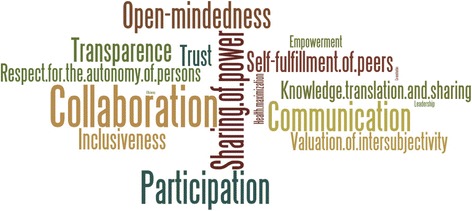
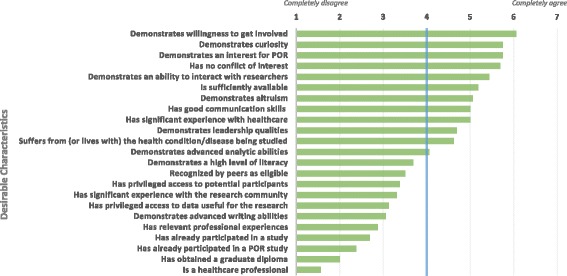
Methods: A three-round Delphi survey was conducted with a panel of early-career researchers (ECRs) involved in PER. One of the objectives was to examine the ethical dimensions of PER as well as ECRs' self-perceived level of preparedness to conduct PER ethically. The study was conducted among awardees of the Québec SPOR-SUPPORT Unit in Canada, who represent the next generation of researchers involved in PER. Many themes were addressed throughout the study, such as definition, values, patients' roles, expected characteristics of patients, and anticipated challenges (including ethical issues). Open-ended questions were used, and all quantitative data were collected through statements using 7-point Likert scales.
Results: Between April and November 2016, 25 ECRs were invited to participate; 18 completed both the first and second rounds, and 16 completed the third round. Panelists consisted of nine women and seven men with various backgrounds (general practitioners and postgraduate students). The majority were between 25 and 44 years old. Panelists' responses showed PER raises important ethical issues: 1) professionalization of patients involved in research (with risks of patients becoming less representative); 2) adequate remuneration of patients; 3) fair recognition of patients' experiential knowledge; and 4) tokenism (engaging patients only for symbolic appeal). While the panelists felt moderately prepared to confront these ethical issues, they reported being uncomfortable applying for an ethics certificate for a PER project.
Conclusion: If PER is an ethical imperative, it is vital to establish clear ethical standards and to train and support the PER community to identify and resolve ethical issues. Despite their overall readiness to conduct PER, panelists did not feel adequately prepared to address many of these issues. It is not easy for ECRs to reconcile ethical desiderata and logistical imperatives. Additional research should focus on supporting the responsible conduct of PER, which, if not done, can undermine the credibility and feasibility of the entire PER enterprise.
Keywords: Authorship; Ethical aspects; Ethical preparedness; Patient engagement; Patient-centered outcomes; Patient-oriented research; Tokenism.
Conflict of interest statement
Ethics approval and consent to participate
Ethics approval was obtained through the University of Montreal Health Research Ethics Committee (#16–044-CERES-D) and an electronic informed consent was obtained from the participants.
Consent for publication
Not applicable.
Competing interests
The authors declare that they have no competing interests.
Publisher’s Note
Springer Nature remains neutral with regard to jurisdictional claims in published maps and institutional affiliations.
Figures
References
-
- Ward PR, Thompson J, Barber R, Armitage CJ, Boote JD, Cooper CL, et al. Critical perspectives on ‘consumer involvement’ in health research: epistomological dissonance and the know-do gap. J Sociol. 2009;46:63–82. doi: 10.1177/1440783309351771. - DOI
Publication types
MeSH terms
Grants and funding
LinkOut - more resources
Full Text Sources
Other Literature Sources
Miscellaneous
