


Assembly and regulation of γ-tubulin complexes
- PMID: 29514869
- PMCID: PMC5881034
- DOI: 10.1098/rsob.170266
Assembly and regulation of γ-tubulin complexes
Abstract
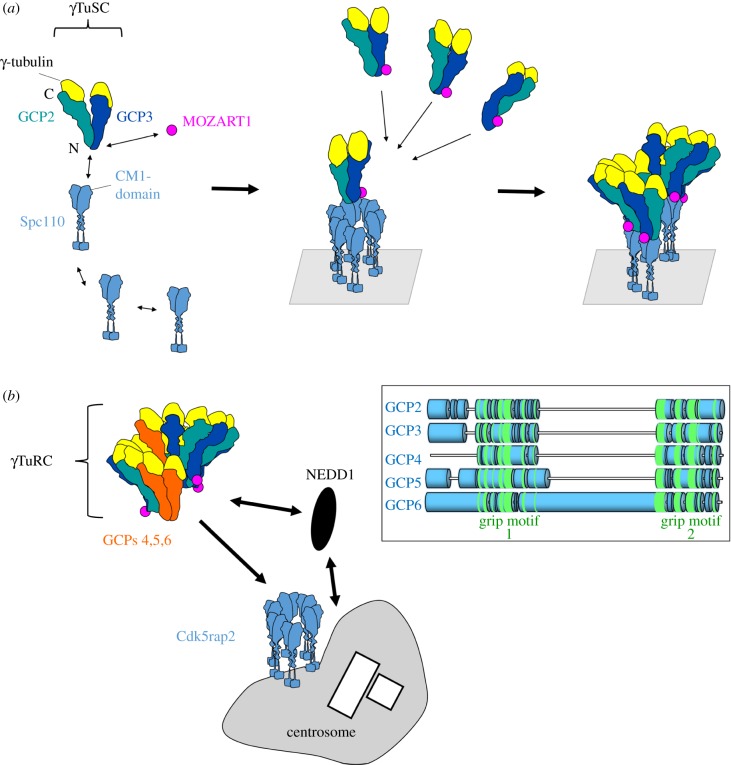
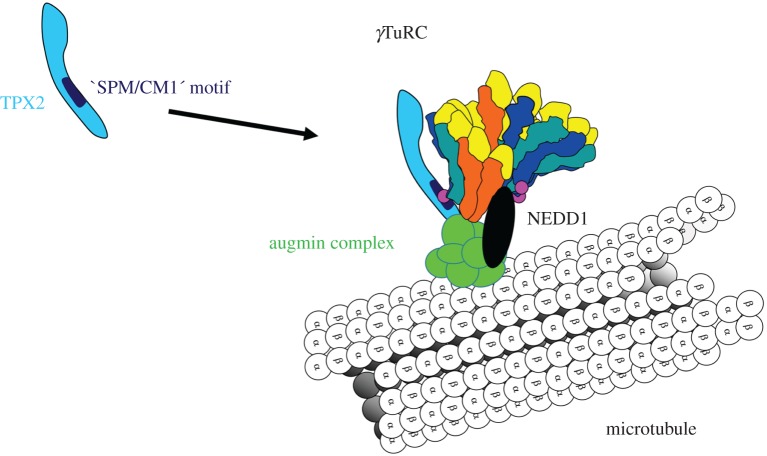
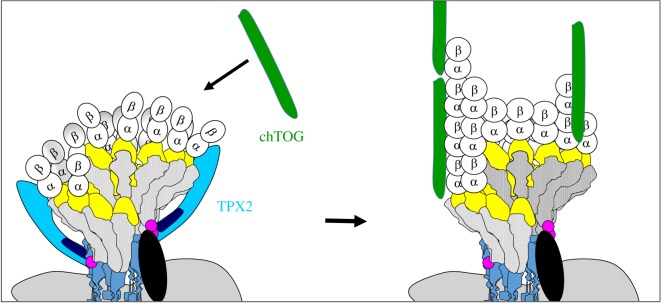
Microtubules are major constituents of the cytoskeleton in all eukaryotic cells. They are essential for chromosome segregation during cell division, for directional intracellular transport and for building specialized cellular structures such as cilia or flagella. Their assembly has to be controlled spatially and temporally. For this, the cell uses multiprotein complexes containing γ-tubulin. γ-Tubulin has been found in two different types of complexes, γ-tubulin small complexes and γ-tubulin ring complexes. Binding to adaptors and activator proteins transforms these complexes into structural templates that drive the nucleation of new microtubules in a highly controlled manner. This review discusses recent advances on the mechanisms of assembly, recruitment and activation of γ-tubulin complexes at microtubule-organizing centres.
Keywords: CM1 proteins; centrosome; gamma-tubulin; gamma-tubulin complex proteins; microtubule nucleation; microtubule-organizing centres.
© 2018 The Authors.
Conflict of interest statement
We declare we have no competing interests.
Figures
References
-
- Weisenberg RC. 1972. Microtubule formation in vitro in solutions containing low calcium concentrations. Science 177, 1104–1105. (doi:10.1126/science.177.4054.1104) - DOI - PubMed
-
- Gard DL, Kirschner MW. 1987. Microtubule assembly in cytoplasmic extracts of Xenopus oocytes and eggs. J. Cell Biol. 105, 2191–2201. (doi:10.1083/jcb.105.5.2191) - DOI - PMC - PubMed
-
- Kollman JM, Merdes A, Mourey L, Agard DA. 2011. Microtubule nucleation by γ-tubulin complexes. Nat. Rev. Mol. Cell Biol. 12, 709–721. (doi:10.1038/nrm3209) - DOI - PMC - PubMed
-
- Strome S, Powers J, Dunn M, Reese K, Malone CJ, White J, Seydoux G, Saxton W. 2001. Spindle dynamics and the role of γ-tubulin in early Caenorhabditis elegans embryos. Mol. Biol. Cell 12, 1751–1764. (doi:10.1091/mbc.12.6.1751) - DOI - PMC - PubMed
-
- Hannak E, Oegema K, Kirkham M, Gönczy P, Habermann B, Hyman AA. 2002. The kinetically dominant assembly pathway for centrosomal asters in Caenorhabditis elegans is γ-tubulin dependent. J. Cell Biol. 157, 591–602. (doi:10.1083/jcb.200202047) - DOI - PMC - PubMed
Publication types
MeSH terms
Substances
LinkOut - more resources
Full Text Sources
Other Literature Sources
