


Prevalence, risk factors and microorganisms of urinary tract infections in patients with type 2 diabetes mellitus: a retrospective study in China
- PMID: 29520146
- PMCID: PMC5834170
- DOI: 10.2147/TCRM.S147078
Prevalence, risk factors and microorganisms of urinary tract infections in patients with type 2 diabetes mellitus: a retrospective study in China
Abstract
Background: Urinary tract infections (UTIs) occur more frequently in diabetic patients. This study was conducted to investigate the prevalence, risk factors and microorganisms of UTIs in Chinese patients with type 2 diabetes (T2D).
Patients and methods: A total of 3,652 Chinese inpatients with T2D were reviewed and data on their clinical characteristics, symptoms of UTIs, random blood glucose, HbA1c, glutamic acid decarboxylase antibody, insulin autoantibody, albumin excretion rate in 24-hour urine, urine culture and susceptibility to antibiotics, and so on were collected. Binary logistic analysis was performed to look for risk factors of UTIs.
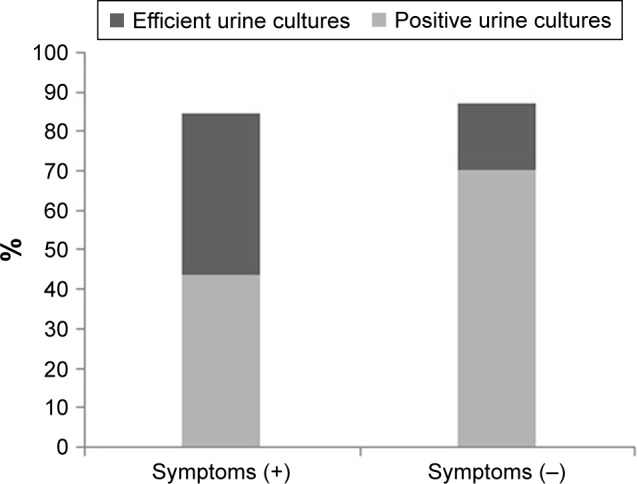
Results: There were 409 (11.2%) patients suffering from UTIs. Gender, age, random blood glucose, insulin autoantibody and albumin excretion rate in 24-hour urine were the risk factors of UTIs in diabetic patients. The percentage of positive urine cultures was higher in the asymptomatic bacteriuria patients than in symptomatic patients (P<0.001). The incidence of septicemia was considerable in the UTIs and asymptomatic bacteriuria groups. Escherichia coli was the most common pathogenic microorganism isolated in diabetic patients with UTIs, and one-half of the E. coli infections were multidrug resistant. Furthermore, meropenem was the most effective antibiotic on E. coli.
Conclusion: We suggest that a routine urine analysis or urine culture should be conducted in patients with T2D diabetes who have the identified risk factors. The UTIs might affect the islet function or blood glucose control in patients with T2D. Before a doctor decides to prescribe antibiotics to a diabetic patient with UTIs, the drug sensitivity test should be performed.
Keywords: asymptomatic bacteriuria; diabetes; multidrug resistant; urinary tract infections.
Conflict of interest statement
Disclosure The authors report no conflicts of interest in this work.
Figures

References
-
- Shah BR, Hux JE. Quantifying the risk of infectious diseases for people with diabetes. Diabetes Care. 2003;26(2):510–513. - PubMed
-
- Muller LM, Gorter KJ, Hak E, et al. Increased risk of common infections in patients with type 1 and type 2 diabetes mellitus. Clin Infect Dis. 2005;41(3):281–288. - PubMed
-
- Gallacher SJ, Thomson G, Fraser WD, Fisher BM, Gemmell CG, MacCuish AC. Neutrophil bactericidal function in diabetes mellitus: evidence for association with blood glucose control. Diabet Med. 1995;12(10):916–920. - PubMed
-
- Delamaire M, Maugendre D, Moreno M, Le Goff MC, Allannic H, Genetet B. Impaired leucocyte functions in diabetic patients. Diabet Med. 1997;14:29–34. - PubMed
-
- Fu AZ, Iglay K, Qiu Y, Engel S, Shankar R, Brodovicz K. Risk characterization for urinary tract infections in subjects with newly diagnosed type 2 diabetes. J Diabetes Complications. 2014;28(6):806–810. - PubMed
LinkOut - more resources
Full Text Sources
Other Literature Sources
Medical
