


Heat and Drought Stresses in Crops and Approaches for Their Mitigation
- PMID: 29520357
- PMCID: PMC5827537
- DOI: 10.3389/fchem.2018.00026
Heat and Drought Stresses in Crops and Approaches for Their Mitigation
Abstract
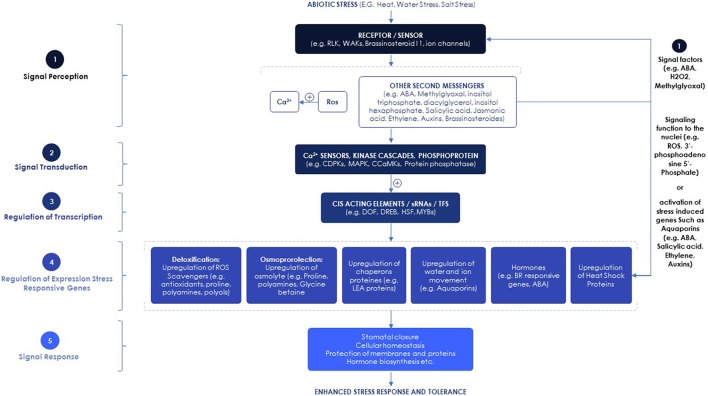
Drought and heat are major abiotic stresses that reduce crop productivity and weaken global food security, especially given the current and growing impacts of climate change and increases in the occurrence and severity of both stress factors. Plants have developed dynamic responses at the morphological, physiological and biochemical levels allowing them to escape and/or adapt to unfavorable environmental conditions. Nevertheless, even the mildest heat and drought stress negatively affects crop yield. Further, several independent studies have shown that increased temperature and drought can reduce crop yields by as much as 50%. Response to stress is complex and involves several factors including signaling, transcription factors, hormones, and secondary metabolites. The reproductive phase of development, leading to the grain production is shown to be more sensitive to heat stress in several crops. Advances coming from biotechnology including progress in genomics and information technology may mitigate the detrimental effects of heat and drought through the use of agronomic management practices and the development of crop varieties with increased productivity under stress. This review presents recent progress in key areas relevant to plant drought and heat tolerance. Furthermore, an overview and implications of physiological, biochemical and genetic aspects in the context of heat and drought are presented. Potential strategies to improve crop productivity are discussed.
Keywords: agronomy; biotechnology; crop; drought; genomics; heat; productivity; stress.
Figures
References
Publication types
LinkOut - more resources
Full Text Sources
Other Literature Sources
