


Cardiac Magnetic Resonance Assessment of the Structural and Functional Cardiac Adaptations to Soccer Training in School-Aged Male Children
- PMID: 29520462
- PMCID: PMC5958145
- DOI: 10.1007/s00246-018-1844-5
Cardiac Magnetic Resonance Assessment of the Structural and Functional Cardiac Adaptations to Soccer Training in School-Aged Male Children
Abstract
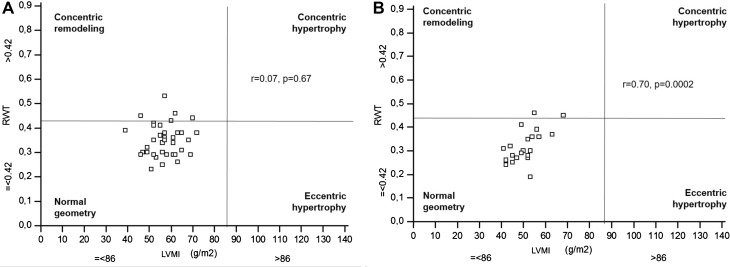
Physical training is associated with changes in cardiac morphology called the "athlete's heart", which has not been sufficiently studied in children. The aim of the study was to analyze cardiac adaptation to exercise in pre-adolescent soccer players. Thirty-six soccer players (mean age 10.1 ± 1.4 years) and 24 non-athlete male controls (10.4 ± 1.7 years) underwent cardiac magnetic resonance. Measurements of myocardial mass, end-diastolic and end-systolic volume, stroke volume and ejection fraction for left and right ventricle (LV, RV) were performed. Additionally, left and right atrial (LA, RA) areas and volumes were analysed. Relative wall thickness (RWT) was calculated to describe the pattern of cardiac remodeling. Interventricular wall thickness and LV mass were significantly higher in athletes, but remained within the reference (6.9 ± 0.8 vs. 6.2 ± 0.9 mm/√m2, p = 0.003 and 57.1 ± 7.4 vs. 50.0 ± 7.1 g/m2, p = 0.0006, respectively) with no changes in LV size and function between groups. The RWT tended to be higher among athletes (p = 0.09) indicating LV concentric remodeling geometry. Soccer players had significantly larger RV size (p < 0.04) with similar function and mass. Also, the LA volume (p = 0.01), LA area (p = 0.03) and LA diameter (p = 0.009) were significantly greater in players than in controls. Cardiac adaptations in pre-adolescent soccer players are characterized by an increased LV mass without any changes in LV size and systolic function, which is typical of resistance training with tendency to concentric remodeling. This is accompanied by increase of LA and RV size. It should be taken into account during annual pre-participation evaluation.
Keywords: Adaptation; Athlete’s heart; Cardiac magnetic resonance; Children; Sport; Training.
Conflict of interest statement
Conflict of interest
The authors declare that they have no conflict of interest.
Ethical Approval
All procedures performed in studies involving human participants were in accordance with the ethical standards of the institutional and/or national research committee and with the 1964 Helsinki Declaration and its later amendments or comparable ethical standards. The study protocol was approved by the Institutional Ethical Committee, and the study was performed in accordance with ethical standards. The examination procedures were explained to the parents and participants before obtaining signature on a written consent for the study.
Informed Consent
Informed consent was obtained from all individual participants included in the study.
Research Involving with Human and Animal Participants
This article does not contain any studies with animals performed by any of the authors.
Figures
References
-
- Physical activity and young people (2017) Recommended levels of physical activity for children aged 5–17 years. http://www.who.int/dietphysicalactivity/factsheet_young_people/en/. Accessed February 2017
MeSH terms
LinkOut - more resources
Full Text Sources
Other Literature Sources
