. 2018 Sep 1:354:153-175.
doi: 10.1016/j.taap.2018.02.024. Epub 2018 Mar 7.

Development of the Adverse Outcome Pathway (AOP): Chronic binding of antagonist to N-methyl-d-aspartate receptors (NMDARs) during brain development induces impairment of learning and memory abilities of children

Affiliations

Development of the Adverse Outcome Pathway (AOP): Chronic binding of antagonist to N-methyl-d-aspartate receptors (NMDARs) during brain development induces impairment of learning and memory abilities of children

Magdalini Sachana et al. Toxicol Appl Pharmacol. .

Abstract

The Adverse Outcome Pathways (AOPs) are designed to provide mechanistic understanding of complex biological systems and pathways of toxicity that result in adverse outcomes (AOs) relevant to regulatory endpoints. AOP concept captures in a structured way the causal relationships resulting from initial chemical interaction with biological target(s) (molecular initiating event) to an AO manifested in individual organisms and/or populations through a sequential series of key events (KEs), which are cellular, anatomical and/or functional changes in biological processes. An AOP provides the mechanistic detail required to support chemical safety assessment, the development of alternative methods and the implementation of an integrated testing strategy. An example of the AOP relevant to developmental neurotoxicity (DNT) is described here following the requirements of information defined by the OECD Users' Handbook Supplement to the Guidance Document for developing and assessing AOPs. In this AOP, the binding of an antagonist to glutamate receptor N-methyl-d-aspartate (NMDAR) receptor is defined as MIE. This MIE triggers a cascade of cellular KEs including reduction of intracellular calcium levels, reduction of brain derived neurotrophic factor release, neuronal cell death, decreased glutamate presynaptic release and aberrant dendritic morphology. At organ level, the above mentioned KEs lead to decreased synaptogenesis and decreased neuronal network formation and function causing learning and memory deficit at organism level, which is defined as the AO. There are in vitro, in vivo and epidemiological data that support the described KEs and their causative relationships rendering this AOP relevant to DNT evaluation in the context of regulatory purposes.

Keywords: Adverse Outcome Pathway; Developmental Neurotoxicity; Regulatory Toxicology.


Figures

Fig. 1
Fig. 1
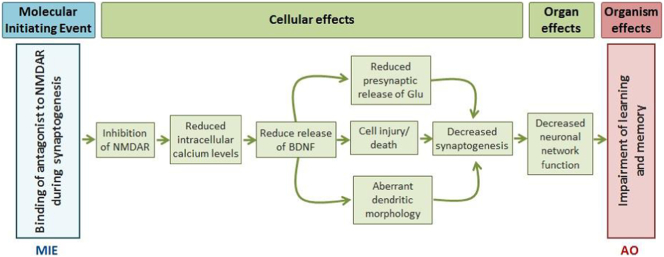
Graphical representation of the AOP. Key events at the cellular, organ and organism level triggered by binding of an antagonist to the NMDA receptor (Molecular Initiating Event) and resulting in the adverse outcome (AO), defined as impairment of learning and memory.
Fig. 2
Fig. 2
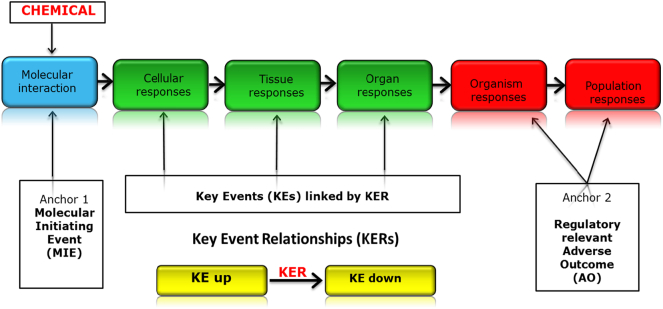
A schematic representation of the Adverse Outcome Pathway (AOP) framework. An AOP is triggered by a Molecular Initiating Event (MIE), an initial interaction with a biological target (Anchor 1) that leads to a sequential cascade of cellular, tissue and organ responses (Key Events), linked to each other by key event relationship (KER) to result in an adverse outcome (AO) of regulatory relevance.
Fig. 3
Fig. 3
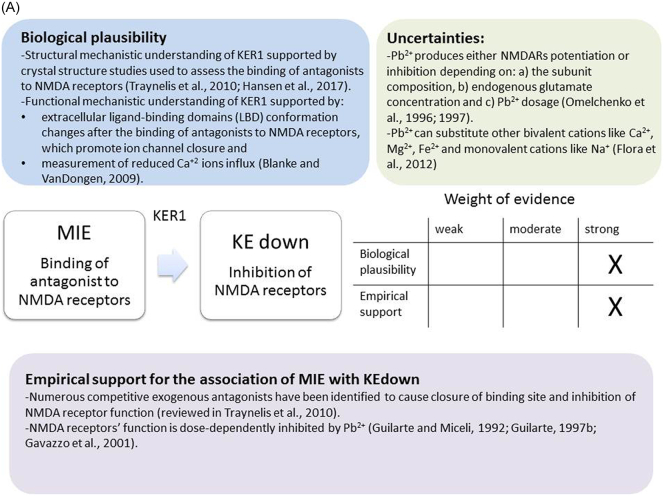
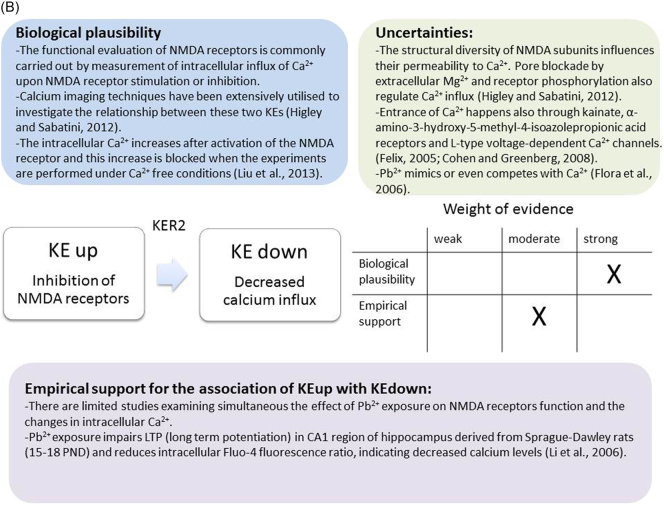
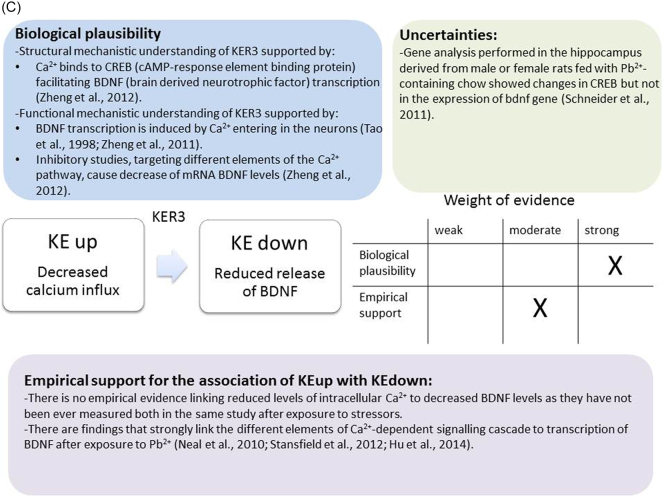
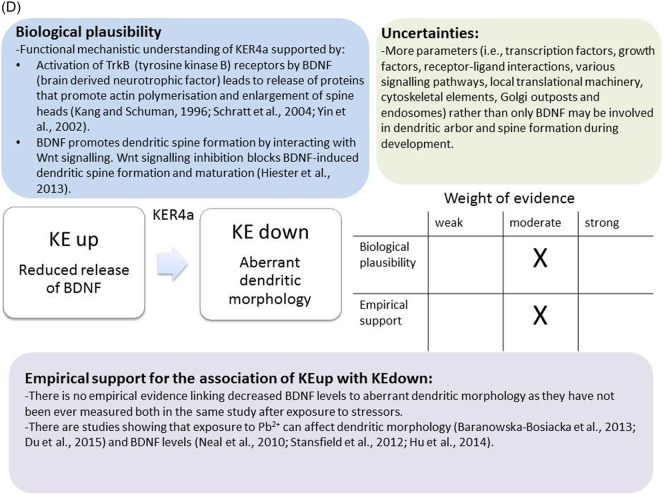
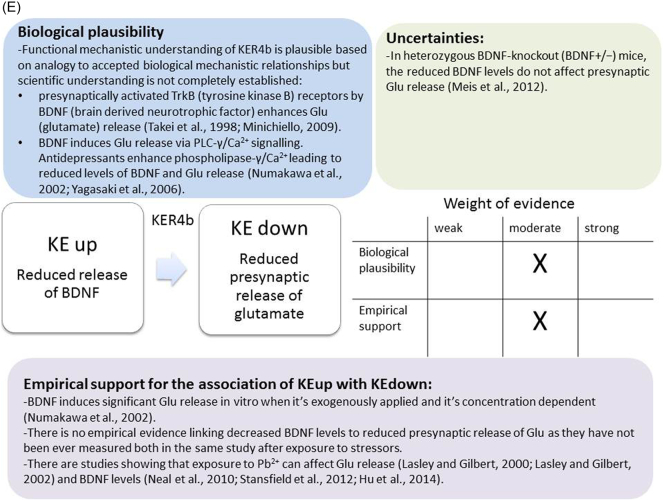
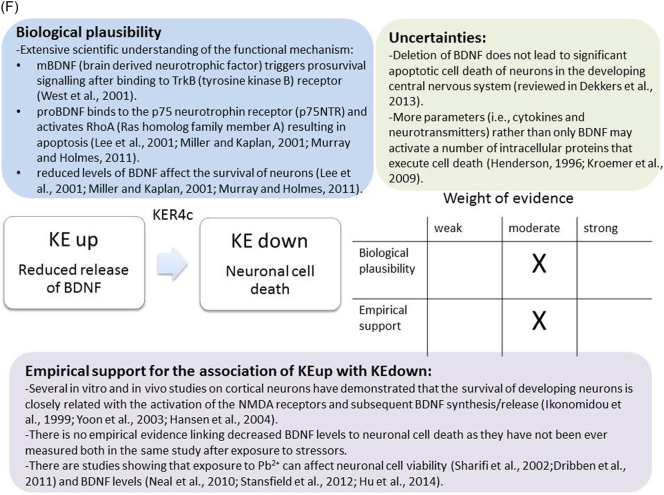
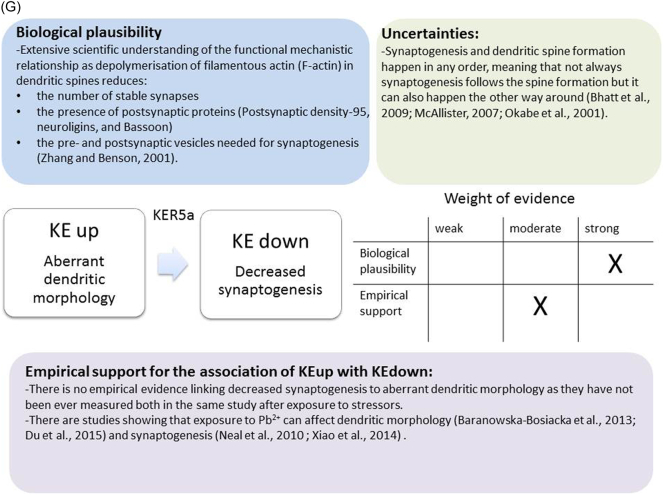
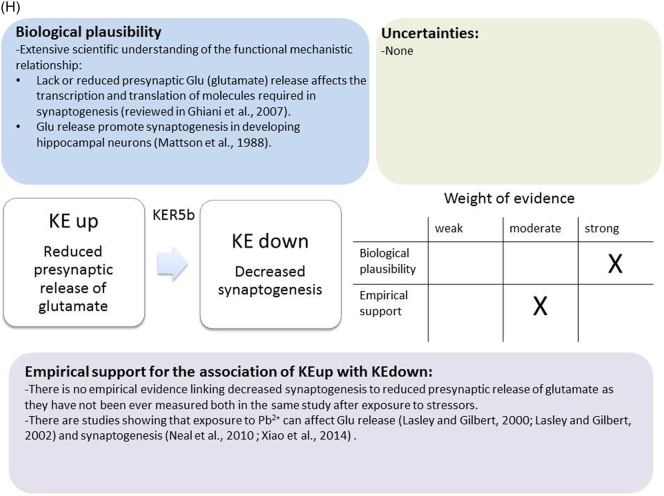
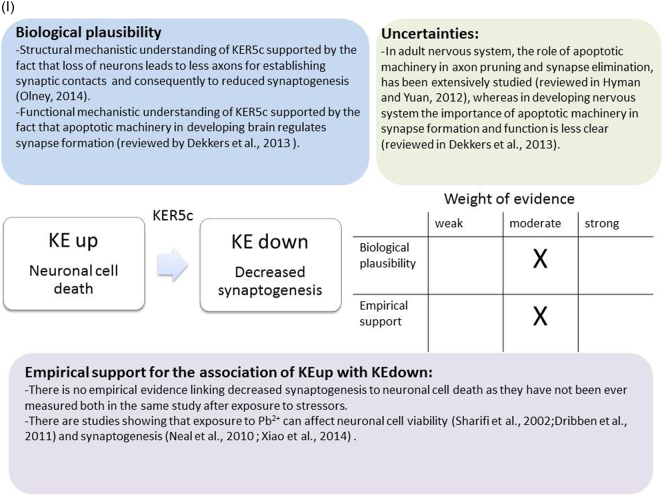
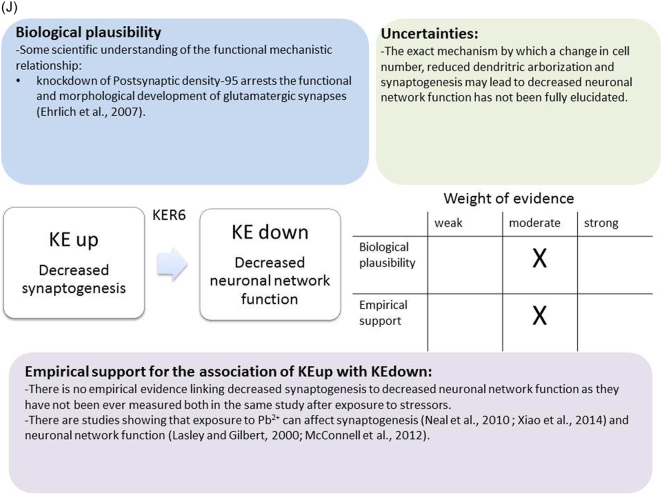
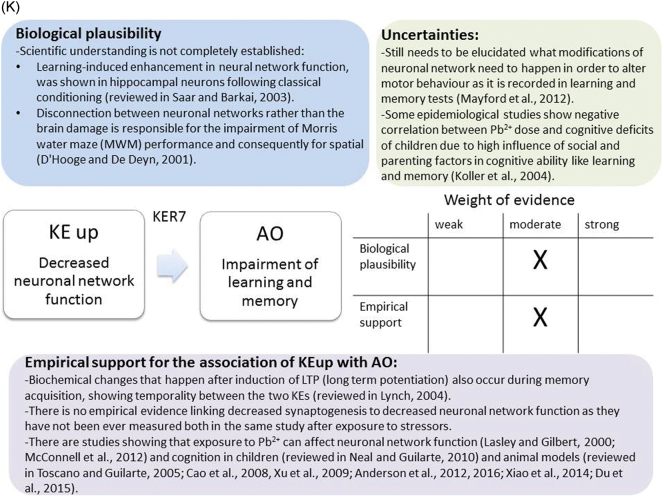
A qualitative assessments of Key Event Relationships (KERs) in the AOP triggered by binding of an antagonist to N-methyl-d-aspartate receptors (NMDARs) (molecular initiating event: MIE) resulting in an impairment of learning and memory (adverse outcome: AO) referring to biological plausibility, empirical support and uncertainties. (A) KER 1, antagonist binding to NMDARs results in the inhibition of NMDA receptor function; (B) KER 2, the inhibition of NMDA leads to decreased calcium influx; (C) KER 3, decreased calcium influx causes reduced release of BDNF; (D) KER 4a, reduced release of BDNF results in aberrant dendritic morphology; (E) KER 4b, reduced release of BDNF leads to reduced presynaptic release of glutamate; (F) KER 4c, reduced release of BDNF causes neuronal cell death; (G). KER 5a, aberrant dendritic morphology results in decreased synaptogenesis; (H) KER 5b, reduced presynaptic release of glutamate leads to decreased synaptogenesis; (I) KER 5c, neuronal cell death leads to decreased synaptogenesis; (J) KER 6, decreased synaptogenesis results in decreased neuronal network function; (K) KER 7, decreased neuronal network function leads to impairment of learning and memory (AO).
Fig. 3
Fig. 3
A qualitative assessments of Key Event Relationships (KERs) in the AOP triggered by binding of an antagonist to N-methyl-d-aspartate receptors (NMDARs) (molecular initiating event: MIE) resulting in an impairment of learning and memory (adverse outcome: AO) referring to biological plausibility, empirical support and uncertainties. (A) KER 1, antagonist binding to NMDARs results in the inhibition of NMDA receptor function; (B) KER 2, the inhibition of NMDA leads to decreased calcium influx; (C) KER 3, decreased calcium influx causes reduced release of BDNF; (D) KER 4a, reduced release of BDNF results in aberrant dendritic morphology; (E) KER 4b, reduced release of BDNF leads to reduced presynaptic release of glutamate; (F) KER 4c, reduced release of BDNF causes neuronal cell death; (G). KER 5a, aberrant dendritic morphology results in decreased synaptogenesis; (H) KER 5b, reduced presynaptic release of glutamate leads to decreased synaptogenesis; (I) KER 5c, neuronal cell death leads to decreased synaptogenesis; (J) KER 6, decreased synaptogenesis results in decreased neuronal network function; (K) KER 7, decreased neuronal network function leads to impairment of learning and memory (AO).
Fig. 3
Fig. 3
A qualitative assessments of Key Event Relationships (KERs) in the AOP triggered by binding of an antagonist to N-methyl-d-aspartate receptors (NMDARs) (molecular initiating event: MIE) resulting in an impairment of learning and memory (adverse outcome: AO) referring to biological plausibility, empirical support and uncertainties. (A) KER 1, antagonist binding to NMDARs results in the inhibition of NMDA receptor function; (B) KER 2, the inhibition of NMDA leads to decreased calcium influx; (C) KER 3, decreased calcium influx causes reduced release of BDNF; (D) KER 4a, reduced release of BDNF results in aberrant dendritic morphology; (E) KER 4b, reduced release of BDNF leads to reduced presynaptic release of glutamate; (F) KER 4c, reduced release of BDNF causes neuronal cell death; (G). KER 5a, aberrant dendritic morphology results in decreased synaptogenesis; (H) KER 5b, reduced presynaptic release of glutamate leads to decreased synaptogenesis; (I) KER 5c, neuronal cell death leads to decreased synaptogenesis; (J) KER 6, decreased synaptogenesis results in decreased neuronal network function; (K) KER 7, decreased neuronal network function leads to impairment of learning and memory (AO).
Fig. 3
Fig. 3
A qualitative assessments of Key Event Relationships (KERs) in the AOP triggered by binding of an antagonist to N-methyl-d-aspartate receptors (NMDARs) (molecular initiating event: MIE) resulting in an impairment of learning and memory (adverse outcome: AO) referring to biological plausibility, empirical support and uncertainties. (A) KER 1, antagonist binding to NMDARs results in the inhibition of NMDA receptor function; (B) KER 2, the inhibition of NMDA leads to decreased calcium influx; (C) KER 3, decreased calcium influx causes reduced release of BDNF; (D) KER 4a, reduced release of BDNF results in aberrant dendritic morphology; (E) KER 4b, reduced release of BDNF leads to reduced presynaptic release of glutamate; (F) KER 4c, reduced release of BDNF causes neuronal cell death; (G). KER 5a, aberrant dendritic morphology results in decreased synaptogenesis; (H) KER 5b, reduced presynaptic release of glutamate leads to decreased synaptogenesis; (I) KER 5c, neuronal cell death leads to decreased synaptogenesis; (J) KER 6, decreased synaptogenesis results in decreased neuronal network function; (K) KER 7, decreased neuronal network function leads to impairment of learning and memory (AO).
Fig. 3
Fig. 3
A qualitative assessments of Key Event Relationships (KERs) in the AOP triggered by binding of an antagonist to N-methyl-d-aspartate receptors (NMDARs) (molecular initiating event: MIE) resulting in an impairment of learning and memory (adverse outcome: AO) referring to biological plausibility, empirical support and uncertainties. (A) KER 1, antagonist binding to NMDARs results in the inhibition of NMDA receptor function; (B) KER 2, the inhibition of NMDA leads to decreased calcium influx; (C) KER 3, decreased calcium influx causes reduced release of BDNF; (D) KER 4a, reduced release of BDNF results in aberrant dendritic morphology; (E) KER 4b, reduced release of BDNF leads to reduced presynaptic release of glutamate; (F) KER 4c, reduced release of BDNF causes neuronal cell death; (G). KER 5a, aberrant dendritic morphology results in decreased synaptogenesis; (H) KER 5b, reduced presynaptic release of glutamate leads to decreased synaptogenesis; (I) KER 5c, neuronal cell death leads to decreased synaptogenesis; (J) KER 6, decreased synaptogenesis results in decreased neuronal network function; (K) KER 7, decreased neuronal network function leads to impairment of learning and memory (AO).
Fig. 3
Fig. 3
A qualitative assessments of Key Event Relationships (KERs) in the AOP triggered by binding of an antagonist to N-methyl-d-aspartate receptors (NMDARs) (molecular initiating event: MIE) resulting in an impairment of learning and memory (adverse outcome: AO) referring to biological plausibility, empirical support and uncertainties. (A) KER 1, antagonist binding to NMDARs results in the inhibition of NMDA receptor function; (B) KER 2, the inhibition of NMDA leads to decreased calcium influx; (C) KER 3, decreased calcium influx causes reduced release of BDNF; (D) KER 4a, reduced release of BDNF results in aberrant dendritic morphology; (E) KER 4b, reduced release of BDNF leads to reduced presynaptic release of glutamate; (F) KER 4c, reduced release of BDNF causes neuronal cell death; (G). KER 5a, aberrant dendritic morphology results in decreased synaptogenesis; (H) KER 5b, reduced presynaptic release of glutamate leads to decreased synaptogenesis; (I) KER 5c, neuronal cell death leads to decreased synaptogenesis; (J) KER 6, decreased synaptogenesis results in decreased neuronal network function; (K) KER 7, decreased neuronal network function leads to impairment of learning and memory (AO).
Fig. 3
Fig. 3
A qualitative assessments of Key Event Relationships (KERs) in the AOP triggered by binding of an antagonist to N-methyl-d-aspartate receptors (NMDARs) (molecular initiating event: MIE) resulting in an impairment of learning and memory (adverse outcome: AO) referring to biological plausibility, empirical support and uncertainties. (A) KER 1, antagonist binding to NMDARs results in the inhibition of NMDA receptor function; (B) KER 2, the inhibition of NMDA leads to decreased calcium influx; (C) KER 3, decreased calcium influx causes reduced release of BDNF; (D) KER 4a, reduced release of BDNF results in aberrant dendritic morphology; (E) KER 4b, reduced release of BDNF leads to reduced presynaptic release of glutamate; (F) KER 4c, reduced release of BDNF causes neuronal cell death; (G). KER 5a, aberrant dendritic morphology results in decreased synaptogenesis; (H) KER 5b, reduced presynaptic release of glutamate leads to decreased synaptogenesis; (I) KER 5c, neuronal cell death leads to decreased synaptogenesis; (J) KER 6, decreased synaptogenesis results in decreased neuronal network function; (K) KER 7, decreased neuronal network function leads to impairment of learning and memory (AO).
Fig. 3
Fig. 3
A qualitative assessments of Key Event Relationships (KERs) in the AOP triggered by binding of an antagonist to N-methyl-d-aspartate receptors (NMDARs) (molecular initiating event: MIE) resulting in an impairment of learning and memory (adverse outcome: AO) referring to biological plausibility, empirical support and uncertainties. (A) KER 1, antagonist binding to NMDARs results in the inhibition of NMDA receptor function; (B) KER 2, the inhibition of NMDA leads to decreased calcium influx; (C) KER 3, decreased calcium influx causes reduced release of BDNF; (D) KER 4a, reduced release of BDNF results in aberrant dendritic morphology; (E) KER 4b, reduced release of BDNF leads to reduced presynaptic release of glutamate; (F) KER 4c, reduced release of BDNF causes neuronal cell death; (G). KER 5a, aberrant dendritic morphology results in decreased synaptogenesis; (H) KER 5b, reduced presynaptic release of glutamate leads to decreased synaptogenesis; (I) KER 5c, neuronal cell death leads to decreased synaptogenesis; (J) KER 6, decreased synaptogenesis results in decreased neuronal network function; (K) KER 7, decreased neuronal network function leads to impairment of learning and memory (AO).
Fig. 3
Fig. 3
A qualitative assessments of Key Event Relationships (KERs) in the AOP triggered by binding of an antagonist to N-methyl-d-aspartate receptors (NMDARs) (molecular initiating event: MIE) resulting in an impairment of learning and memory (adverse outcome: AO) referring to biological plausibility, empirical support and uncertainties. (A) KER 1, antagonist binding to NMDARs results in the inhibition of NMDA receptor function; (B) KER 2, the inhibition of NMDA leads to decreased calcium influx; (C) KER 3, decreased calcium influx causes reduced release of BDNF; (D) KER 4a, reduced release of BDNF results in aberrant dendritic morphology; (E) KER 4b, reduced release of BDNF leads to reduced presynaptic release of glutamate; (F) KER 4c, reduced release of BDNF causes neuronal cell death; (G). KER 5a, aberrant dendritic morphology results in decreased synaptogenesis; (H) KER 5b, reduced presynaptic release of glutamate leads to decreased synaptogenesis; (I) KER 5c, neuronal cell death leads to decreased synaptogenesis; (J) KER 6, decreased synaptogenesis results in decreased neuronal network function; (K) KER 7, decreased neuronal network function leads to impairment of learning and memory (AO).
Fig. 3
Fig. 3
A qualitative assessments of Key Event Relationships (KERs) in the AOP triggered by binding of an antagonist to N-methyl-d-aspartate receptors (NMDARs) (molecular initiating event: MIE) resulting in an impairment of learning and memory (adverse outcome: AO) referring to biological plausibility, empirical support and uncertainties. (A) KER 1, antagonist binding to NMDARs results in the inhibition of NMDA receptor function; (B) KER 2, the inhibition of NMDA leads to decreased calcium influx; (C) KER 3, decreased calcium influx causes reduced release of BDNF; (D) KER 4a, reduced release of BDNF results in aberrant dendritic morphology; (E) KER 4b, reduced release of BDNF leads to reduced presynaptic release of glutamate; (F) KER 4c, reduced release of BDNF causes neuronal cell death; (G). KER 5a, aberrant dendritic morphology results in decreased synaptogenesis; (H) KER 5b, reduced presynaptic release of glutamate leads to decreased synaptogenesis; (I) KER 5c, neuronal cell death leads to decreased synaptogenesis; (J) KER 6, decreased synaptogenesis results in decreased neuronal network function; (K) KER 7, decreased neuronal network function leads to impairment of learning and memory (AO).
Fig. 3
Fig. 3
A qualitative assessments of Key Event Relationships (KERs) in the AOP triggered by binding of an antagonist to N-methyl-d-aspartate receptors (NMDARs) (molecular initiating event: MIE) resulting in an impairment of learning and memory (adverse outcome: AO) referring to biological plausibility, empirical support and uncertainties. (A) KER 1, antagonist binding to NMDARs results in the inhibition of NMDA receptor function; (B) KER 2, the inhibition of NMDA leads to decreased calcium influx; (C) KER 3, decreased calcium influx causes reduced release of BDNF; (D) KER 4a, reduced release of BDNF results in aberrant dendritic morphology; (E) KER 4b, reduced release of BDNF leads to reduced presynaptic release of glutamate; (F) KER 4c, reduced release of BDNF causes neuronal cell death; (G). KER 5a, aberrant dendritic morphology results in decreased synaptogenesis; (H) KER 5b, reduced presynaptic release of glutamate leads to decreased synaptogenesis; (I) KER 5c, neuronal cell death leads to decreased synaptogenesis; (J) KER 6, decreased synaptogenesis results in decreased neuronal network function; (K) KER 7, decreased neuronal network function leads to impairment of learning and memory (AO).

References

    1. Abbott L.F., Nelson S.B. Synaptic plasticity: taming the beast. Nat. Neurosci. 2000;3:1178–1183. - PubMed
    1. Alfano D.P., Petit T.L. Neonatal lead exposure alters the dendritic development of hippocampal dentate granule cells. Exp. Neurol. 1982;75:275–288. - PubMed
    1. An J.J., Gharami K., Liao G.Y., Woo N.H., Lau A.G., Vanevski F., Torre E.R., Jones K.R., Feng Y., Lu B., Xu B. Distinct role of long 3′ UTR BDNF mRNA in spine morphology and synaptic plasticity in hippocampal neurons. Cell. 2008;134:175–187. - PMC - PubMed
    1. Ankley G.T., Bennett R.S., Erickson R.J., Hoff D.J., Hornung M.W., Johnson R.D., Mount D.R., Nichols J.W., Russom C.L., Schmieder P.K., Serrrano J.A., Tietge J.E., Villeneuve D.L. Adverse outcome pathways: a conceptual framework to support ecotoxicology research and risk assessment. Environ. Toxicol. Chem. 2010;29:730–741. - PubMed
    1. Baek D.H., Park S.H., Park J.H., Choi Y., Park K.D., Kang J.W., Choi K.S., Kim H.S. Embryotoxicity of lead (II) acetate and aroclor 1254 using a new end point of the embryonic stem cell test. Int. J. Toxicol. 2011;30:498–509. - PubMed

MeSH terms

Substances