The mechanisms underlying the effects of AMH on Müllerian duct regression in male mice
- PMID: 29526868
- PMCID: PMC5938179
- DOI: 10.1292/jvms.18-0023
The mechanisms underlying the effects of AMH on Müllerian duct regression in male mice
Abstract
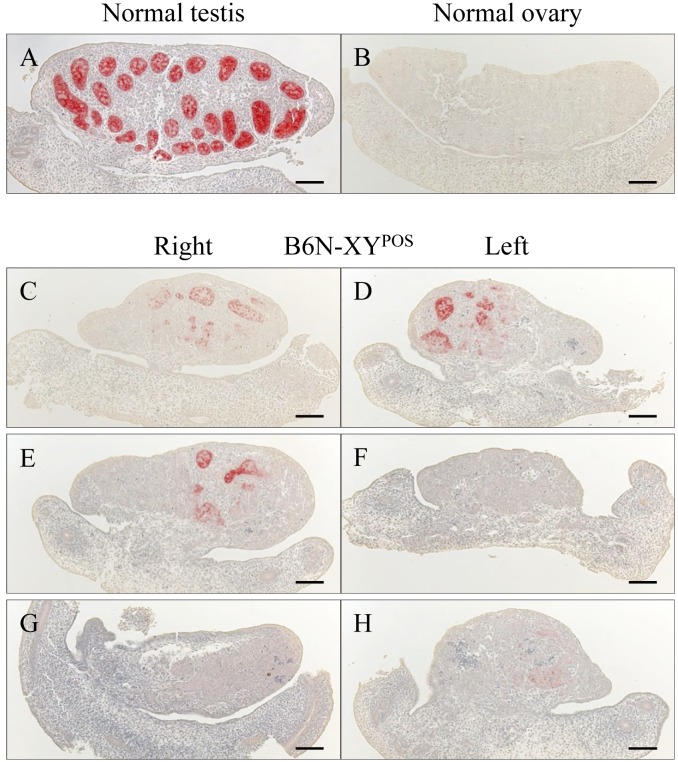
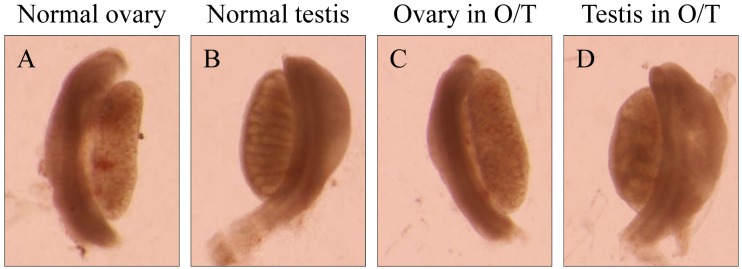
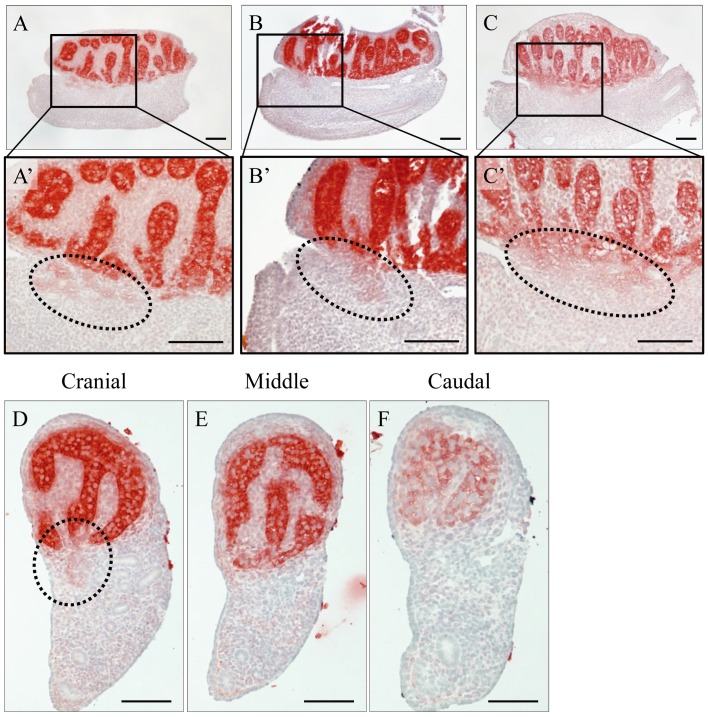
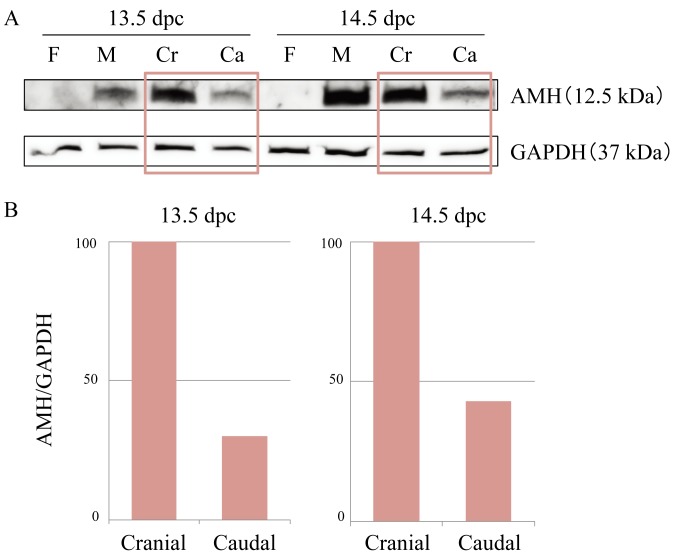
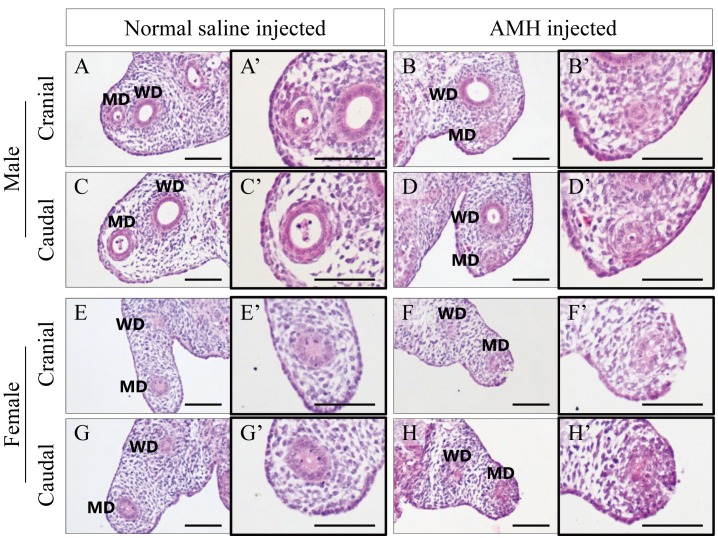
Anti-Müllerian hormone (AMH) produced in the developing testis induces the regression of the Müllerian duct, which develops into the oviducts, uterus and upper vagina. In our true hermaphrodite mouse with an ovary on one side and a testis on the other (O/T), the oviduct and uterus are present only on the ovary side, and nothing derived from the Müllerian duct is present on the testis side. Here, we investigate the mechanism underlying the unilateral Müllerian duct regression and the mode of AMH signaling, by performing immunohistology, Western blotting, and organ culture analyses. The histological analysis revealed that during the start of the Müllerian duct regression, the duct in the O/T mice was clearly regressed on the AMH-positive testis side compared to the AMH-negative ovary side. The immunohistochemistry showed a diffuse immunoreaction of AMH in the interstitium surrounding the testis cord and boundary region between the testis and mesonephros, especially in the cranial portion. Western blotting revealed that the amount of AMH in the cranial half of the mesonephros was larger than that in the caudal half. AMH injected into the gonads in organ culture induced the regression of the Müllerian duct via the interstitium of the organ. These results suggest that AMH acts on the Müllerian duct in male mice by exuding into the interstitium surrounding the testis cord and infiltrating through the cranial region from the testis to the mesonephros.
Keywords: AMH (anti-Müllerian hormone); Müllerian duct regression; secretion manner; sexual differentiation; true hermaphrodite.
Figures


References
-
- Allard S., Adin P., Gouédard L., di Clemente N., Josso N., Orgebin-Crist M. C., Picard J. Y., Xavier F.2000. Molecular mechanisms of hormone-mediated Müllerian duct regression: involvement of β-catenin. Development 127: 3349–3360. - PubMed
-
- Baarends W. M., van Helmond M. J. L., Post M., van der Schoot P. J. C. M., Hoogerbrugge J. W., de Winter J. P., Uilenbroek J. T. J., Karels B., Wilming L. G., Meijers J. H. C., Themmen A. P. N., Grootegoed J. A.1994. A novel member of the transmembrane serine/threonine kinase receptor family is specifically expressed in the gonads and in mesenchymal cells adjacent to the müllerian duct. Development 120: 189–197. - PubMed
MeSH terms
Substances
LinkOut - more resources
Full Text Sources
Other Literature Sources
Molecular Biology Databases