


ROLE OF CYTOCHROME P450S IN THE GENERATION AND METABOLISM OF REACTIVE OXYGEN SPECIES
- PMID: 29527583
- PMCID: PMC5841237
- DOI: 10.1016/j.cotox.2017.10.003
ROLE OF CYTOCHROME P450S IN THE GENERATION AND METABOLISM OF REACTIVE OXYGEN SPECIES
Abstract
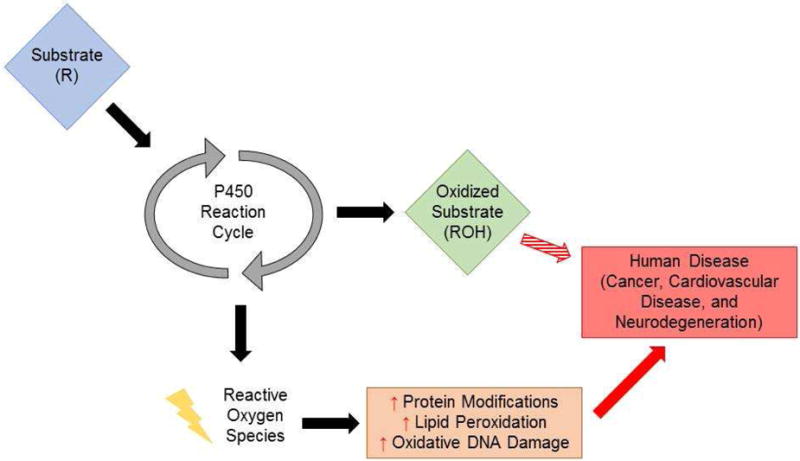
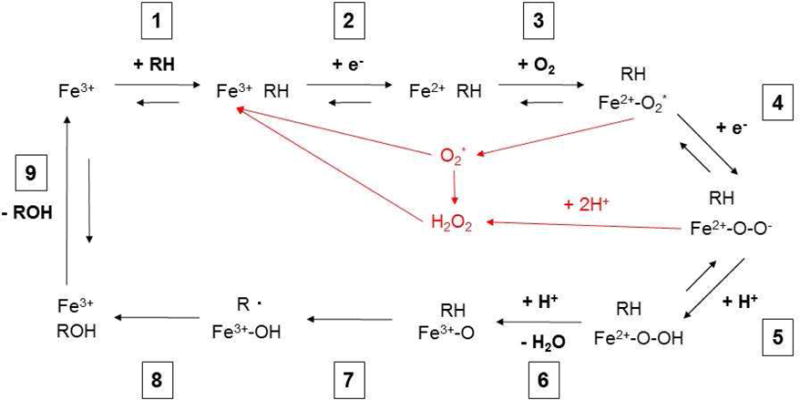
The cytochrome P450 (CYP) enzymes are a diverse group of heme monooxygenases that, through the course of their reaction cycle, contribute to cellular reactive oxygen species (ROS). CYP enzymes play a crucial role in human physiology and are involved in drug and xenobiotic metabolism as well as biosynthesis of endogenous molecules and are expressed throughout the human body. However, during the course of the CYP catalytic cycle, ROS can be generated through uncoupling of the enzymatic cycle. ROS is known to modify endogenous molecules, included lipids, proteins, and nucleic acids, which can lead to cell damage and death and contribute to disease development. ROS has been implicated in a wide range of diseases and conditions, including cancer and ageing, but ROS also play a role in the normal physiological functions in the cell. Here, we discuss specific examples whereby ROS generated by CYPs contribute to or protect against various phenomena, such as hyperoxic lung injury, oxidative hepatic toxicity, formation of DNA adducts from lipid peroxidation products. We have also discussed the mechanistic roles of CYP enzymes belonging to various families, and their effect on cellular ROS production, in relation to normal cellular function as well as disease pathophysiology.
Keywords: Cytochrome P450; reaction uncoupling; reactive oxygen species.
Figures
References
-
- Isin EM, Guengerich FP. Complex reactions catalyzed by cytochrome p450 enzymes. Biochim Biophys Acta. 2007;1770(3):314–329. doi: https://doi.org/10.1016/j.bbagen.2006.07.003. - DOI - PubMed
-
- Guengerich FP. Intersection of the roles of cytochrome p450 enzymes with xenobiotic and endogenous substrates: Relevance to toxicity and drug interactions. Chem Res Toxicol. 2017;30(1):2–12. https://doi.org/10.1021/acs.chemrestox.6b00226. - DOI - PMC - PubMed
-
- Guengerich FP. Cytochrome p450 and chemical toxicology. Chem Res Toxicol. 2008;21(1):70–83. https://doi.org/10.1021/tx700079z. - DOI - PubMed
-
- Bae YS, Oh H, Rhee SG, Yoo YD. Regulation of reactive oxygen species generation in cell signaling. Mol Cells. 2011;32(6):491–509. https://doi.org/10.1007/s10059-011-0276-3. - DOI - PMC - PubMed
-
- Omura T, Sato R. A new cytochrome in liver microsomes. J Biol Chem. 1962;237:1375–1376. - PubMed
Grants and funding
LinkOut - more resources
Full Text Sources
Other Literature Sources