


Association of air particulate pollution with bone loss over time and bone fracture risk: analysis of data from two independent studies
- PMID: 29527596
- PMCID: PMC5841468
- DOI: 10.1016/S2542-5196(17)30136-5
Association of air particulate pollution with bone loss over time and bone fracture risk: analysis of data from two independent studies
Abstract
Background: Air particulate matter (PM) is a ubiquitous environmental exposure associated with oxidation, inflammation, and age-related chronic disease. Whether PM is associated with loss of bone mineral density (BMD) and risk of bone fractures is undetermined.
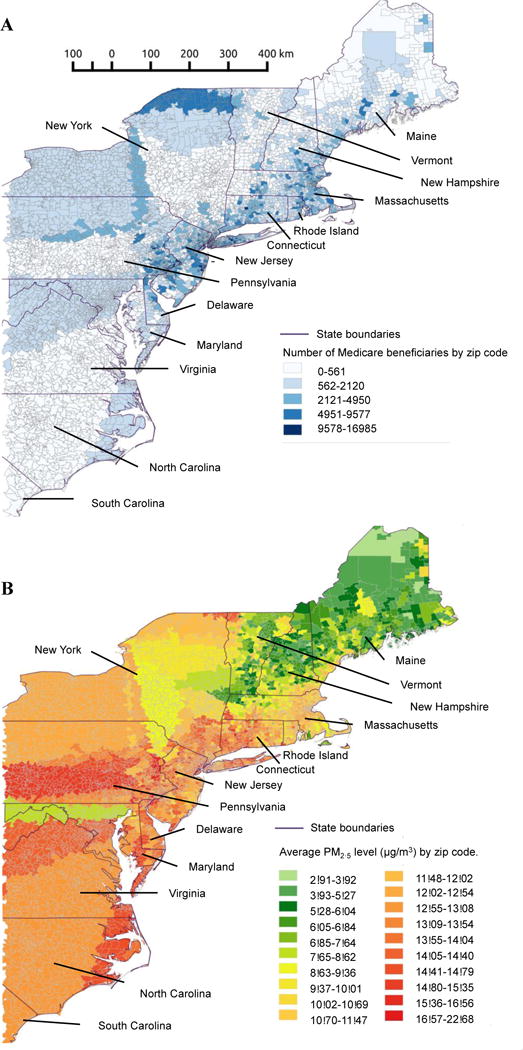
Methods: We conducted two complementary studies of: (i) long-term PM <2.5 μm (PM2.5) levels and osteoporosis-related fracture hospital admissions among 9.2 million Medicare enrollees of the Northeast/Mid-Atlantic United States between 2003-2010; (ii) long-term black carbon [BC] and PM2.5 levels, serum calcium homeostasis biomarkers (parathyroid hormone, calcium, and 25-hydroxyvitamin D), and annualized BMD reduction over a 8-year follow-up of 692 middle-aged (46.7±12.3 yrs), low-income BACH/Bone cohort participants.
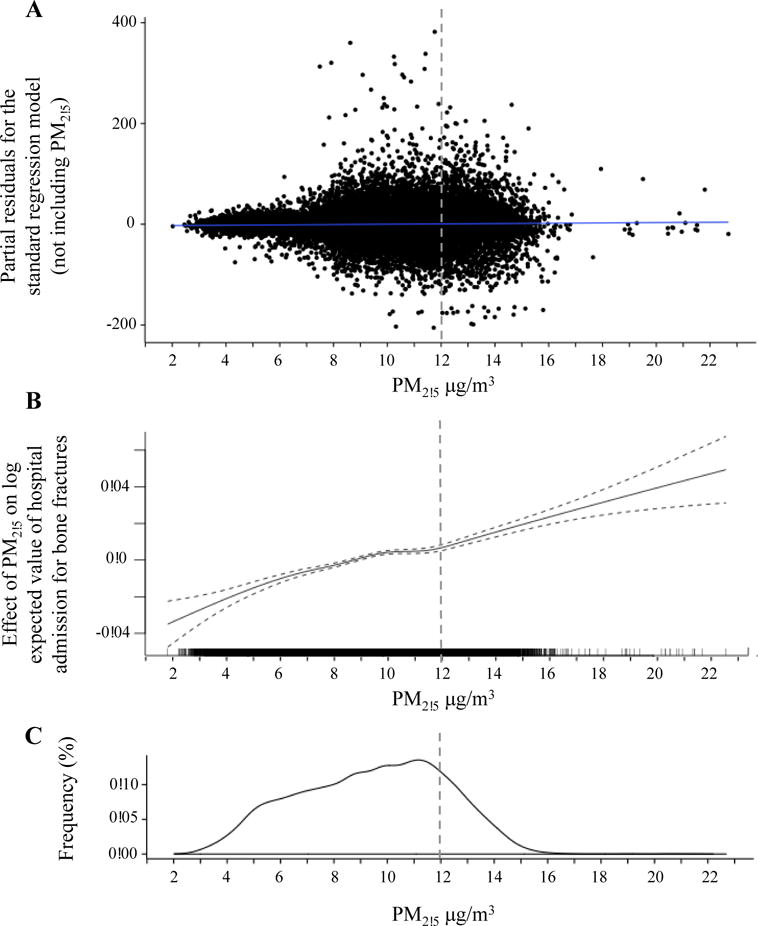
Findings: In the Medicare analysis, risk of bone fracture admissions at osteoporosis-related sites was greater in areas with higher PM2.5 levels (Risk ratio [RR] 1.041, 95% Confidence Interval [CI], 1.030, 1.051). This risk was particularly high among low-income communities (RR 1.076; 95% CI, 1.052, 1.100). In the longitudinal BACH/Bone study, baseline BC and PM2.5 levels were associated with lower serum PTH (Estimate for baseline one interquartile increase in 1-year average BC= -1.16, 95% CI -1.93, -0.38; Estimate for baseline one interquartile increase in 1-year average PM2.5= -7.39; 95%CI -14.17, -0.61). BC level was associated with higher BMD loss over time at multiple anatomical sites, including femoral neck (-0.08%/year per one interquartile increase; 95% CI -0.14, -0.02%/year) and ultradistal radius (-0.06%/year per one interquartile increase; 95% CI -0.12, -0.01%/year).
Interpretation: Our results suggest that poor air quality is a modifiable risk factor for bone fractures and osteoporosis, especially in low-income communities.
Conflict of interest statement
DECLARATION OF INTEREST We declare that we have no conflicts of interest.
Figures
References
-
- Burge R, Dawson-Hughes B, Solomon DH, Wong JB, King A, Tosteson A. Incidence and economic burden of osteoporosis-related fractures in the United States, 2005–2025. J Bone Miner Res. 2007;22:465–75. - PubMed
-
- Leibson CL, Tosteson ANA, Gabriel SE, Ransom JE, Melton LJ. Mortality, disability, and nursing home use for persons with and without hip fracture: a population-based study. J Am Geriatr Soc. 2002;50:1644–50. - PubMed
-
- Li Y, Zhang Z, Liu X, et al. miR-124 functions as a tumor suppressor in the endometrial carcinoma cell line HEC-1B partly by suppressing STAT3. Mol Cell Biochem. 2014;388:219–31. - PubMed
-
- Iacono MV. Osteoporosis: a national public health priority. J Perianesth Nurs. 2007;22:175–80. - PubMed
-
- Wilkins CH, Birge SJ. Prevention of osteoporotic fractures in the elderly. Am J Med. 2005;118:1190–5. - PubMed
Grants and funding
LinkOut - more resources
Full Text Sources
Other Literature Sources
Miscellaneous