


GalT-KO pig lungs are highly susceptible to acute vascular rejection in baboons, which may be mitigated by transgenic expression of hCD47 on porcine blood vessels
- PMID: 29527745
- PMCID: PMC6135720
- DOI: 10.1111/xen.12391
GalT-KO pig lungs are highly susceptible to acute vascular rejection in baboons, which may be mitigated by transgenic expression of hCD47 on porcine blood vessels
Abstract
Background: Despite recent progress in survival times of xenografts in non-human primates, there are no reports of survival beyond 5 days of histologically well-aerated porcine lung grafts in baboons. Here, we report our initial results of pig-to-baboon xeno-lung transplantation (XLTx).
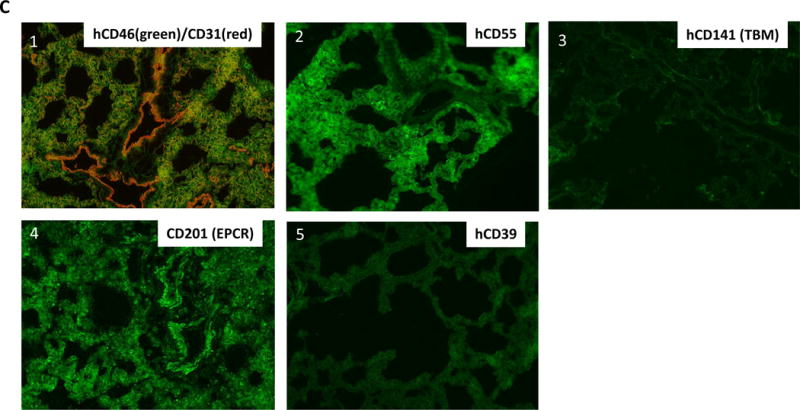
Methods: Eleven baboons received genetically modified porcine left lungs from either GalT-KO alone (n = 3), GalT-KO/humanCD47(hCD47)/hCD55 (n = 3), GalT-KO/hD47/hCD46 (n = 4), or GalT-KO/hCD39/hCD46/hCD55/TBM/EPCR (n = 1) swine. The first 2 XLTx procedures were performed under a non-survival protocol that allowed a 72-hour follow-up of the recipients with general anesthesia, while the remaining 9 underwent a survival protocol with the intention of weaning from ventilation.
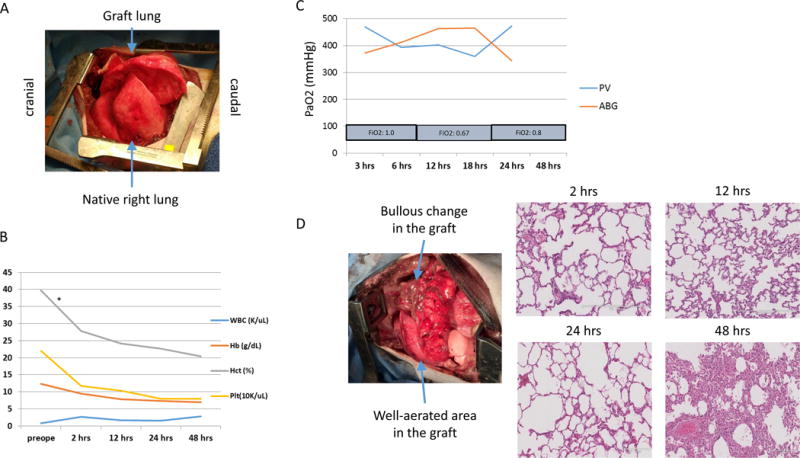
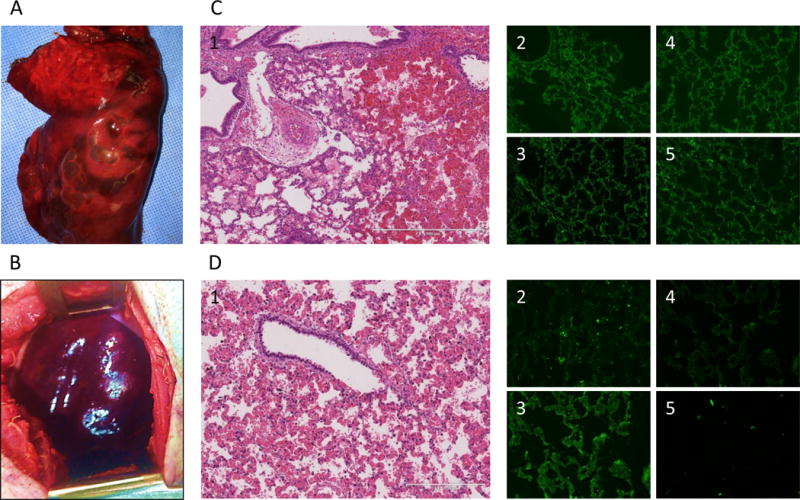
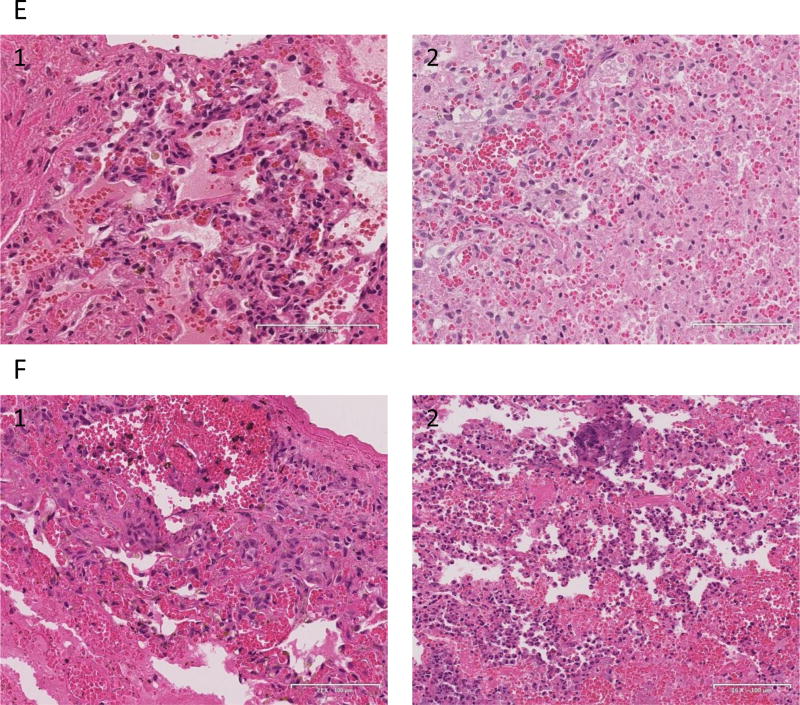
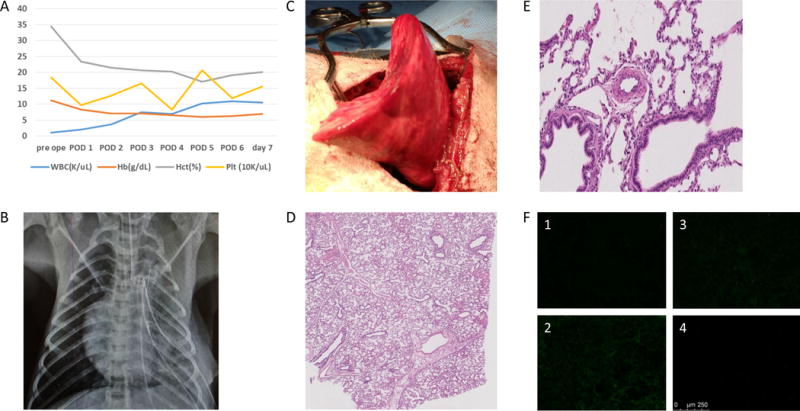
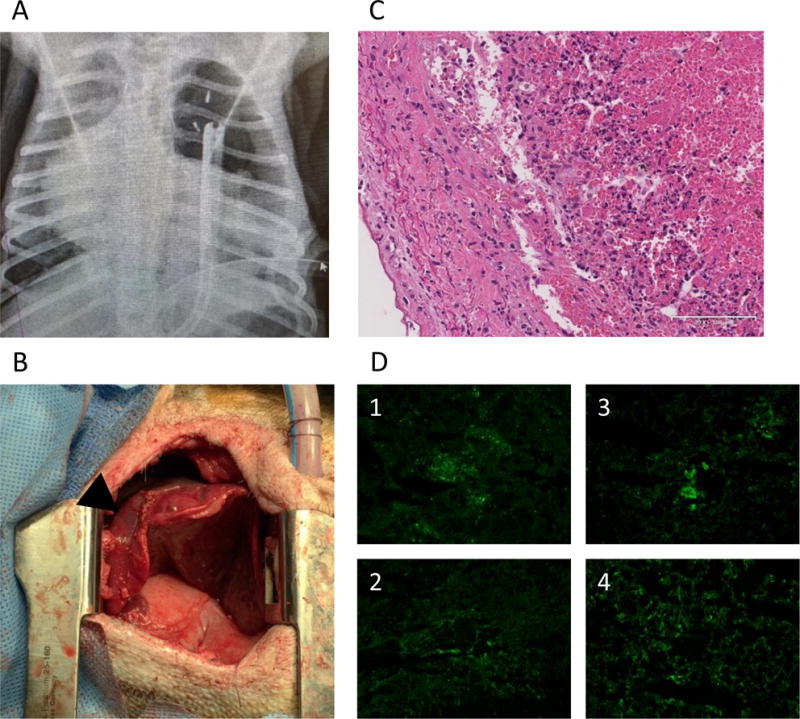
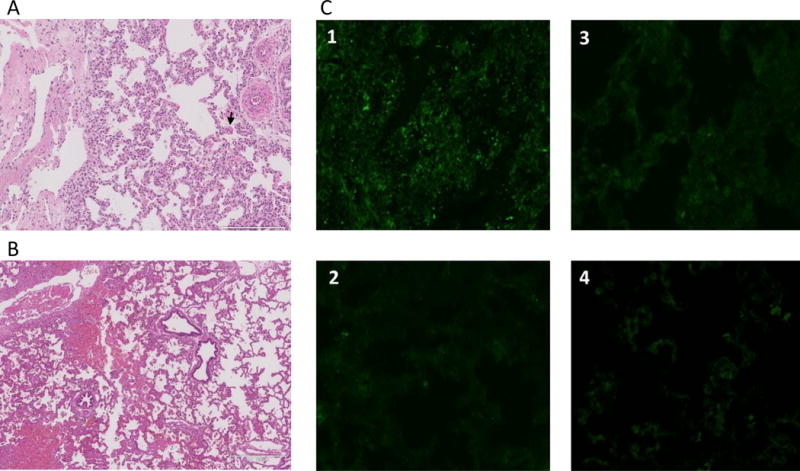
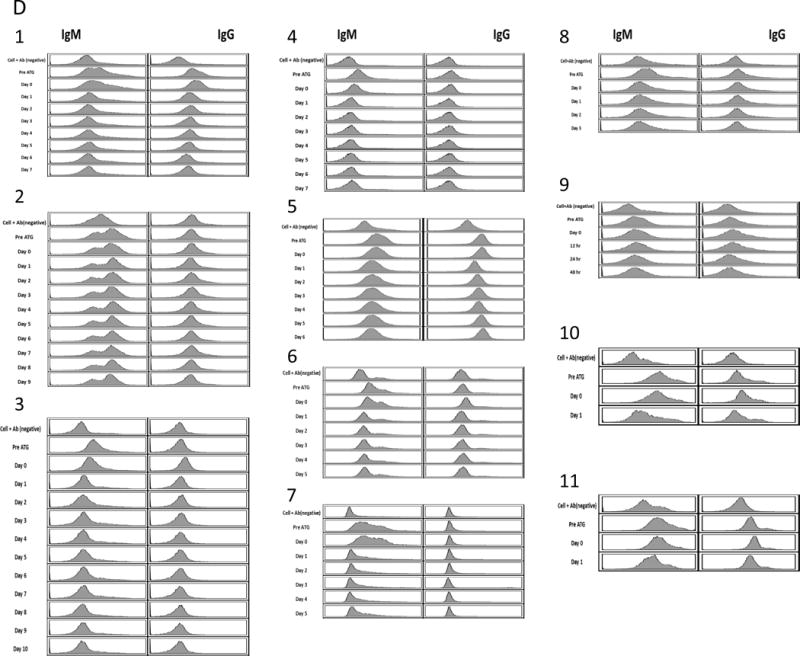
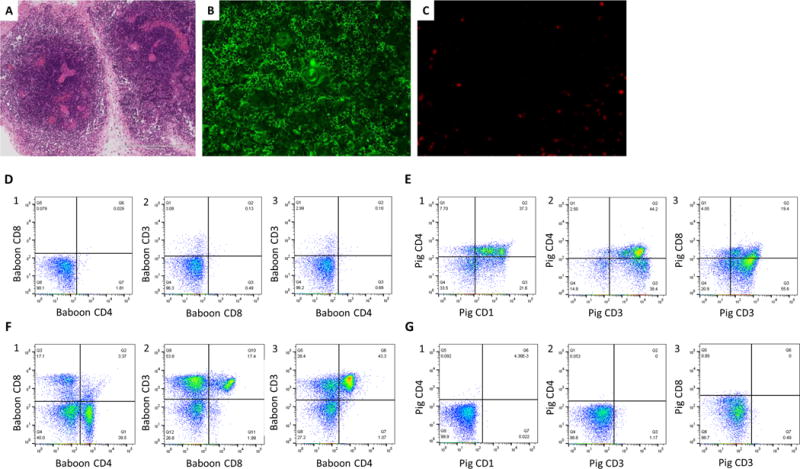
Results: Lung graft survivals in the 2 non-survival animals were 48 and >72 hours, while survivals in the other 9 were 25 and 28 hours, at 5, 5, 6, 7, >7, 9, and 10 days. One baboon with graft survival >7 days, whose entire lung graft remained well aerated, was euthanized on POD 7 due to malfunction of femoral catheters. hCD47 expression of donor lungs was detected in both alveoli and vessels only in the 3 grafts surviving >7, 9, and 10 days. All other grafts lacked hCD47 expression in endothelial cells and were completely rejected with diffuse hemorrhagic changes and antibody/complement deposition detected in association with early graft loss.
Conclusions: To our knowledge, this is the first evidence of histologically viable porcine lung grafts beyond 7 days in baboons. Our results indicate that GalT-KO pig lungs are highly susceptible to acute humoral rejection and that this may be mitigated by transgenic expression of hCD47.
Keywords: hCD47; lung transplantation; pig to baboon; xenotransplantation.
© 2018 John Wiley & Sons A/S. Published by John Wiley & Sons Ltd.
Figures



References
-
- Klassen DK, Edwards LB, Stewart DE, Glazier AK, Orlowski JP, Berg CL. The OPTN Deceased Donor Potential Study: Implications for Policy and Practice. American journal of transplantation : official journal of the American Society of Transplantation and the American Society of Transplant Surgeons. 2016;16(6):1707–1714. doi: 10.1111/ajt.13731. - DOI - PubMed
-
- Yusen RD, Edwards LB, Kucheryavaya AY, Benden C, Dipchand AI, Goldfarb SB, et al. The Registry of the International Society for Heart and Lung Transplantation: Thirty-second Official Adult Lung and Heart-Lung Transplantation Report–2015; Focus Theme: Early Graft Failure. The Journal of heart and lung transplantation : the official publication of the International Society for Heart Transplantation. 2015;34(10):1264–1277. doi: 10.1016/j.healun.2015.08.014. - DOI - PubMed
-
- Sachs DH. The pig as a potential xenograft donor. Veterinary immunology and immunopathology. 1994;43(1–3):185–191. - PubMed
-
- Sato M, Kagoshima A, Saitoh I, Inada E, Miyoshi K, Ohtsuka M, et al. Generation of alpha-1,3-Galactosyltransferase-Deficient Porcine Embryonic Fibroblasts by CRISPR/Cas9-Mediated Knock-in of a Small Mutated Sequence and a Targeted Toxin-Based Selection System. Reprod Domest Anim. 2015;50(5):872–880. doi: 10.1111/rda.12565. - DOI - PubMed
Publication types
MeSH terms
Substances
Grants and funding
LinkOut - more resources
Full Text Sources
Other Literature Sources
Research Materials
Miscellaneous
