


Host cell cytosolic immune response during Plasmodium liver stage development
- PMID: 29529207
- PMCID: PMC5995216
- DOI: 10.1093/femsre/fuy007
Host cell cytosolic immune response during Plasmodium liver stage development
Abstract
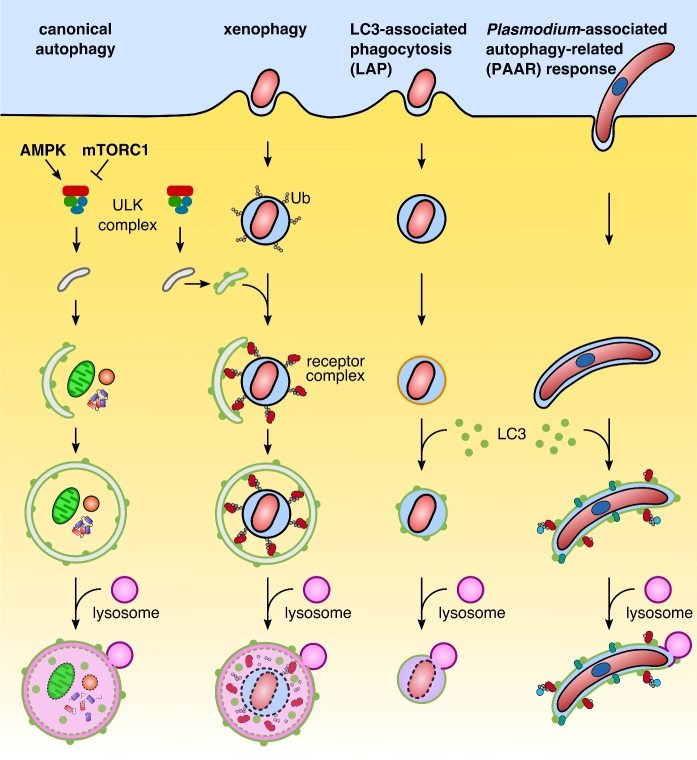
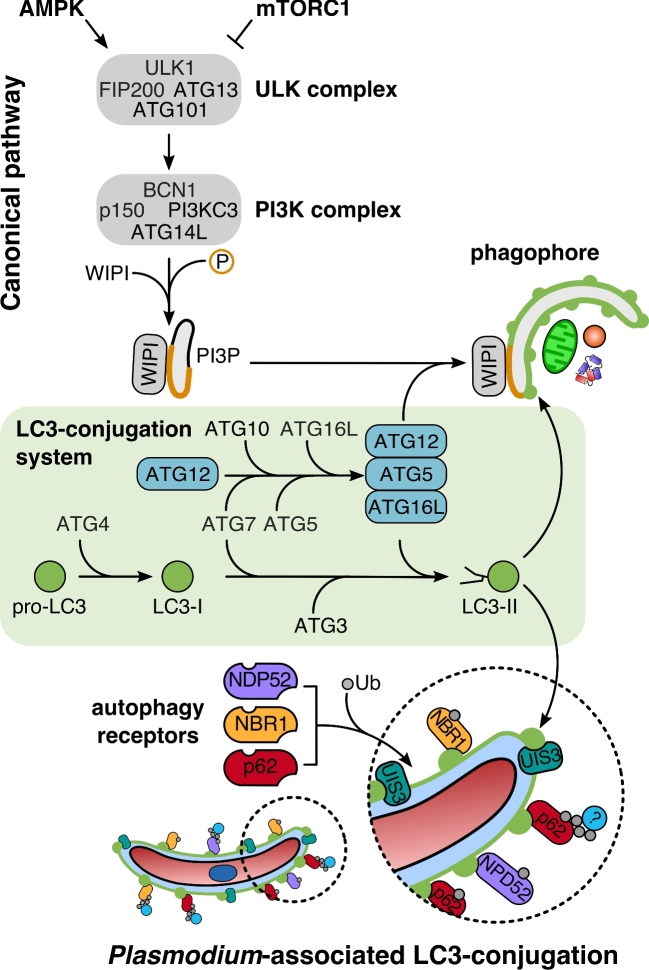
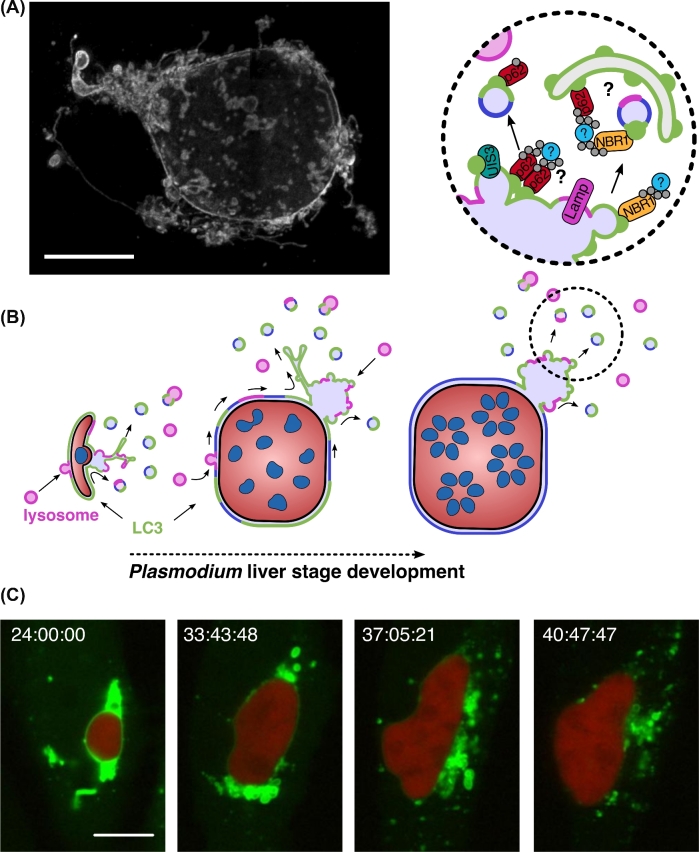
Recent years have witnessed a great gain in knowledge regarding parasite-host cell interactions during Plasmodium liver stage development. It is now an accepted fact that a large percentage of sporozoites invading hepatocytes fail to form infectious merozoites. There appears to be a delicate balance between parasite survival and elimination and we now start to understand why this is so. Plasmodium liver stage parasites replicate within the parasitophorous vacuole (PV), formed during invasion by invagination of the host cell plasma membrane. The main interface between the parasite and hepatocyte is the parasitophorous vacuole membrane (PVM) that surrounds the PV. Recently, it was shown that autophagy marker proteins decorate the PVM of Plasmodium liver stage parasites and eliminate a proportion of them by an autophagy-like mechanism. Successfully developing Plasmodium berghei parasites are initially also labeled but in the course of development, they are able to control this host defense mechanism by shedding PVM material into the tubovesicular network (TVN), an extension of the PVM that releases vesicles into the host cell cytoplasm. Better understanding of the molecular events at the PVM/TVN during parasite elimination could be the basis of new antimalarial measures.
Figures
References
-
- Amino R, Thiberge S, Martin B et al. Quantitative imaging of Plasmodium transmission from mosquito to mammal. Nat Med 2006;12:220–4. - PubMed
-
- Annoura T, van Schaijk BCL, Ploemen IHJ et al. Two Plasmodium 6-Cys family-related proteins have distinct and critical roles in liver-stage development. FASEB J 2014;28:2158–70. - PubMed
-
- Bano N, Romano JD, Jayabalasingham B et al. Cellular interactions of Plasmodium liver stage with its host mammalian cell. Int J Parasitol 2007;37:1329–41. - PubMed
Publication types
MeSH terms
LinkOut - more resources
Full Text Sources
Other Literature Sources
