


Nicotine Abstinence Influences the Calculation of Salience in Discrete Insular Circuits
- PMID: 29529410
- PMCID: PMC5851477
- DOI: 10.1016/j.bpsc.2017.09.010
Nicotine Abstinence Influences the Calculation of Salience in Discrete Insular Circuits
Abstract
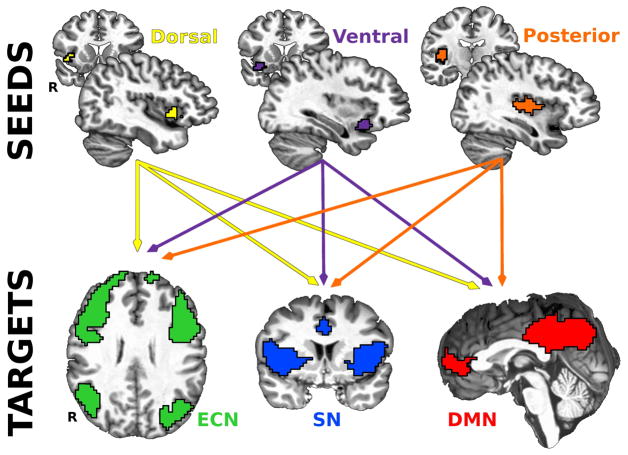
Background: Insular subdivisions show distinct patterns of resting-state functional connectivity (rsFC) with specific brain regions, each with different functional significance. Seeds in these subdivisions are employed to characterize the effects of acute nicotine abstinence on rsFC between insula subdivisions and brain networks implicated in addiction and attentional control.
Methods: In a within-subjects design, resting-state blood oxygen level-dependent data were collected from treatment-seeking smokers (N= 20) following smoking satiety and again following 48 hours of nicotine abstinence. Three right hemisphere insular regions of interest (dorsal, ventral, and posterior) served as seeds for analyses. Indices of both static and dynamic rsFC were obtained and correlated with indices of subjective withdrawal and behavioral performance.
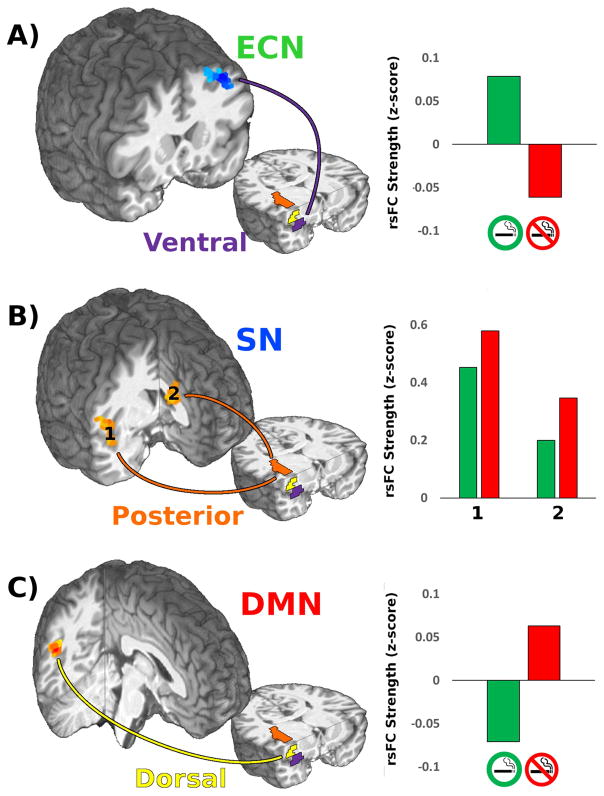
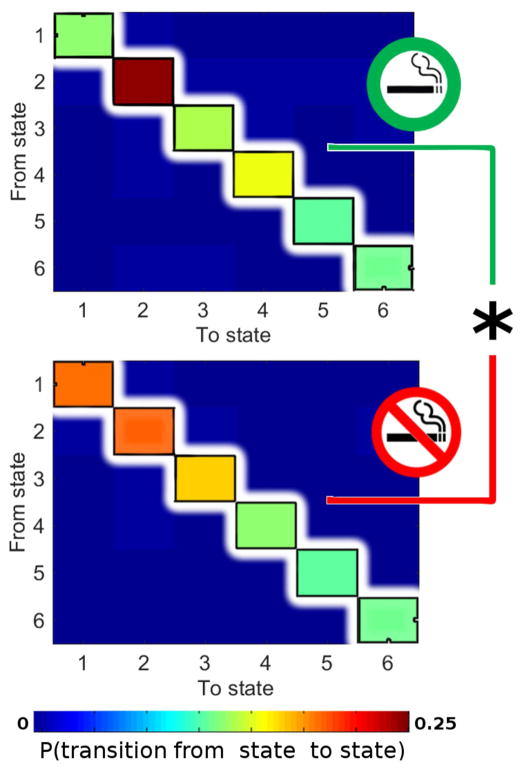
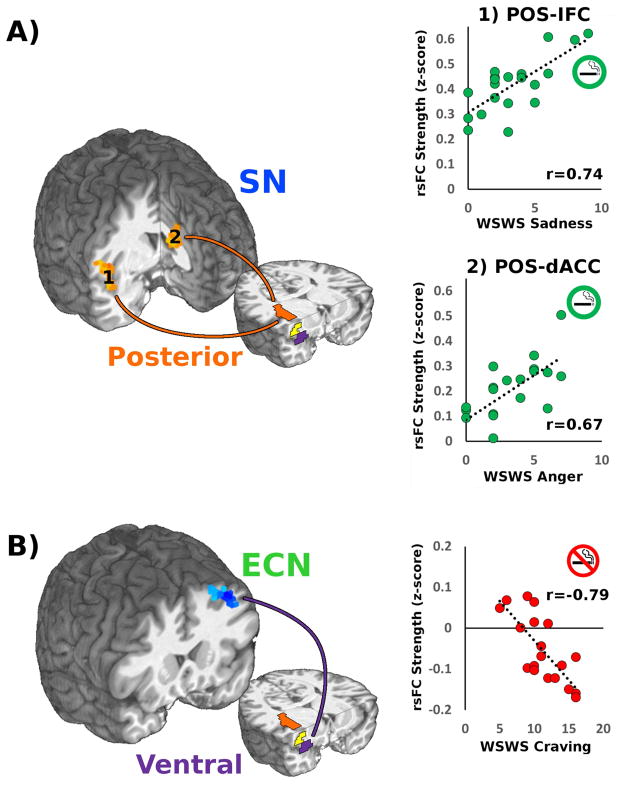
Results: Abstinence-induced physiological, subjective, and cognitive differences were observed. Overall dynamic rsFC was reduced during abstinence, and circuits containing each insular seed showed changes in rsFC as a function of nicotine abstinence. Specifically, dorsal and posterior insular connections to the default mode and salience networks were enhanced, while a previously undescribed ventral insular connection to the executive control network was reduced. Further, static rsFC was significantly correlated with subjective ratings of aversive affect and withdrawal in the modified ventral and posterior insular-seeded circuits.
Conclusions: As predicted, divergent connections between insula subdivisions and anticorrelated resting brain networks were observed during abstinence. These changes reflect an attentional bias toward aversive affective processing and not directly away from exogenous cognitive processing, suggesting a coordinated modulation of circuits associated with interoceptive and affective processing that instantiates an aversive state during nicotine abstinence.
Keywords: Abstinence; Affect; Cessation; Functional connectivity; Insula; Nicotine.
Published by Elsevier Inc.
Conflict of interest statement
The authors have no biomedical financial interests or potential conflicts of interest.
Figures
References
-
- Piasecki TM. Relapse to smoking. Clin Psychol Rev. 2006;26:196–215. - PubMed
-
- Westman EC, Behm FM, Simel DL, Rose JE. Smoking Behavior on the First Day of a Quit Attempt Predicts Long-term Abstinence. Arch Intern Med. 1997;157:335. - PubMed
-
- McClernon FJ, Addicott MA, Sweitzer MM. Smoking abstinence and neurocognition: implications for cessation and relapse. Curr Top Behav Neurosci. 2015;23:193–227. - PubMed
Publication types
MeSH terms
Substances
Grants and funding
LinkOut - more resources
Full Text Sources
Other Literature Sources
Molecular Biology Databases
Research Materials
