Direct oral anticoagulants versus warfarin: is new always better than the old?
- PMID: 29531758
- PMCID: PMC5845414
- DOI: 10.1136/openhrt-2017-000712
Direct oral anticoagulants versus warfarin: is new always better than the old?
Erratum in
-
Correction: Direct oral anticoagulants versus warfarin: is new always better than the old?.Open Heart. 2018 Mar 1;5(1):openhrt-2017-000712corr1. doi: 10.1136/openhrt-2017-000712corr1. eCollection 2018. Open Heart. 2018. PMID: 31329787 Free PMC article.
Abstract
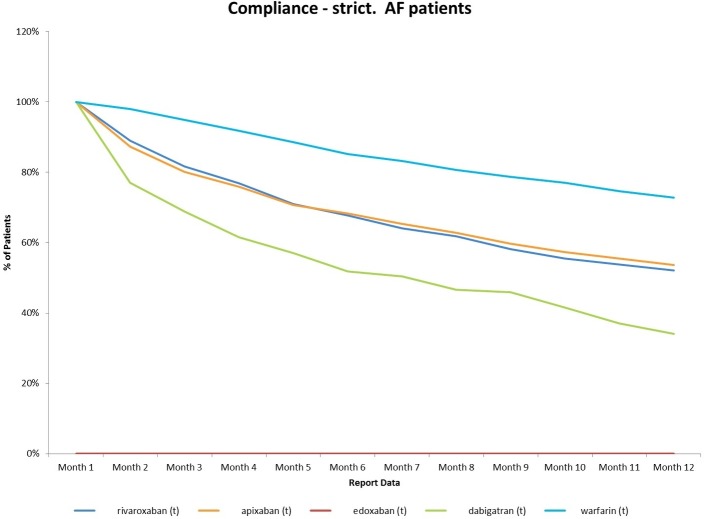
About 1.4 British million people are at risk of strokes due to non-valvular atrial fibrillation (AF) necessitating long-term anticoagulation. The vitamin K antagonist, warfarin, has a long half-life and narrow therapeutic range necessitating regular monitoring and is a common cause of iatrogenic hospital admission. Direct-acting oral anticoagulants (DOACs), dabigatran, rivaroxaban, apixaban and edoxaban are not required to have monitoring but are sensitive to changes in renal function and are associated with poorer adherence. There are good grounds to believe that DOACs are not always superior to warfarin in routine practice particularly with an older population. Much higher levels of therapeutic effectiveness can be achieved using a simple genotype guidance to identify those who are highly sensitive and by adoption of home monitoring. These adjustments could make warfarin the preferred drug for most people and would reduce the dramatic rise in health service expenditure.
Keywords: anticoagulants; atrial fibrillation; stroke; warfarin.
Conflict of interest statement
Competing interests: None declared.
Figures
References
-
- AFA. Atrial fibrillation association. 2017. http://www.heartrhythmalliance.org/afa/uk/af-related-stroke
-
- Mant J, Hobbs FD, Fletcher K, et al. Warfarin versus aspirin for stroke prevention in an elderly community population with atrial fibrillation (the Birmingham Atrial Fibrillation Treatment of the Aged Study, BAFTA): a randomised controlled trial. Lancet 2007;370:493–503. 10.1016/S0140-6736(07)61233-1 - DOI - PubMed
Publication types
Grants and funding
LinkOut - more resources
Full Text Sources
Other Literature Sources