


Chemotherapy in cancer patients undergoing haemodialysis: a nationwide study in Japan
- PMID: 29531838
- PMCID: PMC5844381
- DOI: 10.1136/esmoopen-2017-000301
Chemotherapy in cancer patients undergoing haemodialysis: a nationwide study in Japan
Abstract
Background: Cancer is a major cause of death in patients undergoing haemodialysis. However, information about the actual clinical practice of chemotherapy for patients with cancer undergoing haemodialysis is lacking. We conducted a nationwide survey using questionnaires on the clinical practice of chemotherapy for such patients.
Patients and methods: The nationwide survey included patients undergoing haemodialysis who were subsequently diagnosed with cancer in 20 hospitals in Japan from January 2010 to December 2012. We reviewed their clinical data, including cancer at the following primary sites: kidney, colorectum, stomach, lung, liver, bladder, pancreas and breast. The questionnaires consisted of the following subjects: (1) patient characteristics; (2) regimen, dosage and timing of chemotherapy; and (3) clinical outcome.
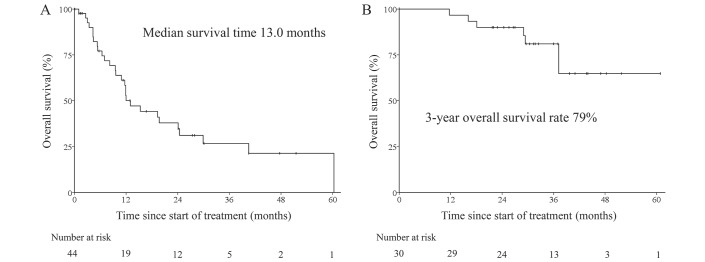
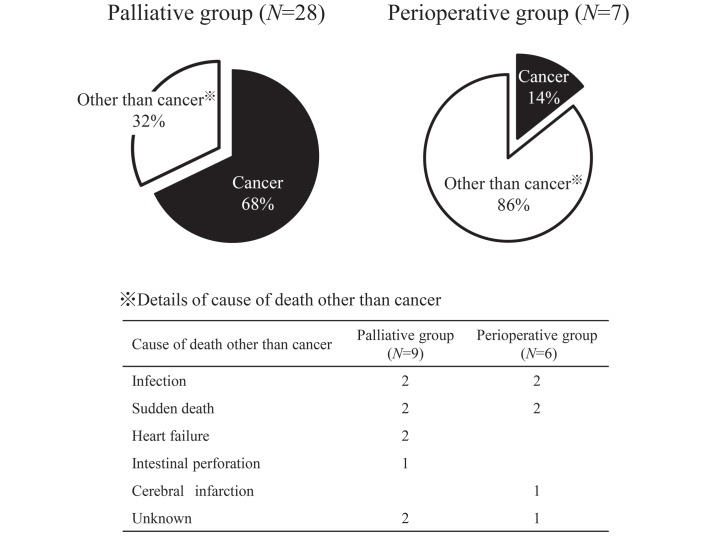
Results: Overall, 675 patients were registered and assessed for main primary cancer site involvement. Of 507 patients with primary site involvement, 74 patients (15%) received chemotherapy (44 as palliative chemotherapy and 30 as perioperative chemotherapy). The most commonly used cytotoxic drugs were fluoropyrimidine (15 patients), platinum (8 patients) and taxane (8 patients), and the dosage and timing of these drugs differed between institutions; however, the dosage of molecular targeted drugs (24 patients) and hormone therapy drugs (15 patients) was consistent. The median survival time of patients receiving palliative chemotherapy was 13.0 months (0.1-60.3 months). Three patients (6.8%) died from treatment-related causes and nine patients (20%) died of causes other than cancer. Of the 30 patients who received perioperative chemotherapy, 6 (20%) died of causes other than cancer within 3 years after the initiation of chemotherapy.
Conclusion: Among the haemodialysis patients with cancer who received chemotherapy, the rates of mortality from causes other than cancer might be high for both palliative and perioperative chemotherapy. Indications for the use of chemotherapy in patients undergoing haemodialysis should be considered carefully.
Keywords: anticancer drug; chemotherapy; dosage adjustment; end-stage renal disease; hemodialysis.
Conflict of interest statement
Competing interests: MN has received honoraria from Daiichi Sankyo and Taiho Pharmaceutical. MasM has received research grants from Chugai, Kyowa Hakko Kirin, Takeda, Daiichi Sankyo, Astellas, Otsuka, Baxter, Teijin Pharma and Shionogi. TS has received research grants from Baxter, Astellas, Kyowa Hakko Kirin, Teijin Pharma and Takeda. EB has received research grants from Takeda, Chugai, Eli Lilly, Merck Serono, Shionogi and Taiho. He has also received honorarium from Eli Lilly. KT has received research grants from Kyowa Hakko Kirin, Chugai, Takeda, Kissei, Otsuka, Daiichi Sankyo and Torii. He has also received honoraria from Kyowa Hakko Kirin, Chugai and Sanofi. His institution has received funding from Baxter. AN has received research grant from Daiichi Sankyo. HY has received honoraria from Medicon, Taiho, Chugai, Yakult Honsha, Bristol-Myers Squibb, Takeda and Kyowa Hakko Kirin. MY has been on the advisory board of Astellas and received research grants from Astellas, Chugai, Daiichi Sankyo, Fuji Yakuhin, Kyowa Hakko Kirin, Mitsubishi Tanabe, MSD, Nippon Boehringer Ingelheim, Baxter, Takeda Pharmaceutical Company, Fuso Pharmaceutical Industries and Terumo Corporation. ManM has received research grant from Chugai, Yakult Honsha, Ono Pharmaceutical, Ayumi Pharmaceutical, Showa Yakuhin Kako, Shionogi, Taiho, Terumo and Nippon Zoki Pharmaceutical Corporations.
Figures
References
LinkOut - more resources
Full Text Sources
Other Literature Sources
