


National cancer database analysis of outcomes in pediatric glioblastoma
- PMID: 29532996
- PMCID: PMC5911617
- DOI: 10.1002/cam4.1404
National cancer database analysis of outcomes in pediatric glioblastoma
Abstract
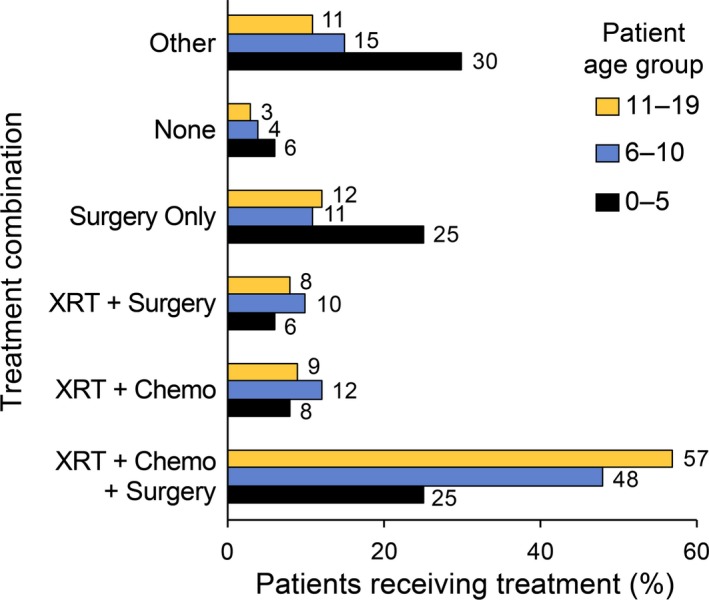
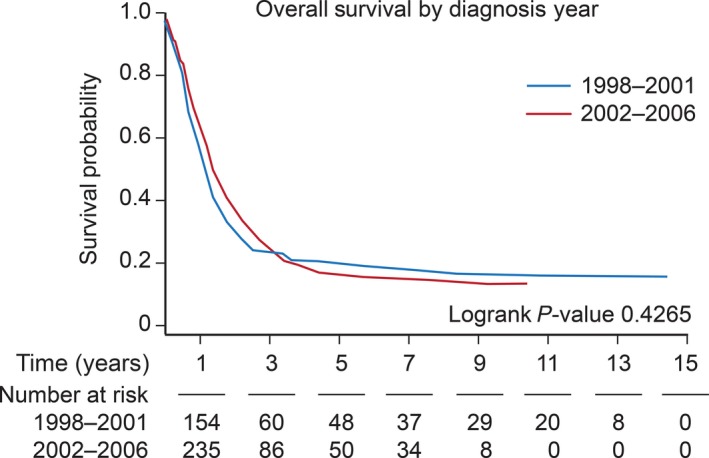
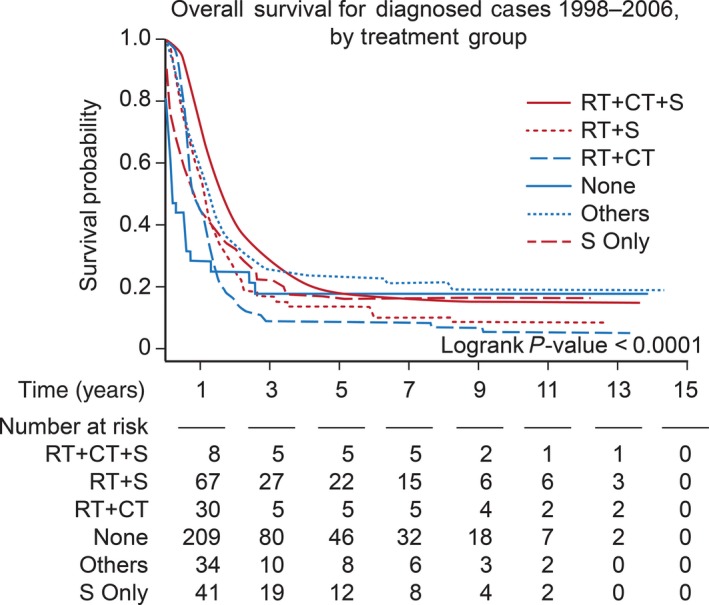
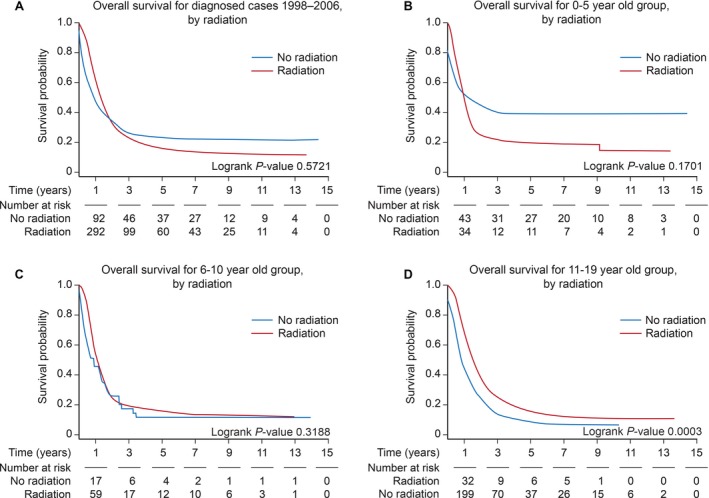
Glioblastoma in children is an aggressive disease with no defined standard therapy. We evaluated hospital-based demographic and survival patterns obtained through the National Cancer Database to better characterize children with glioblastoma. Our study identified 1173 patients from 0 to 19 years of age between 1998 and 2011. Comparisons were made among demographics, clinical characteristics, treatment, and survival variables. Fifty-four percent of patients were over 10 years of age. Approximately 80% of patients underwent either partial or complete resection. Adjuvant therapy was used variably, and its use increased with patient age. Forty-eight percent of patients received the combination of surgery, radiation, and chemotherapy, and 4% did not receive any treatment. As expected, patients ≤5 years of age had better 5-year survival than those ages 6-10 (P = 0.01) or 11-19 years (P = 0.0077). Other factors associated with poor survival included black race and central tumor location. Better outcomes were associated with treatment that included surgery, radiotherapy, and chemotherapy compared to any other treatment combinations. Radiotherapy had no impact on survival in the 0 to 10-year-old age group, but was associated with improved survival for patients 11-19 years. We report an extensive demographic and survival analysis of pediatric glioblastoma. The observed differences likely reflect variances in tumor biology and likelihood of treatment receipt. Improved survival was associated with the use of surgery, radiotherapy, and chemotherapy. Radiation therapy was not associated with survival in patients younger than 10 years of age.
Keywords: Outcomes; pediatric glioblastoma; survival; treatment.
© 2018 The Authors. Cancer Medicine published by John Wiley & Sons Ltd.
Figures
References
-
- Ostrom, Q. T. , Gittleman H., De Blank P. M., Finlay J. L., Gurney J. G., McKean‐Cowdin R., et al. 2016. American Brain Tumor Association Adolescent and young adult primary brain and central nervous system tumors diagnosed in the United States in 2008–2012. Neuro Oncol. 18(Suppl. 1):i1–i50. - PMC - PubMed
-
- Cavenee, W. K. , Louis D. N., Ohgaki H., and Wiestler O. D.. 2016. WHO classification of tumours of the central nervous system (revised 4th ed.). International Agency for Research on Cancer, Lyon.
Publication types
MeSH terms
Grants and funding
LinkOut - more resources
Full Text Sources
Other Literature Sources
Research Materials
