Effect of cytoreductive surgery and hyperthermic intraperitoneal chemotherapy on relapse pattern in primary epithelial ovarian cancer: a propensity score based case-control study
- PMID: 29533028
- PMCID: PMC5920229
- DOI: 10.3802/jgo.2018.29.e53
Effect of cytoreductive surgery and hyperthermic intraperitoneal chemotherapy on relapse pattern in primary epithelial ovarian cancer: a propensity score based case-control study
Abstract
Objective: Hyperthermic intraperitoneal chemotherapy (HIPEC) has been proposed as a treatment in ovarian cancer. A recently published RCT demonstrated that HIPEC prolongs disease-free survival (DFS) and overall survival (OS) in ovarian cancer. The aim of the study was to investigate oncologic results of cytoreductive surgery+HIPEC compared with cytoreductive surgery alone in advanced primary ovarian cancer with a particular attention to the pattern of recurrence.
Methods: This is a retrospective case control study with a propensity score (PS) matching of the patients. All the patients treated for primary advanced ovarian cancer who underwent interval surgery with or without HIPEC were collected; a PS was calculated in order to match cases to controls.
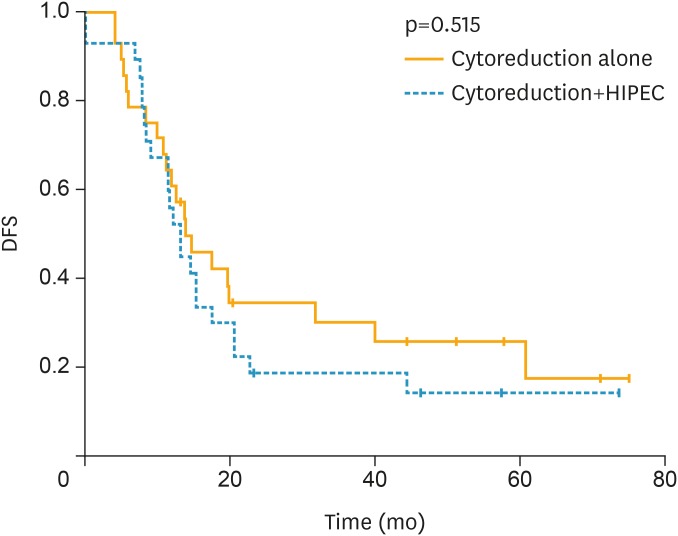
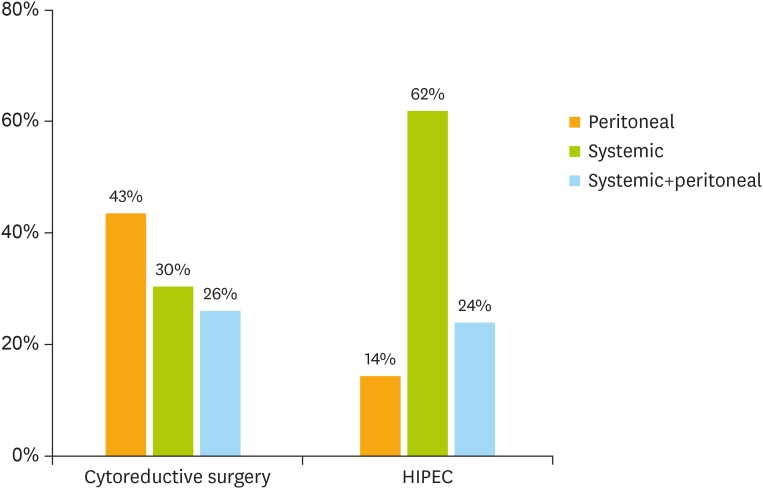
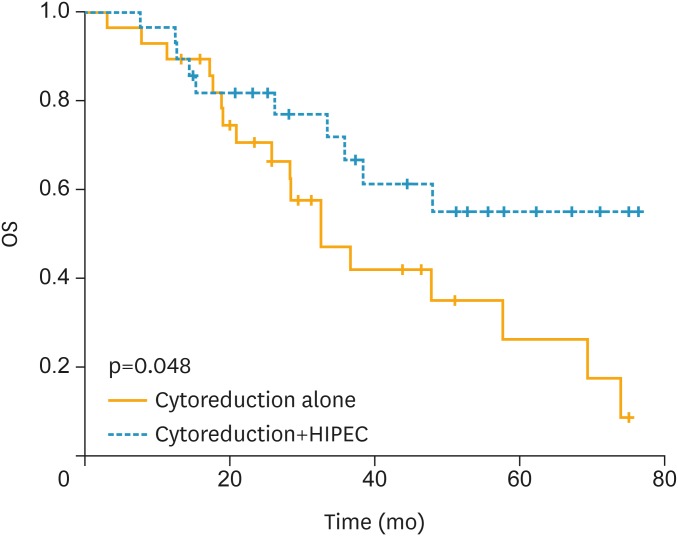
Results: Among 77 eligible patients 56 patients were included in the study. Preoperative patients' characteristics were homogeneous. No difference in morbidity and mortality after surgery were recorded. DFS was not different among the 2 groups (13.2 vs. 13.9 months, p=0.454) but OS was better in patients treated with HIPEC with no median reached vs. 35.5 months (p=0.048). Patients treated with cytoreductive surgery alone were more likely to have a peritoneal recurrence (43% vs. 14%).
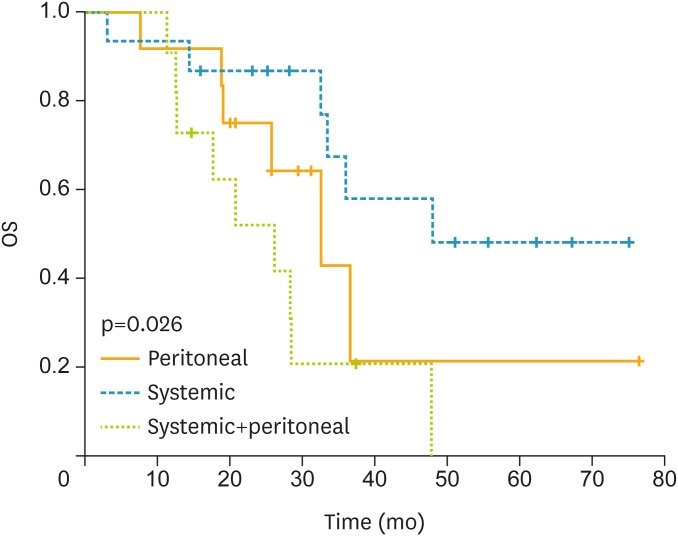
Conclusion: HIPEC seems to affect the relapse pattern with lesser peritoneal recurrence. This difference in relapse pattern seems to affect the OS with better results in patients treated with HIPEC. Further studies are needed to confirm these findings.
Keywords: Cytoreduction; Disease-Free Survival; Hyperthermia, Induced; Neoplasm Recurrence; Ovarian Neoplasms; Propensity Score.
Copyright © 2018. Asian Society of Gynecologic Oncology, Korean Society of Gynecologic Oncology.
Conflict of interest statement
No potential conflict of interest relevant to this article was reported.
Figures
References
-
- Jemal A, Bray F, Center MM, Ferlay J, Ward E, Forman D. Global cancer statistics. CA Cancer J Clin. 2011;61:69–90. - PubMed
-
- Jacquet P, Sugarbaker PH. Peritoneal-plasma barrier. Cancer Treat Res. 1996;82:53–63. - PubMed
-
- Flessner MF. Endothelial glycocalyx and the peritoneal barrier. Perit Dial Int. 2008;28:6–12. - PubMed
-
- Sugarbaker PH, Van Der Speeten K, Anthony Stuart O, Chang D. Impact of surgical and clinical factors on the pharmacology of intraperitoneal doxorubicin in 145 patients with peritoneal carcinomatosis. Eur J Surg Oncol. 2011;37:719–726. - PubMed
MeSH terms
LinkOut - more resources
Full Text Sources
Other Literature Sources
Medical