


Involvement of Acute Care Physical Therapists in Care Transitions for Older Adults Following Acute Hospitalization: A Cross-sectional National Survey
- PMID: 29533283
- PMCID: PMC6135710
- DOI: 10.1519/JPT.0000000000000187
Involvement of Acute Care Physical Therapists in Care Transitions for Older Adults Following Acute Hospitalization: A Cross-sectional National Survey
Abstract
Background and purpose: Recent evidence has suggested physical therapist involvement in care transitions after hospitalization is associated with reduced rates of hospital readmissions. However, little is known about how physical therapists participate in care transitions for older adults, the content of care communications, and the facilitators and barriers of implementing evidence-based care transition strategies into practice. Thus, the purpose of this article is to evaluate participation in care transition activities known to influence readmission risk among older adults, and understand perceptions of and barriers to participation in these activities.
Methods: We developed a survey questionnaire to quantify hospital-based physical therapist participation in care transitions and validated it using cognitive interviewing. It was introduced to a cross-sectional national sample of physical therapists who participate in the Academy of Acute Care Physical Therapy electronic discussion board using a SurveyMonkey tool.
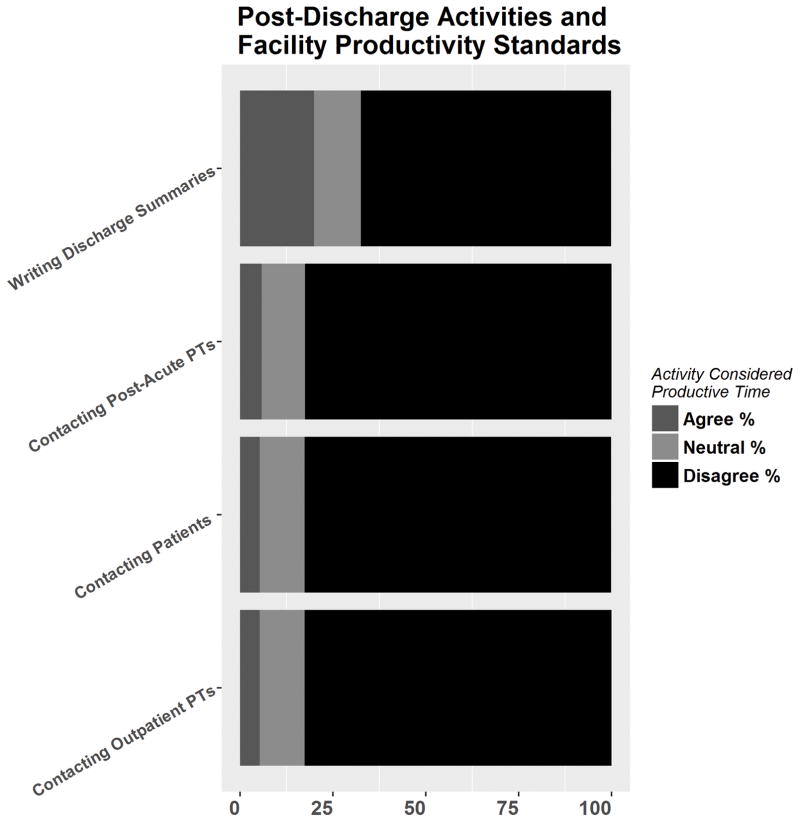
Results and discussion: More than 90% of respondents agreed they routinely recommended a discharge location and provided recommendations for durable medical equipment for patients at the time of hospital discharge. Respondents did not routinely initiate communication with therapists in other care settings, or follow up with patients to determine whether recommendations were followed. A majority of respondents agreed their facilities would not consider many key care transition activities to count as productive time.This survey provides a novel insight into how hospital-based physical therapists participate in care transitions. Communications between rehabilitation providers across care settings are infrequent, even though those communications are recommended to help reduce readmissions. However, administrative barriers were elucidated in this study that may help explain lack of therapist involvement.
Conclusions: Physical therapists' communications across health care setting about older adults discharging from acute care hospitalization are infrequent, but may represent a meaningful intervention target for future studies. Future research is needed to evaluate best practices for hospital-based physical therapists during care transitions.
Conflict of interest statement
Figures
References
-
- Kripalani S, LeFevre F, Phillips CO, et al. Deficits in communication and information transfer between hospital-based and primary care physicians: implications for patient safety and continuity of care. JAMA. 2007;297(8):831–841. - PubMed
-
- Witherington E, Pirzada O, Avery A. Communication gaps and readmissions to hospital for patients aged 75 years and older: observational study. Qual Saf Health Care. 2008;17(1):71–75. - PubMed
Publication types
MeSH terms
Grants and funding
LinkOut - more resources
Full Text Sources
Other Literature Sources
