


Perioperative beta-blockers for preventing surgery-related mortality and morbidity
- PMID: 29533470
- PMCID: PMC6494407
- DOI: 10.1002/14651858.CD004476.pub3
Perioperative beta-blockers for preventing surgery-related mortality and morbidity
Abstract
Background: Randomized controlled trials have yielded conflicting results regarding the ability of beta-blockers to influence perioperative cardiovascular morbidity and mortality. Thus routine prescription of these drugs in unselected patients remains a controversial issue.
Objectives: The objective of this review was to systematically analyse the effects of perioperatively administered beta-blockers for prevention of surgery-related mortality and morbidity in patients undergoing any type of surgery while under general anaesthesia.
Search methods: We identified trials by searching the following databases from the date of their inception until June 2013: MEDLINE, Embase , the Cochrane Central Register of Controlled Trials (CENTRAL), Biosis Previews, CAB Abstracts, Cumulative Index to Nursing and Allied Health Literature (CINAHL), Derwent Drug File, Science Citation Index Expanded, Life Sciences Collection, Global Health and PASCAL. In addition, we searched online resources to identify grey literature.
Selection criteria: We included randomized controlled trials if participants were randomly assigned to a beta-blocker group or a control group (standard care or placebo). Surgery (any type) had to be performed with all or at least a significant proportion of participants under general anaesthesia.
Data collection and analysis: Two review authors independently extracted data from all studies. In cases of disagreement, we reassessed the respective studies to reach consensus. We computed summary estimates in the absence of significant clinical heterogeneity. Risk ratios (RRs) were used for dichotomous outcomes, and mean differences (MDs) were used for continuous outcomes. We performed subgroup analyses for various potential effect modifiers.
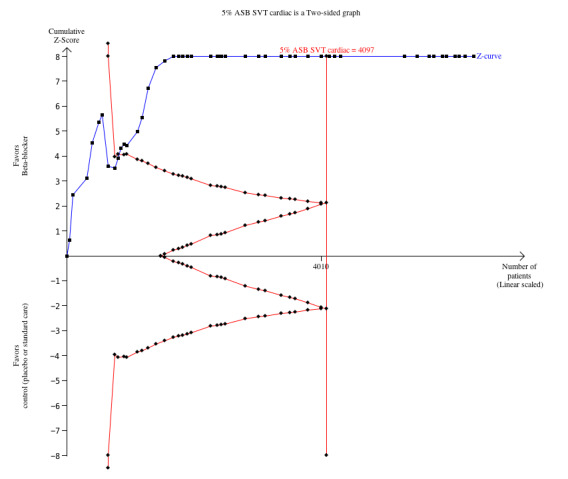
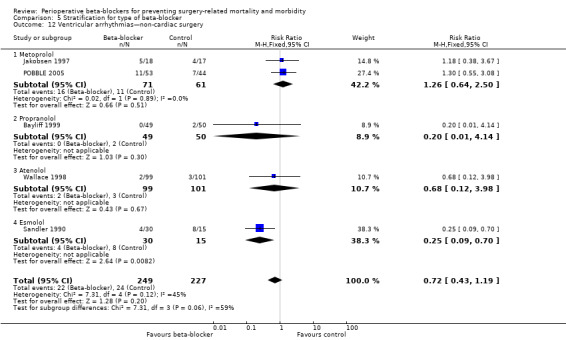
Main results: We included 88 randomized controlled trials with 19,161 participants. Six studies (7%) met the highest methodological quality criteria (studies with overall low risk of bias: adequate sequence generation, adequate allocation concealment, double/triple-blinded design with a placebo group, intention-to-treat analysis), whereas in the remaining trials, some form of bias was present or could not be definitively excluded (studies with overall unclear or high risk of bias). Outcomes were evaluated separately for cardiac and non-cardiac surgery.CARDIAC SURGERY (53 trials)We found no clear evidence of an effect of beta-blockers on the following outcomes.• All-cause mortality: RR 0.73, 95% CI 0.35 to 1.52, 3783 participants, moderate quality evidence.• Acute myocardial infarction (AMI): RR 1.04, 95% CI 0.71 to 1.51, 3553 participants, moderate quality evidence.• Myocardial ischaemia: RR 0.51, 95% CI 0.25 to 1.05, 166 participants, low quality evidence.• Cerebrovascular events: RR 1.52, 95% CI 0.58 to 4.02, 1400 participants, low quality evidence.• Hypotension: RR 1.54, 95% CI 0.67 to 3.51, 558 participants, low quality evidence.• Bradycardia: RR 1.61, 95% CI 0.97 to 2.66, 660 participants, low quality evidence.• Congestive heart failure: RR 0.22, 95% CI 0.04 to 1.34, 311 participants, low quality evidence.Beta-blockers significantly reduced the occurrence of the following endpoints.• Ventricular arrhythmias: RR 0.37, 95% CI 0.24 to 0.58, number needed to treat for an additional beneficial outcome (NNTB) 29, 2292 participants, moderate quality evidence.• Supraventricular arrhythmias: RR 0.44, 95% CI 0.36 to 0.53, NNTB five, 6420 participants, high quality evidence.• On average, beta-blockers reduced length of hospital stay by 0.54 days (95% CI -0.90 to -0.19, 2450 participants, low quality evidence).NON-CARDIAC SURGERY (35 trials)Beta-blockers significantly increased the occurrence of the following adverse events.• All-cause mortality: RR 1.25, 95% CI 1.00 to 1.57, 11,413 participants, low quality of evidence, number needed to treat for an additional harmful outcome (NNTH) 167.• Hypotension: RR 1.50, 95% CI 1.38 to 1.64, NNTH 16, 10,947 participants, high quality evidence.• Bradycardia: RR 2.23, 95% CI 1.48 to 3.36, NNTH 21, 11,033 participants, moderate quality evidence.We found a potential increase in the occurrence of the following outcomes with the use of beta-blockers.• Cerebrovascular events: RR 1.59, 95% CI 0.93 to 2.71, 9150 participants, low quality evidence.Whereas no clear evidence of an effect was found when all studies were analysed, restricting the meta-analysis to low risk of bias studies revealed a significant increase in cerebrovascular events with the use of beta-blockers: RR 2.09, 95% CI 1.14 to 3.82, NNTH 265, 8648 participants.Beta-blockers significantly reduced the occurrence of the following endpoints.• AMI: RR 0.73, 95% CI 0.61 to 0.87, NNTB 76, 10,958 participants, high quality evidence.• Myocardial ischaemia: RR 0.51, 95% CI 0.34 to 0.77, NNTB nine, 978 participants, moderate quality evidence.• Supraventricular arrhythmias: RR 0.73, 95% CI 0.57 to 0.94, NNTB 112, 8744 participants, high quality evidence.We found no clear evidence of an effect of beta-blockers on the following outcomes.• Ventricular arrhythmias: RR 0.68, 95% CI 0.31 to 1.49, 476 participants, moderate quality evidence.• Congestive heart failure: RR 1.18, 95% CI 0.94 to 1.48, 9173 participants, moderate quality evidence.• Length of hospital stay: mean difference -0.45 days, 95% CI -1.75 to 0.84, 551 participants, low quality evidence.
Authors' conclusions: According to our findings, perioperative application of beta-blockers still plays a pivotal role in cardiac surgery, as they can substantially reduce the high burden of supraventricular and ventricular arrhythmias in the aftermath of surgery. Their influence on mortality, AMI, stroke, congestive heart failure, hypotension and bradycardia in this setting remains unclear.In non-cardiac surgery, evidence shows an association of beta-blockers with increased all-cause mortality. Data from low risk of bias trials further suggests an increase in stroke rate with the use of beta-blockers. As the quality of evidence is still low to moderate, more evidence is needed before a definitive conclusion can be drawn. The substantial reduction in supraventricular arrhythmias and AMI in this setting seems to be offset by the potential increase in mortality and stroke.
Conflict of interest statement
H. Blessberger: received consultancy honoraria from Ever Neuro Pharma in 2012.
J. Kammler: none known.
H. Domanovits: received honoraria from MSD, Sanofi‐Aventis, Boehringer‐Ingelheim and Amomed Pharma for giving lectures and consulting.
O. Schlager: none known.
B. Wildner: none known.
D. Azar: none known.
M. Schillinger: none known.
F. Wiesbauer: received payments from Medtronic for lectures on cardiac resynchronization therapy and received travel grants to attend the EuroEcho meeting from GE and Medtronic. Dr. Wiesbauer was part‐time employee of Ever Neuro Pharma between September 2010 and September 2011 and is currently managing director of Medmastery ‐ a company producing online training materials for doctors. All these activities were unrelated to this review.
C. Steinwender: received honoraria from MSD, Sanofi‐Aventis, Boehringer‐Ingelheim, Bayer Austria, Medtronic, Biotronik, Abbott Vascular, St.Jude Medical and Boston Scientific for giving lectures.
Ever Neuro Pharma, Medmastery, Sanofi‐Aventis, Boehringer‐Ingelheim Europe, Medtronic, Biotronik, GE, Bayer Austria, Abbott Vascular, St. Jude Medical and Boston Scientific do not produce, market or distribute any of the studied drug entities.
MSD (timolol) and Amomed Pharma (esmolol) both have a beta‐blocker in their portfolio.
Figures






Update of
-
Perioperative beta-blockers for preventing surgery-related mortality and morbidity.Cochrane Database Syst Rev. 2014 Sep 18;(9):CD004476. doi: 10.1002/14651858.CD004476.pub2. Cochrane Database Syst Rev. 2014. Update in: Cochrane Database Syst Rev. 2018 Mar 13;3:CD004476. doi: 10.1002/14651858.CD004476.pub3. PMID: 25233038 Updated.
References
References to studies included in this review
Abel 1983 {published data only}
-
- Abel RM, Gelder HM, Pores IH, Liguori J. Continued propranolol administration following coronary bypass surgery. Archives of Surgery 1983;118:727‐31. [PUBMED: 6601941] - PubMed
Ali 1997 {published data only}
-
- Ali IM, Sanalla AA, Clark V. Beta‐blocker effects on postoperative atrial fibrillation. European Journal of Cardio‐Thoracic Surgery 1997;11:1154‐7. [PUBMED: 9237602] - PubMed
Apipan 2010 {published data only}
-
- Apipan B, Rummasak D. Efficacy and safety of oral propranolol premedication to reduce reflex tachycardia during hypotensive anesthesia with sodium nitroprusside in orthognathic surgery: a double‐blind randomized clinical trial. American Association of Oral and Maxillofacial Surgeons 2010;68:120‐4. [PUBMED: 20006165] - PubMed
Auer 2004 {published data only}
-
- Auer J, Weber T, Berent R, Puschmann R, Hartl P, Ng C, et al. A comparison between oral antiarrhythmic drugs in the prevention of atrial fibrillation after cardiac surgery: the pilot study of prevention of postoperative atrial fibrillation (SSPAF), a randomized, placebo‐controlled trial. American Heart Journal 2004;147(4):636‐43. [PUBMED: 15077078] - PubMed
Babin‐Ebell 1996 {published data only}
-
- Babin‐Ebell J, Keith PR, Elert O. Efficacy and safety of low‐dose propranolol versus diltiazem in the prophylaxis of supraventricular tachyarrhythmia after coronary artery bypass grafting. European Journal of Cardio‐Thoracic Surgery 1996;10:412‐6. [PUBMED: 8817135] - PubMed
Bayliff 1999 {published data only}
-
- Bayliff CD, Massel DR, Inculet RI, Malthaner RA, Quinton SD, Powell FS, et al. Propranolol for the prevention of postoperative arrhythmias in general thoracic surgery. Annals of Thoracic Surgery 1999;67:182‐6. [PUBMED: 10086546 ] - PubMed
Bert 2001 {published data only}
-
- Bert A, Reinert SE, Singh AK. A beta‐blocker, not magnesium, is effective prophylaxis for atrial tachyarrhythmias after coronary artery bypass graft surgery. Journal of Cardiothoracic and Vascular Anesthesia 2001;15:204‐9. [PUBMED: 11312480] - PubMed
Booth 2004 {published data only}
-
- Booth JV, Ward EE, Colgan KC, Funk BL, El‐Moalem H, Smith MP, et al. Metoprolol and coronary artery bypass grafting surgery: does intraoperative metoprolol attenuate acute β‐adrenergic receptor desensitization during cardiac surgery?. Anaesthesia and Analgesia 2004;98:1224‐31. [PUBMED: 15105192] - PubMed
Burns 1988 {published data only}
-
- Burns JMA, Hart DM, Hughes RL, Kelman AW, Hillis WS. Effects of nadolol on arrhythmias during laparoscopy performed under general anaesthesia. British Journal of Anaesthesiology 1988;61:345‐6. [PUBMED: 2972306] - PubMed
But 2006 {published data only}
-
- But AK, Yapici E, Erdil F, Öztürk E, Gedik E, Durmus M, et al. The effects of esmolol and magnesium on blood glucose regulation in the patients with type II diabetes mellitus undergoing CABG surgery [Koroner arter cerrahisi planlanan tip II diyabetes mellitus olgularinda esmolol ve magnezyumun kan sekeri regülasyonuna etkisi]. Gogus‐Kalp‐Damar Anestezi ve Yogun Bakim Dernegi Dergesi 2006;124(4):143‐8. [PUBMED: not available]
Coleman 1980 {published data only}
-
- Coleman AJ, Jordan C. Cardiovascular response to anaesthesia. Influence of beta‐adrenergic blockade with metoprolol. Anaesthesia 1980;35:972‐8. [PUBMED: 7004251] - PubMed
Connolly 2003 {published data only}
-
- Connolly SJ, Cybulsky I, Lamy A, Roberts RS, Tech M, O'Brien B, et al. Double‐blind, placebo‐controlled, randomized trial of prophylactic metoprolol for reduction of hospital length of stay after heart surgery: the beta‐blocker length of stay (BLOS) study. American Heart Journal 2003;145:226‐32. [PUBMED: 12595838] - PubMed
Cork 1995 {published data only}
-
- Cork RC, Kramer TH, Dreischmeier B, Behr S, Nardo JA. The effect of esmolol given during cardiopulmonary bypass. Cardiovascular Anesthesia 1995;80:28‐40. [PUBMED: 7802296] - PubMed
Cucchiara 1986 {published data only}
-
- Cicchiara RF, Benefiel DJ, Matteo RS, DeWood M, Albin MS. Evaluation of esmolol in controlling increases in heart rate and blood pressure during endotracheal intubation in patients undergoing carotid endarterectomy. Anesthesiology 1986;65:528‐31. [PUBMED: 2877599 ] - PubMed
Daudon 1986 {published data only}
-
- Daudon P, Corcos T, Gandjabakhch I, Levasseur JP, Cabrol A, Cabrol C. Prevention of atrial fibrillation or flutter by acebutolol after coronary bypass grafting. American Journal of Cardiology 1986;58:933‐6. [PUBMED: 3535474] - PubMed
De Azevedo Lúcio 2003 {published data only}
-
- Azevedo Lúcio E, Flores A, Blacher C, Leaes PE, Lucchese FA, Pinto Ribeiro J. Effectiveness of metoprolol in preventing atrial fibrillation and flutter in the postoperative period of coronary artery bypass graft surgery [Efetividade do metoprolol na prevencao de fibrilacao e flutter atrial no pos‐operatorio de cirurgia de revascularizacao miocardica]. Arquivos Brasileiros de Cardiologia 2003;82(1):37‐41. [PUBMED: 14978593] - PubMed
DIPOM ‐ Juul 2006 {published and unpublished data}
Dy 1998 {published data only}
-
- Dy J, Jayasundera T, Kapadala D, Cuperman C, Whitman G, DiSesa V, et al. Post‐operative atrial fibrillation—a randomized trial of metoprolol, flecainide, and placebo. Journal of the American College of Cardiology. 1998; Vol. 31, issue SuplA:324A.
Evrard 2000 {published data only}
-
- Evrard P, Gonzalez M, Jamart J, Malhomme B, Blommaert D, Eucher P, et al. Prophylaxis of supraventricular and ventricular arrhythmias after coronary artery bypass grafting with low‐dose sotalol. Annals of Thoracic Surgery 2000;70:151‐6. [PUBMED: 10921700] - PubMed
Forlani 2002 {published data only}
-
- Forlani S, Paulis R, Notaris S, Nardi P, Tomai F, Proietti I, et al. Combination of sotalol and magnesium prevents atrial fibrillation after coronary artery bypass grafting. Annals of Thoracic Surgery 2002;74:720‐6. [PUBMED: 12238830] - PubMed
Gibson 1988 {published data only}
-
- Gibson BE, Black S, Maass L, Cucchiara RF. Esmolol for the control of hypertension after neurologic surgery. Clinical Pharmacologic Therapy 1988;44:650‐3. [PUBMED: 2904310] - PubMed
Gomes 1999 {published data only}
-
- Gomes JA, Ip J, Santoni‐Rugiu F, Mehta D, Ergin A, Lansman S, et al. Oral d,l sotalol reduces the incidence of postoperative atrial fibrillation in coronary artery bypass surgery patient: a randomized, double‐blind, placebo‐controlled study. Journal of the American College of Cardiology 1999;34(2):334‐9. [PUBMED: 10440141] - PubMed
Graham 1996 {published data only}
-
- Graham SP, Hasnain S, Celano J. Low dose but not medium dose beta blockers reduce post‐operative atrial fibrillation. Circulation 1996;94(8 Suppl 1):190‐1.
Gupta 2011 {published data only}
-
- Gupta D, Srivastava S, Dubey RK, Prakash PS, Singh PK, Singh U. Comparative evaluation of atenolol and clonidine premedication on cardiovascular response to nasal speculum insertion during trans‐sphenoid surgery for resection of pituitary adenoma: a prospective, randomised, double‐blind, controlled study. Indian Journal of Anaesthesia 2011;55(2):135‐40. [PUBMED: 21712869] - PMC - PubMed
Hammon 1984 {published data only}
-
- Hammon JW, Wood AJJ, Prager RL, Wood M, Muirhead J, Bender HW Jr. Perioperative beta blockade with propranolol: reduction in myocardial oxygen demands and incidence of atrial and ventricular arrhythmias. Annals of Thoracic Surgery 1984;38:363‐7. [PUBMED: 6385890] - PubMed
Harrison 1987 {published data only}
-
- Harrison L, Ralley FE, Wynands E, Robbins GR, Sami M, Ripley R, et al. The role of an ultra short‐acting adrenergic blocker (esmolol) in patients undergoing coronary artery bypass surgery. Anesthesiology 1987;66:413‐8. [PUBMED: 2881505] - PubMed
Inada 1989 {published data only}
-
- Inada E, Cullen DJ, Nemeskal AR, Teplick R. Effect of labetalol or lidocaine on the hemodynamic response to intubation: a controlled randomized double‐blind study. Journal of Clinical Anesthesiology 1998;1(3):207‐13. [PUBMED: 2697239] - PubMed
Ivey 1983 {published data only}
-
- Ivey MF, Ivey TD, Bailey WW, Williams DB, Hessel EA, Miller DW. Influence of propranolol on supraventricular tachycardia early after coronary artery revascularization. Journal of Cardiovascular Surgery 1983;85:214‐8. [PUBMED: 6337306] - PubMed
Jacquet 1994 {published data only}
-
- Jacquet L, Evenepoel M, Marenne F, Evrard P, Verhelst R, Dion R, et al. Hemodynamic effects and safety of sotalol in the prevention of supraventricular arrhythmias after coronary artery bypass surgery. Journal of Cardiothoracic and Vascular Anesthesia 1994;8:431‐6. [PUBMED: 7948800] - PubMed
Jakobsen 1992 {published data only}
-
- Jakobsen CJ, Blom L. Effect of pre‐operative metoprolol on cardiovascular and catecholamine response and bleeding during hysterectomy. European Journal of Anaesthesiology 1992;9:209‐15. [PUBMED: 1600972] - PubMed
Jakobsen 1997 {published data only}
-
- Jakobsen CJ, Bille S, Ahlburg P, Rybro L, Pedersen KD, Rasmussen B. Preoperative metoprolol improves cardiovascular stability and reduces oxygen consumption after thoracotomy. Acta Anaesthesiologica Scandinavica 1997;41:1324‐30. [PUBMED: 9422300] - PubMed
Janssen 1986 {published data only}
-
- Janssen J, Loomans L, Harink J, Taams M, Brunninkhuis L, Starre P, et al. Prevention and treatment of supraventricular tachycardia shortly after coronary artery bypass grafting: a randomized open trial. Angiology 1986;60:601‐9. [PUBMED: 2874755] - PubMed
Kawaguchi 2010 {published data only}
-
- Kawaguchi M, Utada K, Yoshitani K, Uchino H, Takeda Y, Masui K, et al. Effects of a short‐acting β1 receptor antagonist landiolol on hemodynamics and tissue injury markers in patients with subarachnoid hemorrhage undergoing intracranial aneurysm surgery. Journal of Neurosurgical Anesthesiology 2010;22(3):230‐9. [PUBMED: 20118792] - PubMed
Khuri 1987 {published data only}
-
- Khuri SF, Okike N, Josa M, Salm TJV, Assoussa S, Leone L, et al. Efficacy of nadolol in preventing supraventricular tachycardia after coronary artery bypass grafting. American Journal of Cardiology 1987;60:51‐8D. [PUBMED: 3498356] - PubMed
Kurian 2001 {published data only}
-
- Kurian SM, Evans R, Fernandes NO, Sherry KM. The effect of an infusion of esmolol on the incidence of myocardial ischaemia during tracheal extubation following coronary artery surgery. Anaesthesia 2001;56:1163‐8. [PUBMED: 11736772] - PubMed
Lai 2006 {published data only}
-
- Lai R, Xu M, Huang W, Wang X, Zeng W, Lin W. Beneficial effects of metoprolol on perioperative cardiac function of elderly esophageal cancer patients. Chinese Journal of Cancer 2006;25(5):609‐13. [PUBMED: 16687084] - PubMed
Lamb 1988 {published data only}
-
- Lamb RK, Prabhakar G, Thorpe JAC, Smith S, Norton R, Dyde JA. The use of atenolol in the prevention of supraventricular arrhythmias following coronary artery surgery. European Heart Journal 1988;9:32‐6. [PUBMED: 3257915] - PubMed
Lee 2010 {published data only}
Liu 1986 {published data only}
-
- Liu PL, Gatt S, Gugino LD, Mallampati SR, Covino BG. Esmolol for control of increases in heart rate and blood pressure during tracheal intubation after thiopentone and succinylcholine. Canadian Anaesthetists' Society Journal 1986;33:556‐62. [PUBMED: 3768764] - PubMed
Liu 2006 {published data only}
-
- Liu Y, Huang C, He M, Zhang L, Cai H, Guo Q. Influences of perioperative metoprolol on haemodynamics and myocardial ischaemia in elderly patients undergoing noncardiac surgery. Journal of Central South University ‐ Medical Sciences (Zhong Nan Da Xue Xue Bao Yi Xue Ban) 2006;31(2):249‐53. [PUBMED: 16706126] - PubMed
Magnusson 1986 {published data only}
-
- Magnusson J, Thulin T, Werner O, Järhult J, Thomson D. Haemodynamic effects of pretreatment with metoprolol in hypertensive patients undergoing surgery. British Journal of Anaesthesiology 1986;58:251‐60. [PUBMED: 3511930] - PubMed
Mangano 1996 {published data only}
-
- Mangano DT, Layug EL, Wallace A, Tateo I. Effect of atenolol on mortality and cardiovascular morbidity after noncardiac surgery. New England Journal of Medicine 1996;335(23):1713‐20. [PUBMED: 8929262] - PubMed
Martinussen 1988 {published data only}
-
- Martinussen HJ, Lolk A, Szczepanski C, Alstrup P. Supraventricular tachyarrhythmias after coronary bypass surgery ‐ a double blind randomized trial of prophylactic low dose propranolol. Thoracic Cardiovascular Surgeon 1988;36:206‐7. [PUBMED: 2903581] - PubMed
Marwick 2009 {published data only}
-
- Marwick TH, Branagan H, Venkatesh B, Stewart S. Use of a nurse‐led intervention to optimize beta‐blockade for reducing cardiac events after major noncardiac surgery. American Heart Journal 2009;157(4):784‐90. [PUBMED: 19332211] - PubMed
Matangi 1985 {published data only}
-
- Matangi MF, Neutze JM, Graham KJ, Hill DG, Kerr AR, Barratt‐Boyes BG. Arrhythmia prophylaxis after aorta‐coronary bypass. The effect of minidose propranolol. Journal of Thoracic and Cardiovascular Surgery 1985;89:439‐43. [PUBMED: 3871883] - PubMed
Matangi 1989 {published data only}
-
- Matangi MF, Strickland J, Garbe GJ, Habib N, Basu A, Burgess JJ, et al. Atenolol for the prevention of arrhythmias following coronary artery bypass grafting. Canadian Journal of Cardiology 1989;5(4):229‐34. [PUBMED: 2659151] - PubMed
Materne 1985 {published data only}
-
- Materne P, Larbuisson R, Collignon P, Limet R, Kulbertus H. Prevention by acebutolol of rhythm disorders following coronary bypass surgery. International Journal of Cardiology 1985;8:275‐83. [PUBMED: 3894250] - PubMed
Matsuura 2001 {published data only}
-
- Matsuura K, Takahara Y, Sudo Y, Ishida K. Effect of sotalol in the prevention of atrial fibrillation following coronary artery bypass grafting. Japanese Journal of Thoracic and Cardiovascular Surgery 2001;49:614‐7. [PUBMED: 11692587] - PubMed
Miller 1990 {published data only}
-
- Miller DR, Martineau RJ, Hull KA, Hill J. Bolus administration of esmolol for controlling the hemodynamic response to laryngoscopy and intubation: efficacy and effects on myocardial performance. Journal of Cardiothoracic Anesthesia 1990;4(5 Suppl 2):31‐6.
Miller 1991 {published data only}
-
- Miller DR, Martineau RJ, Wynands JE, Hill J. Bolus administration of esmolol for controlling the haemodynamic response to tracheal intubation: the Canadian multicentre trial. Canadian Journal of Anesthesia 1991;38(7):849‐58. [PUBMED: 1683818 ] - PubMed
Mohr 1981 {published data only}
-
- Mohr R, Smolinsky A, Goor DA. Prevention of supraventricular tachyarrhythmia with low‐dose propranolol after coronary bypass. Journal of Thoracic and Cardiovascular Surgery 1981;81:840‐5. [PUBMED: 7015021] - PubMed
Moon 2011 {published data only}
-
- Moon YE, Hwang WJ, Koh HJ, Min JY, Lee J. The sparing effect of low‐dose esmolol on sevoflurane during laparoscopic gynaecological surgery. Journal of International Medical Research 2011;39:1861‐9. [PUBMED: 22117987 ] - PubMed
Myhre 1984 {published data only}
-
- Myhre ESP, Sorlie D, AArbakke J, Hals PA, Straume B. Effects of low dose propranolol after coronary bypass surgery. Journal of Cardiovascular Surgery 1984;25:348‐51. [PUBMED: 6148345] - PubMed
Neary 2006 {published data only}
-
- Neary WD, McCrirrick A, Foy C, Heather BP, Earnshaw JJ. Lessons learned from a randomised controlled study of perioperative beta blockade in high risk patients undergoing emergency surgery. Surgeon 2006;4(3):139‐43. [PUBMED: 16764198] - PubMed
Neustein 1994 {published data only}
-
- Neustein SM, Bronheim DS, Lasker S, Reich DL, Thys DM. Esmolol and intraoperative myocardial ischemia: a double‐blind study. Journal of Cardiothoracic and Vascular Anesthesia 1994;8(3):273‐7. [PUBMED: 7914754] - PubMed
Nyström 1993 {published data only}
-
- Nyström U, Edvardsson N, Berggren H, Pizzarelli GP, Radergran K. Oral sotalol reduces the incidence of atrial fibrillation after coronary artery bypass surgery. Thoracic and Cardiovascular Surgeon 1993;41:34‐7. [PUBMED: 8103611] - PubMed
Ogawa 2013 {published data only}
Oka 1980 {published data only}
-
- Oka Y, Frishman W, Becker RM, Kadish A, Strom J, Matsumoto M, et al. Clinical pharmacology of the new beta‐adrenergic blocking drugs. Part 10. Beta‐adrenoceptor blockade and coronary artery surgery. American Heart Journal 1980;99(2):255‐69. [PUBMED: 6101516] - PubMed
Ormerod 1984 {published data only}
Osada 2012 {published data only}
-
- Osada H, Nakajima H, Masuyama S, Morishima M, Su T. Landiolol hydrochloride: prevention of atrial fibrillation after open‐heart surgery. European Heart Journal 2012;33(Suppl 1):65. [DOI: 10.1093/eurheartj/ehs281] - DOI
Oxorn 1990 {published data only}
-
- Oxorn D, Know JWD, Hill J. Bolus doses of esmolol for the prevention of perioperative hypertension and tachycardia. Canadian Journal of Anaesthesiology 1990;37(2):206‐9. [PUBMED: 1968784] - PubMed
Paull 1997 {published data only}
-
- Paull DL, Tidwell SL, Guyton SW, Harvey E, Woolf RA, Holmes JR, et al. Beta‐blockade to prevent atrial dysrhythmias following coronary bypass surgery. American Journal of Surgery 1997;173:419‐21. [PUBMED: 9168080] - PubMed
Pfisterer 1997 {published data only}
-
- Pfister ME, Klöter‐Weber UC, Huber M, Osswald S, Buser PT, Skarvan K, et al. Prevention of supraventricular tachyarrhythmias after open heart operation by low‐dose sotalol: a prospective, double‐blind, randomized, placebo‐controlled study. Annals of Thoracic Surgery 1997;64:1113‐9. [PUBMED: 9354537] - PubMed
POBBLE 2005 {published data only}
-
- Brady AR, Gibbs JS, Greenhalgh RM, Powell JT, Sydes MR, POBBLE trial investigators. Perioperative beta‐blockade (POBBLE) for patients undergoing infrarenal vascular surgery: results of a randomized double‐blind controlled trial. Journal of Vascular Surgery 2005;41(4):602‐9. [PUBMED: 15874923] - PubMed
POISE 2008 {published data only}
-
- Devereaux PJ, Yang H, Yusuf S, Guyatt G, Leslie K, Villar JC, et al. Effects of extended‐release metoprolol succinate in patients undergoing non‐cardiac surgery (POISE trial): a randomised controlled trial. Lancet 2008;371:1839‐47. [PUBMED: 18479744] - PubMed
Raby 1999 {published data only}
-
- Raby KE, Brull SJ, Timimi F, Akhtar S, Rosenbaum S, Naimi C, et al. The effect of heart rate control on myocardial ischemia among high‐risk patients after vascular surgery. Anesthesia and Analgesia 1999;88:477‐82. [PUBMED: 10071990] - PubMed
Reves 1990 {published data only}
-
- Reves JG, Croughwell ND, Hawkins E, Smith LR, Jacobs JR, Rankin S, et al. Esmolol for treatment of intraoperative tachycardia and/or hypertension in patients having cardiac operations. Bolus loading technique. Journal of Thoracic and Cardiovascular Surgery 1990;100:221‐7. [PUBMED: 1974664] - PubMed
Rubin 1987 {published data only}
-
- Rubin DA, Nieminski KE, Reed GE, Herman MV. Predictors, prevention, and long‐term prognosis of atrial fibrillation after coronary artery bypass graft operation. Journal of Thoracic and Cardiovascular Surgery 1987;94:331‐5. [PUBMED: 3306163] - PubMed
Sakaguchi 2012 {published data only}
-
- Sakaguchi M, Sasaki Y, Hidekazu H, Hosono M, Nakahira A, Seo H, et al. Efficacy of landiolol hydrochloride for prevention of atrial fibrillation after heart valve surgery. International Heart Journal 2012;53(6):359‐63. [PUBMED: 23258136] - PubMed
Salazar 1979 {published data only}
-
- Salazar C, Frishman W, Friedman S, Patel J, Lin YT, Oka Y, et al. Beta‐blockade therapy for supraventricular tachyarrhythmias after coronary surgery: a propranolol withdrawal syndrome?. Angiology 1979;30(12):816‐9. [PUBMED: 316976] - PubMed
Sandler 1990 {published data only}
-
- Sandler AN, Leitch LF, Badner NH, Colmenares M, Kimball B. Esmolol compared with placebo in preventing increases in heart rate and blood pressure during rigid bronchoscopy. Journal of Cardiothoracic Anesthesia 1990;4(5 Suppl 2):44‐50.
Sezai 2011 {published data only}
-
- Sezai A, Minami K, Nakai T, Hata M, Yoshitake I, Wakui S, et al. Landiolol hydrochloride for prevention of atrial fibrillation after coronary artery bypass grafting: new evidence from the PASCAL trial. Journal of Thoracic and Cardiovascular Surgery 2011;141(6):1478‐87. [PUBMED: 21269646] - PubMed
Sezai 2012 {published data only}
-
- Sezai A, Nakai T, Hata M, Yoshitake I, Shiono M, Kunimoto S, et al. Feasibility of landiolol and bisoprolol for prevention of atrial fibrillation after coronary artery bypass grafting: a pilot study. Journal of Thoracic and Cardiovascular Surgery 2012;144(5):1241‐8. [PUBMED: 22858430] - PubMed
Shukla 2010 {published data only}
-
- Shukla S, Gupta K, Gurha P, Sharma M, Sanjay RR, Shukla R, et al. Role of β blockade in anaesthesia and postoperative pain management after major lower abdominal surgery. Internet Journal of Anesthesiology 2010;25(1):pagination not available. [DOI: 10.5580/170f] - DOI
Silverman 1982 {published data only}
Stephenson 1980 {published data only}
-
- Stephenson LW, MacVaugh H, Tomasello DN, Josephson ME. Propranolol for prevention of postoperative cardiac arrhythmias: a randomized study. Annals of Thoracic Surgery 1980;29(2):113‐6. [PUBMED: 6965579] - PubMed
Stone 1988 {published data only}
-
- Stone JG, Foex P, Sear JW, Johnson LL, Khambatta HJ, Triner L. Myocardial ischemia in untreated hypertensive patients: effect of a single small oral dose of a beta‐adrenergic blocking agent. Anesthesiology 1988;68:495‐500. [PUBMED: 2895596] - PubMed
Sun 2011 {published data only}
Suttorp 1991 {published data only}
-
- Suttorp MJ, Kingma JH, Peels HO, Koomen EM, Tijssen JG, Hemel NM, et al. Effectiveness of sotalol in preventing supraventricular tachyarrhythmias shortly after coronary artery bypass grafting. American Journal of Cardiology 1991;68:1163‐9. [PUBMED: 1951075] - PubMed
Vecht 1986 {published data only}
-
- Vecht RJ, Nicolaides EP, Ikeuke JK, Liassides C, Cleary J, Cooper WB. Incidence and prevention of supraventricular tachyarrhythmias after coronary bypass surgery. International Journal of Cardiology 1986;13:125‐34. [PUBMED: 3539826] - PubMed
Wallace 1998 {published data only}
-
- Wallace A, Layug B, Tateo I, Li J, Hollenberg M, Browner W, et al. Prophylactic atenolol reduces postoperative myocardial ischemia. McSPI Research Group. Anesthesiology 1998;88(1):7‐17. [PUBMED: 9447850] - PubMed
Wenke 1999 {published data only}
-
- Wenke K, Parsa MHA, Imhof M, Kemkes BM. Efficacy of metoprolol in prevention of supraventricular arrhythmias after coronary artery bypass grafting [Wirksamkeit der Metoprolol‐Therapie in der Prävention supraventrikulärer Arrhythmien nach koronarer Bypass‐Operation]. Zeitschrift für Kardiologie 1999;88:647‐52. [PUBMED: 10525926] - PubMed
White 1984 {published data only}
-
- White HD, Antman EM, Glynn MA, Collins JJ, Cohn LH, Shemin RJ, et al. Efficacy and safety of timolol for prevention of supraventricular tachyarrhythmias after coronary artery bypass surgery. Circulation 1984;70:479‐84. [PUBMED: 6378423] - PubMed
Whitehead 1980 {published data only}
-
- Whitehead MH, Whitmarsh VB, Horton JN. Metoprolol in anaesthesia for oral surgery. Anaesthesia 1980;35:779‐82. [PUBMED: 7004258] - PubMed
Williams 1982 {published data only}
-
- Williams JB, Stephenson LW, Holford FD, Langer T, Dunkman WB, Josephson ME. Arrhythmia prophylaxis using propranolol after coronary artery surgery. Annals of Throacic Surgery 1982;34(4):435‐8. [PUBMED: 6982689 ] - PubMed
Yang 2006 {published data only}
-
- Yang H, Raymer K, Butler R, Parlow J, Roberts R, Tech M. The effects of perioperative beta‐blockade: results of the metoprolol after vascular surgery (MaVS) study, a randomized controlled trial. American Heart Journal 2006;152:983‐90. [PUBMED: 17070177] - PubMed
Yang 2008 {published data only}
-
- Yang X, Wu X, Wang S, Wang Q. Effects of metoprolol on perioperative cardiovascular events in patients with risk or at high risk for coronary artery disease undergoing non‐cardiac surgery. Chinese Medical Journal (Zhonghua Yi Xue Za Zhi) 2008;88(21):1476‐80. [PUBMED: 18953854] - PubMed
Zaugg 1999 {published data only}
-
- Zaugg M, Tagliente T, Lucchinetti E, Jacobs E, Drol M, Bodian C, et al. Beneficial effects from beta‐adrenergic blockade in elderly patients undergoing noncardiac surgery. Anesthesiology 1999;91:1674‐86. [PUBMED: 10598610] - PubMed
References to studies excluded from this review
DECREASE‐IV 2009 {published data only}
-
- Dunkelgrun M, Boersma E, Schouten O, Koopman‐van Gemert AWMM, Poorten F, Bax JJ, et al. Bisoprolol and fluvastatin for the reduction of perioperative cardiac mortality and myocardial infarction in intermediate‐risk patients undergoing noncardiovascular surgery—A randomized controlled trial (DECREASE‐IV). Annals of Surgery 2009;249:921‐6. [PUBMED: 19474688] - PubMed
Klöter‐Weber 1998 {published data only}
-
- Klöter‐Weber U, Osswald S, Buser P, Huber M, Skarvan K, Stulz P, et al. Significance of supraventricular tachyarrhythmias after coronary artery bypass graft surgery and their prevention by low‐dose sotalol: a prospective double‐blind randomized placebo‐controlled study. Journal of Cardiovascular Pharmacology and Therapeutics 1998;3(3):209‐16. [PUBMED: 10684499] - PubMed
Poldermans 1999 {published data only}
-
- Poldermans D, Boersma E, Bax JJ, Thomson IR, Ven LL, Blankensteijn JD, et al. The effect of bisoprolol on perioperative mortality and myocardial infarction in high‐risk patients undergoing vascular surgery. New England Journal of Medicine 1999;341(24):1789‐94. [PUBMED: 10588963] - PubMed
Suttner 2009 {published data only}
-
- Suttner S, Boldt J, Mengistu A, Lang K, Mayer J. Influence of continuous perioperative beta‐blockade in combination with phosphodiesterase inhibition on haemodynamics and myocardial ischaemia in high‐risk vascular surgery patients. British Journal of Anaesthesia 2009;102(5):597‐607. [PUBMED: 19336536] - PubMed
Additional references
Bangalore 2008
-
- Bangalore S, Wetterslev J, Pranesh S, Sawhney S, Gluud C, Messerli FH. Perioperative β blockers in patients having non‐cardiac surgery: a meta‐analysis. Lancet 2008;372:1962‐76. [PUBMED: 19012955] - PubMed
Bouri 2013
Chopra 2012
-
- Chopra V, Eagle KA. Perioperative mischief: the price of academic misconduct. American Journal of Medicine 2012;125(10):953‐5. [PUBMED: 22884175] - PubMed
Crystal 2002
-
- Crystal E, Connolly SJ, Sleik K, Ginger TJ, Yusuf S. Interventions on prevention of postoperative atrial fibrillation in patients undergoing heart surgery: a meta‐analysis. Circulation 2002;106:75‐80. [PUBMED: 12093773] - PubMed
DerSimonian 1986
-
- DerSimonian R, Laird N. Meta‐analysis in clinical trials. Controlled Clinical Trials 1986;7(3):177‐88. [PUBMED: 3802833] - PubMed
Devereaux 2004
Duval 2000
-
- Duval S, Tweedie R. Trim and fill: a simple funnel‐plot‐based method of testing and adjusting for publication bias in meta‐analysis. Biometrics 2000;56(2):455‐63. [PUBMED: 10877304] - PubMed
Egger 1997
Fihn 2012
-
- Fihn SD, Gardin JM, Abrams J, Berra K, Blankenship JC, Dallas AP, et al. 2012 ACCF/AHA/ACP/AATS/PCNA/SCAI/STS guideline for the diagnosis and management of patients with stable ischemic heart disease: a report of the American College of Cardiology Foundation/American Heart Association task force on practice guidelines, and the American College of Physicians, American Association for Thoracic Surgery, Preventive Cardiovascular Nurses Association, Society for Cardiovascular Angiography and Interventions, and Society of Thoracic Surgeons. Circulation 2012;126(25):3097‐137. [PUBMED: 23166210] - PubMed
Fleisher 2001
-
- Fleisher LA, Eagle KA. Lowering cardiac risk in noncardiac surgery. New England Journal of Medicine 2001;345:1677‐82. [PUBMED: 11759647] - PubMed
Fleisher 2007
-
- Fleisher LA, Beckman JA, Brown KA, Calkins H, Chaikof EL, Fleischmann KE, et al. ACC/AHA 2007 guidelines on perioperative cardiovascular care and care for noncardiac surgery: a report of the ACC/AHA Task Force on Practice Guidelines (Writing Committee to Revise the 2002 Guidelines on Perioperative Cardiovascular Evaluation for Noncardiac Surgery). Circulation 2007;116(17):1971‐96. [PUBMED: 17950159] - PubMed
Fleisher 2014
-
- Fleisher LA, Fleischmann KE, Auerbach AD, Barnason SA, Beckman JA, Bozkurt B, et al. 2014 ACC/AHA guideline on perioperative cardiovascular evaluation and management of patients undergoing noncardiac surgery: a report of the American College of Cardiology/American Heart Association Task Force on practice guidelines. Journal of the American College of Cardiology 2014;64(22):e77‐137. [PUBMED: 25091544] - PubMed
Guyatt 2008
Hammermeister 1990
-
- Hammermeister KE, Burchfield C, Johnstin R. Identification of patients at greatest risk for developing major complications at cardiac surgery. Circulation 1990;82:IV‐380‐9. [PUBMED: 2225429] - PubMed
Higgins 2002
-
- Higgins JP, Thompson SG. Quantifying heterogeneity in a meta‐analysis. Statistics in Medicine 2002;21(11):1539‐58. [PUBMED: 12111919] - PubMed
Higgins 2003
Higgins 2011
-
- Higgins JP, Green S, editor(s). Cochrane Handbook for Systematic Reviews of Interventions Version 5.1.0 (updated March 2011). The Cochrane Collaboration, 2011. Available from handbook.cochrane.org.
Hillis 2011
-
- Hillis LD, Smith PK, Anderson JL, Bittl JA, Bridges CR, Byrne JG, et al. 2011 ACCF/AHA guidelines for coronary artery bypass graft surgery: a report of the American College of Cardiology Foundation/American Heart Association Task Force on Practice Guidelines. Circulation 2011;124(23):e652‐e735. [PUBMED: 22064599] - PubMed
Juni 1999
-
- Juni P, Witschi A, Bloch R, Egger M. The hazards of scoring the quality of clinical trials for meta‐analysis. JAMA 1999;282(11):1054‐60. [PUBMED: 10493204] - PubMed
Kaplan 1993
-
- Kaplan JA. Cardiac Anesthesia. Philadelphia: WB Saunders, 1993.
Kjekshus 1987
-
- Kjekshus J. Heart rate reduction—a mechanism of benefit?. European Heart Journal 1987;8(Suppl L):115‐22. [PUBMED: 2897914] - PubMed
Kjekshus 1991
-
- Kjekshus J, Gullestad L. Heart rate as a therapeutic target in heart failure. European Heart Journal 1991;1(Suppl H):H64‐9.
Kristensen 2014
-
- Kristensen SD, Knuuti J, Saraste A, Anker S, Botker HE, DeHert S, et al. 2014 ESC/ESA Guidelines on non‐cardiac surgery: cardiovascular assessment and management. European Heart Journal 2014;35:2383‐431. [PUBMED: 25086026] - PubMed
Lancet 1986
-
- No authors listed. Randomised trial of intravenous atenolol among 16 027 cases of suspected acute myocardial infarction: ISIS‐1. First International Study of Infarct Survival Collaborative Group. Lancet 1986;2(8498):57‐66. [PUBMED: 2873379] - PubMed
Lancet 1999
-
- No authors listed. The Cardiac Insufficiency Bisoprolol Study II (CIBIS‐II): a randomised trial. Lancet 1999;353(9146):9‐13. [PUBMED: 10023943] - PubMed
Lauer 1989
-
- Lauer MS, Eagle KA, Buckley MJ, DeSanctis RW. Atrial fibrillation following coronary artery bypass surgery. Progress in Cardiovascular Disease 1989;31:367‐78. [PUBMED: 2646657 ] - PubMed
Mangano 1990a
-
- Mangano DT, Browner WS, Hollenberg M, London MJ, Tubau JF, Tateo IM. Association of perioperative myocardial ischemia with cardiac morbidity and mortality in men undergoing noncardiac surgery. The Study of Perioperative Ischemia Research Group. New England Journal of Medicine 1990;323(26):1781‐8. [PUBMED: 2247116] - PubMed
Mangano 1990b
-
- Mangano DT. Perioperative cardiac morbidity. Anesthesiology 1990;72(1):153‐84. [PUBMED: 2404426] - PubMed
Mangano 1995
-
- Mangano DT, Goldman L. Preoperative assessment of patients with known or suspected coronary disease. New England Journal of Medicine 1995;333(26):1750‐6. [PUBMED: 7491140] - PubMed
Moher 2001
-
- Moher D, Schulz KF, Altman DG, for the CONSORT group. The CONSORT statement: revised recommendations for improving the quality of reports of parallel‐group randomised trials. Lancet 2001;357(9263):1191‐4. [PUBMED: 11323066] - PubMed
Montalescot 2013
-
- Montalescot G, Sechtem U, Achenbach S, Andreotti F, Arden C, Budaj A, et al. 2013 ESC guidelines in the management of stable coronary artery disease. European Heart Journal 2013;34(38):2949‐3003. [PUBMED: 23996286] - PubMed
Pepine 1994
-
- Pepine CJ, Cohn PF, Deedwania PC, Gibson RS, Handberg E, Hill JA, et al. Effects of treatment on outcome in mildly symptomatic patients with ischemia during daily life. The Atenolol Silent Ischemia Study (ASIST). Circulation 1994;90(2):762‐68. [PUBMED: 8044945] - PubMed
Poldermans 2009
-
- Poldermans D, Bax JJ, Boersma E, Hert S, Eeckhout E, Fowkes G, et al. Guidelines for pre‐operative cardiac risk assessment and perioperative cardiac management in non‐cardiac surgery. European Heart Journal 2009;30:2769‐812. [PUBMED: 19713421] - PubMed
Rahimzadeh 2008
-
- Rahimzadeh P, Faiz SHR, Etemadi SH. Evaluation of the metoprolol effects in controlled hypotension and reduction of bleeding during head and neck surgery. University of Medical Sciences Journal 2008;1(4):37‐43.
RevMan 5.3 [Computer program]
-
- The Nordic Cochrane Centre, The Cochrane Collaboration. Review Manager (RevMan). Version 5.3. Copenhagen: The Nordic Cochrane Centre, The Cochrane Collaboration, 2014.
Ryden 1983
-
- Ryden L, Ariniego R, Arnman K, Herlitz J, Hjalmarson A, Holmberg S, et al. A double‐blind trial of metoprolol in acute myocardial infarction. Effects on ventricular tachyarrhythmias. New England Journal of Medicine 1983;308(11):614‐8. [PUBMED: 6828092] - PubMed
Stevens 2003
-
- Stevens RD, Burri H, Tramer M. Pharmacologic myocardial protection in patients undergoing noncardiac surgery: a quantitative systematic review. Anesthesia and Analgesia 2003;97(3):623‐33. [PUBMED: 12933373] - PubMed
Thorlund 2011
-
- Thorlund K, Engström J, Wetterslev J, Brok J, Imberger G, Gluud C. User Manual for Trial Sequential Analysis (TSA). Copenhagen, Denmark: Copenhagen Trial Unit, Centre for Clincal Intervention Research, 2011. [www.ctu.dk/tsa]
Wetterslev 2008
-
- Wetterslev J, Thorlund K, Brok J, Gluud C. Trial sequential analysis may establish when firm evidence is reached in cumulative meta‐analysis. Journal of Clinical Epidemiology 2008;61(1):64‐75. [PUBMED: 18083463] - PubMed
References to other published versions of this review
Blessberger 2014
-
- Blessberger H, Kammler J, Domanovits H, Schlager O, Wildner B, Azar D, Schillinger M, Wiesbauer F, Steinwender C. Perioperative beta‐blockers for preventing surgery‐related mortality and morbidity. Cochrane Database of Systematic Reviews 2014, Issue 9. [DOI: 10.1002/14651858.CD004476.pub2] - DOI - PubMed
Wiesbauer 2007
-
- Wiesbauer F, Schlager O, Domanovits H, Wildner B, Maurer G, Muellner M, et al. Perioperative β‐blockers for preventing surgery‐related mortality and morbidity: a systematic review and meta‐analysis. Anesthesia and Analgesia 2007;104(1):27‐41. [PUBMED: 17179240] - PubMed
Publication types
MeSH terms
Substances
LinkOut - more resources
Full Text Sources
Other Literature Sources
Medical
Research Materials
Miscellaneous
