


Weight Change over the Course of Binge Eating Disorder Treatment: Relationship to Binge Episodes and Psychological Factors
- PMID: 29533531
- PMCID: PMC5915913
- DOI: 10.1002/oby.22149
Weight Change over the Course of Binge Eating Disorder Treatment: Relationship to Binge Episodes and Psychological Factors
Abstract
Objective: Treatment for binge eating disorder (BED), a condition associated with both excess adiposity and psychological distress, has not typically produced significant weight loss despite reducing binge eating. Characterizing factors that promote or inhibit weight loss in individuals with co-occurring BED and obesity may help explain overall nonsignificant weight changes during treatment.
Methods: In this study, 189 adults with BED participated in a randomized clinical trial evaluating the efficacy of 5 months of cognitive behavioral therapy. Assessments included measured height and weight at baseline, midtreatment, end of treatment (EOT), and 6-month follow-up, the Eating Disorder Examination interview, and questionnaires.
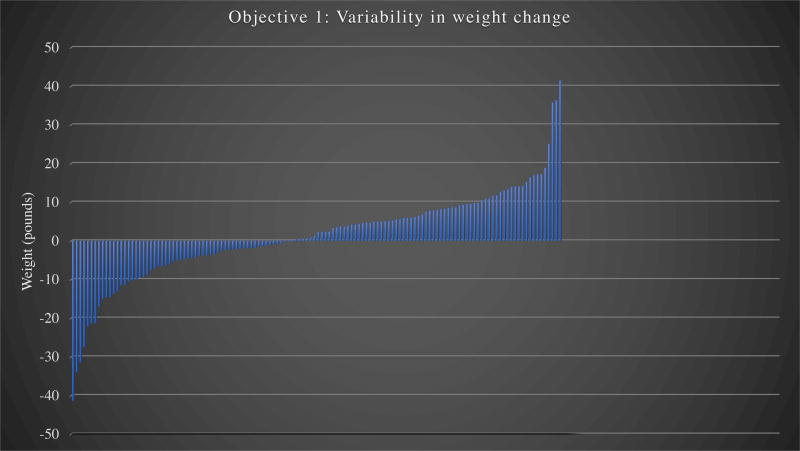
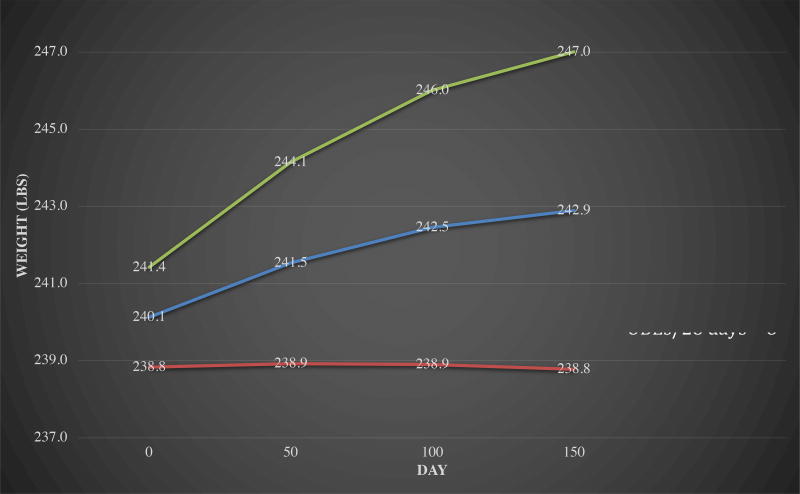
Results: During treatment, there was a mean weight gain of 1.3 ± 12.0 lb. Twenty-two percent of the sample lost ≥ 5 lb, and 25% of the sample gained ≥ 8 lb. Results showed that baseline objective binge eating episodes predicted weight over treatment. Changes in weight were significantly positively related to concurrent changes in shape concern, weight concern, and disinhibition, but not binge eating episodes. Changes in objective binge eating episodes from baseline to EOT were associated with changes in weight from EOT to follow-up.
Conclusions: Further investigation of eating behavior during BED treatment to understand the energy balance contributions to weight change or stability is warranted.
Trial registration: ClinicalTrials.gov NCT00041743.
© 2018 The Obesity Society.
Conflict of interest statement
Figures
References
-
- Kalarchian MA, Marcus MD, Levine MD, et al. Psychiatric disorders among bariatric surgery candidates: relationship to obesity and functional health status. Am J Psychiatry. 2007;164(2):328–334. - PubMed
Publication types
MeSH terms
Associated data
Grants and funding
LinkOut - more resources
Full Text Sources
Other Literature Sources
Medical
