


Opioid Dose- and Route-Dependent Efficacy of Oxycodone and Heroin Vaccines in Rats
- PMID: 29535156
- PMCID: PMC5884377
- DOI: 10.1124/jpet.117.247049
Opioid Dose- and Route-Dependent Efficacy of Oxycodone and Heroin Vaccines in Rats
Abstract
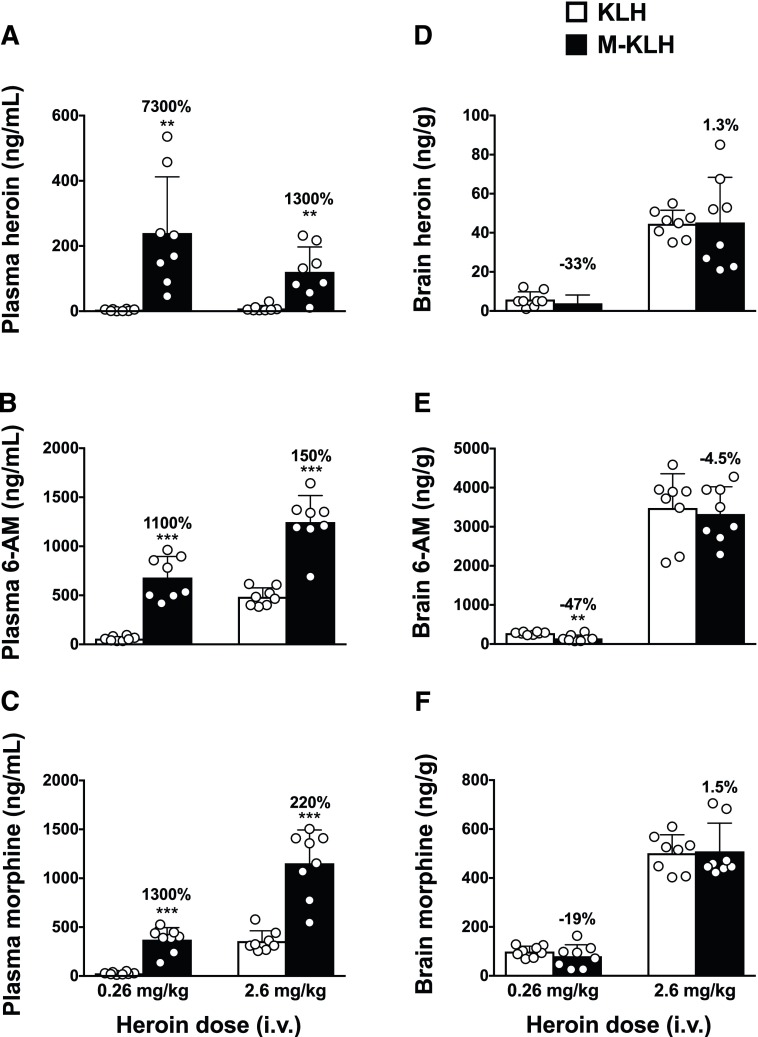
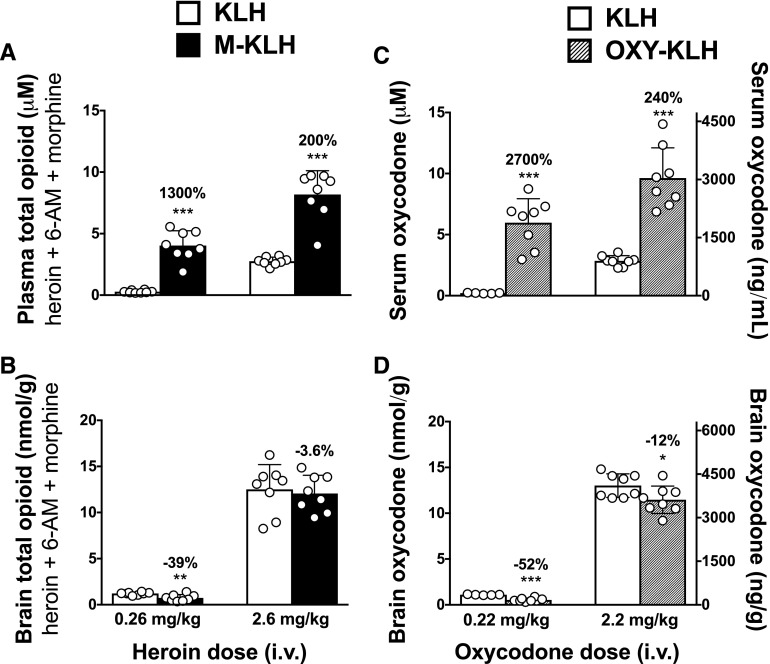
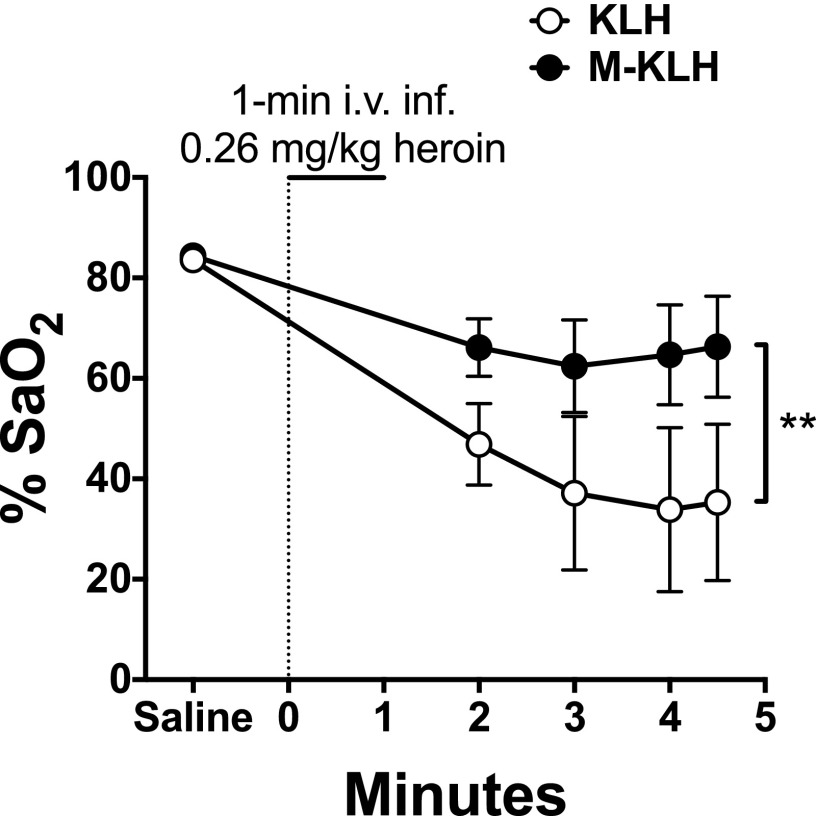
Heroin and oxycodone abuse occurs over a wide range of drug doses and by various routes of administration characterized by differing rates of drug absorption. The current study addressed the efficacy of a heroin vaccine [morphine hapten conjugated to keyhole limpet hemocyanin (M-KLH)] or oxycodone vaccine [oxycodone hapten conjugated to keyhole limpet hemocyanin (OXY-KLH)] for reducing drug distribution to brain after intravenous heroin or oxycodone, or subcutaneous oxycodone. Rats immunized with M-KLH or keyhole limpet hemocyanin (KLH) control received an intravenous bolus dose of 0.26 or 2.6 mg/kg heroin. Vaccination with M-KLH increased retention of heroin and its active metabolites 6-acetylmorphine (6-AM) and morphine in plasma compared with KLH controls, and reduced total opioid (heroin + 6-AM + morphine) distribution to brain but only at the lower heroin dose. Immunization also protected against respiratory depression at the lower heroin dose. Rats immunized with OXY-KLH or KLH control received 0.22 or 2.2 mg/kg oxycodone intravenously, the molar equivalent of the heroin doses. Immunization with OXY-KLH significantly reduced oxycodone distribution to brain after either oxycodone dose, although the magnitude of effect of immunization at the higher oxycodone dose was small (12%). By contrast, vaccination with OXY-KLH was more effective when oxycodone was administered subcutaneously rather than intravenously, reducing oxycodone distribution to brain by 44% after an oxycodone dose of 2.3 mg/kg. Vaccination also reduced oxycodone-induced antinociception. These data suggest that the efficacy of OXY-KLH and M-KLH opioid vaccines is highly dependent upon opioid dose and route of administration.
Copyright © 2018 by The American Society for Pharmacology and Experimental Therapeutics.
Figures

References
-
- Anton B, Leff P. (2006) A novel bivalent morphine/heroin vaccine that prevents relapse to heroin addiction in rodents. Vaccine 24:3232–3240. - PubMed
-
- Appel PW, Ellison AA, Jansky HK, Oldak R. (2004) Barriers to enrollment in drug abuse treatment and suggestions for reducing them: opinions of drug injecting street outreach clients and other system stakeholders. Am J Drug Alcohol Abuse 30:129–153. - PubMed
-
- Backonja M, Webster LR, Setnik B, Bass A, Sommerville KW, Matschke K, Malhotra BK, Wolfram G. (2016) Intravenous abuse potential study of oxycodone alone or in combination with naltrexone in nondependent recreational opioid users. Am J Drug Alcohol Abuse 42:539–549. - PubMed
-
- Bazin-Redureau MI, Renard CB, Scherrmann JM. (1997) Pharmacokinetics of heterologous and homologous immunoglobulin G, F(ab′)2 and Fab after intravenous administration in the rat. J Pharm Pharmacol 49:277–281. - PubMed
-
- Bonese KF, Wainer BH, Fitch FW, Rothberg RM, Schuster CR. (1974) Changes in heroin self-administration by a rhesus monkey after morphine immunisation. Nature 252:708–710. - PubMed
Publication types
MeSH terms
Substances
Grants and funding
LinkOut - more resources
Full Text Sources
Other Literature Sources
Medical
