Extension of chemotactic pseudopods by nonadherent human neutrophils does not require or cause calcium bursts
- PMID: 29535263
- PMCID: PMC7053518
- DOI: 10.1126/scisignal.aal4289
Extension of chemotactic pseudopods by nonadherent human neutrophils does not require or cause calcium bursts
Abstract
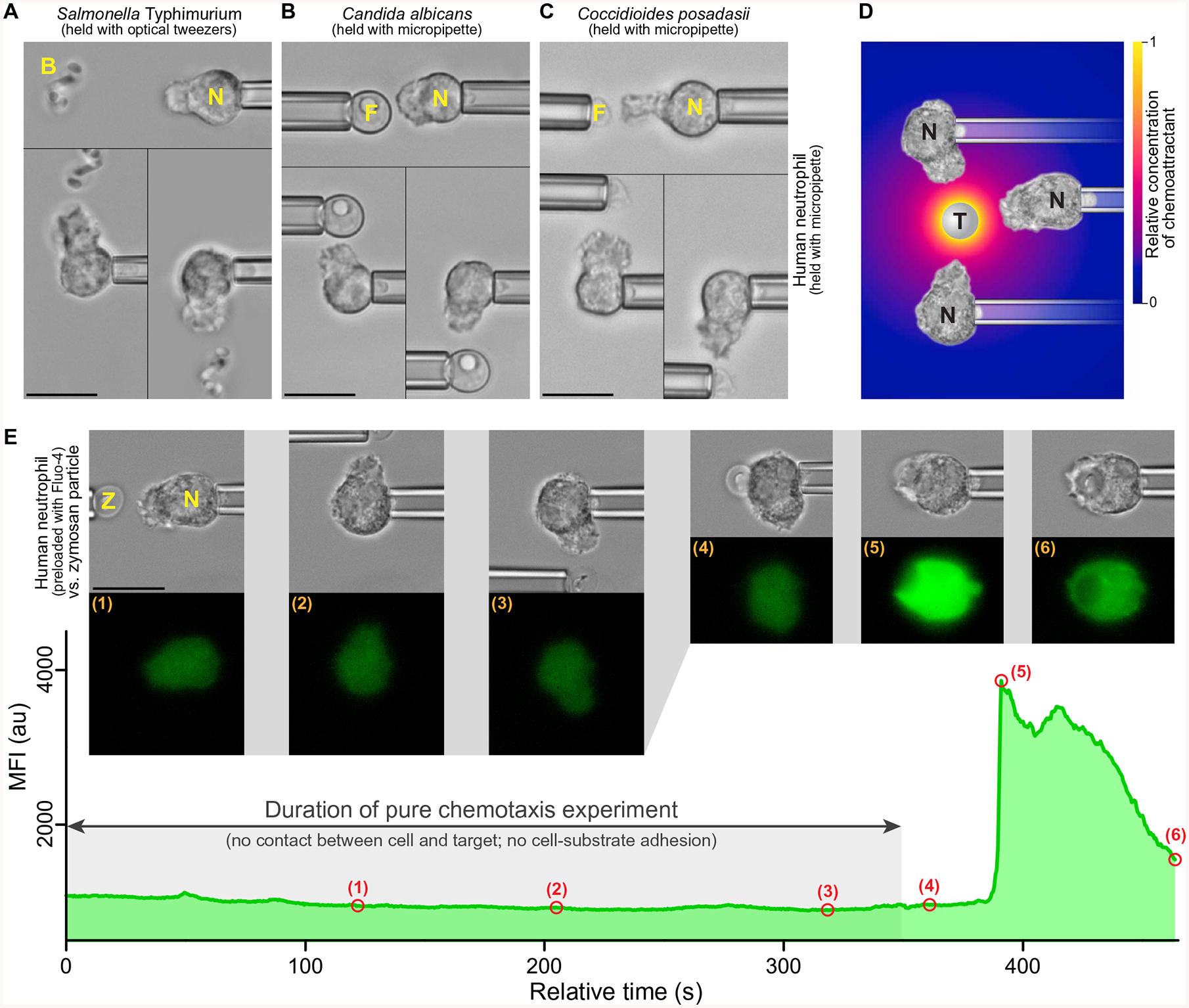
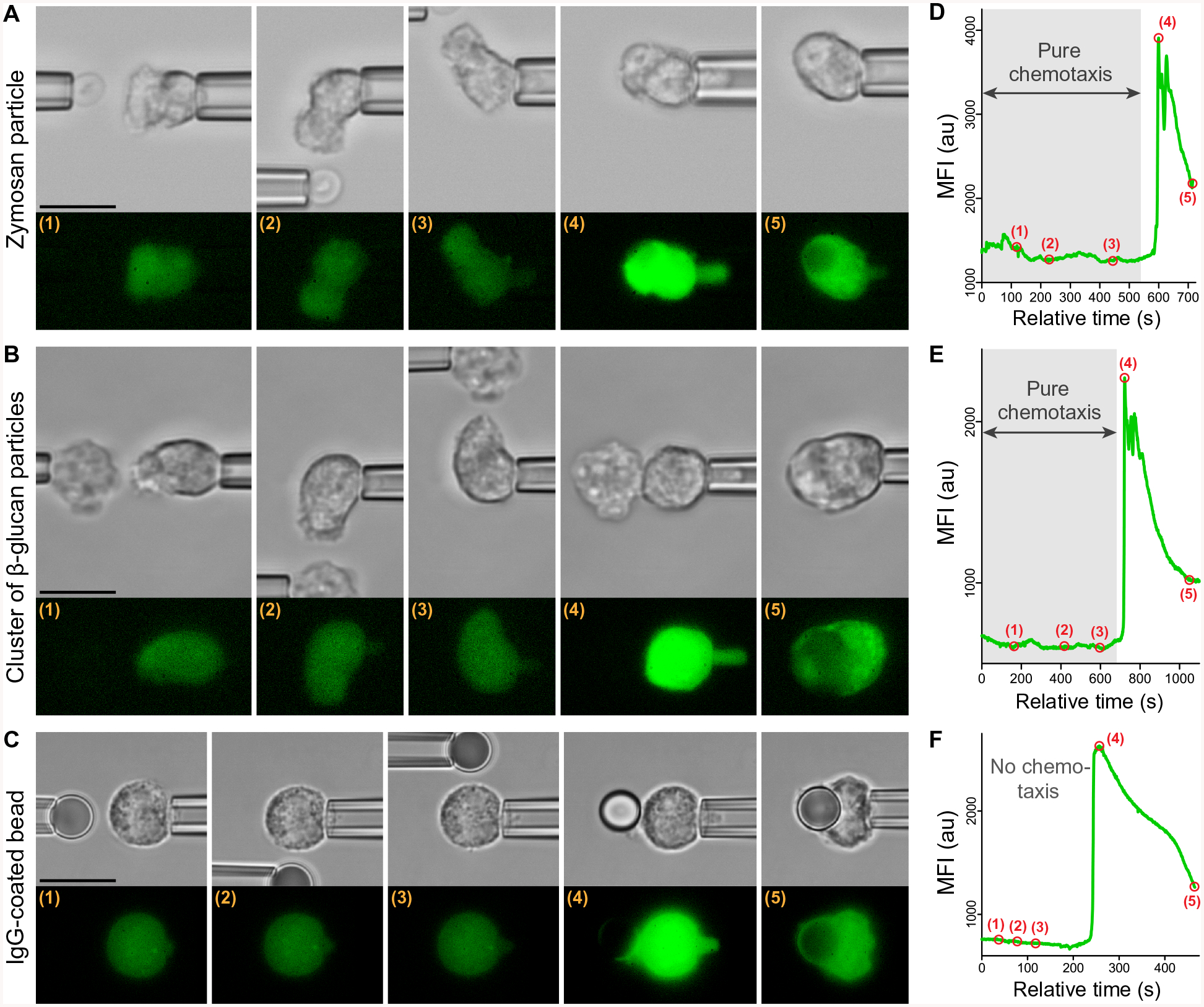
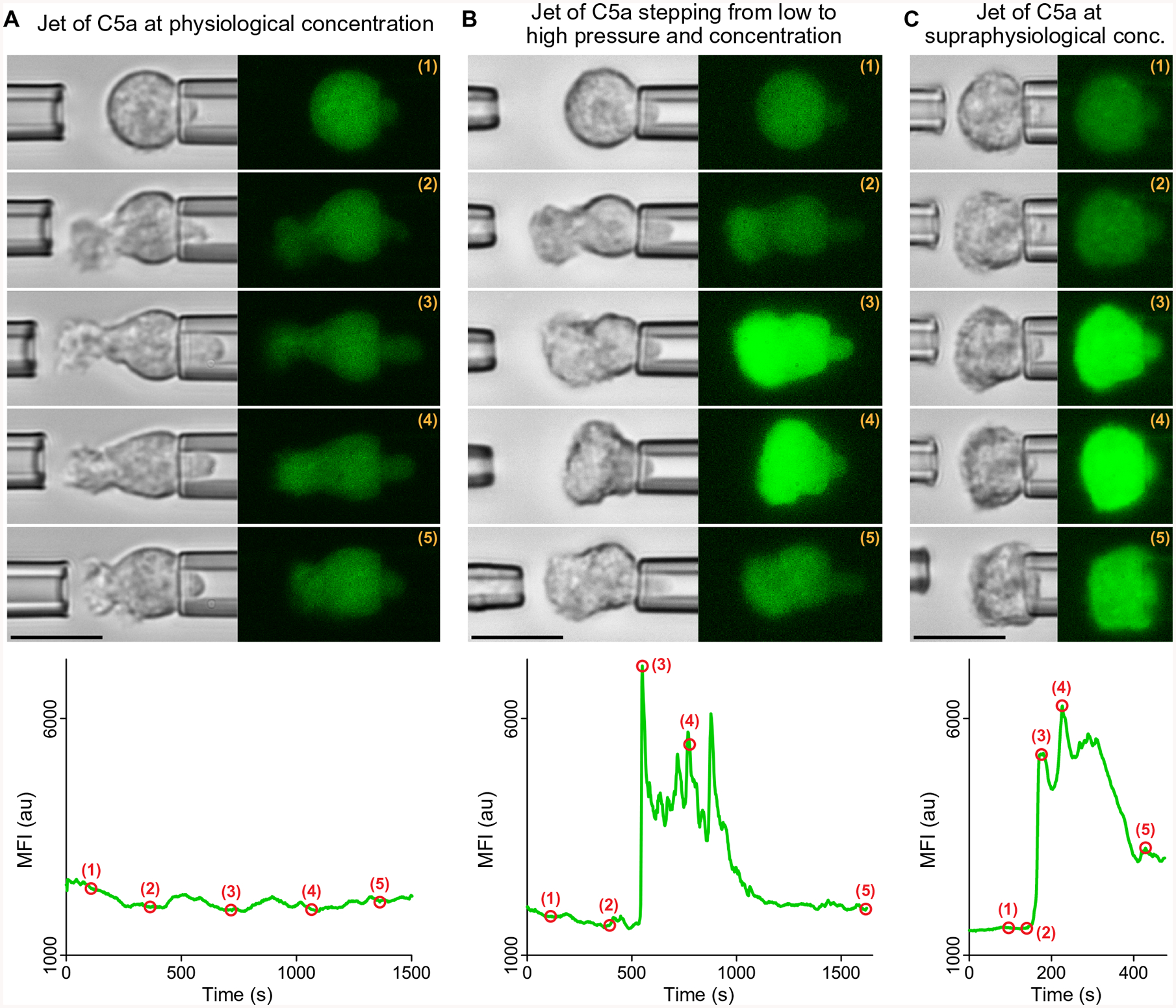
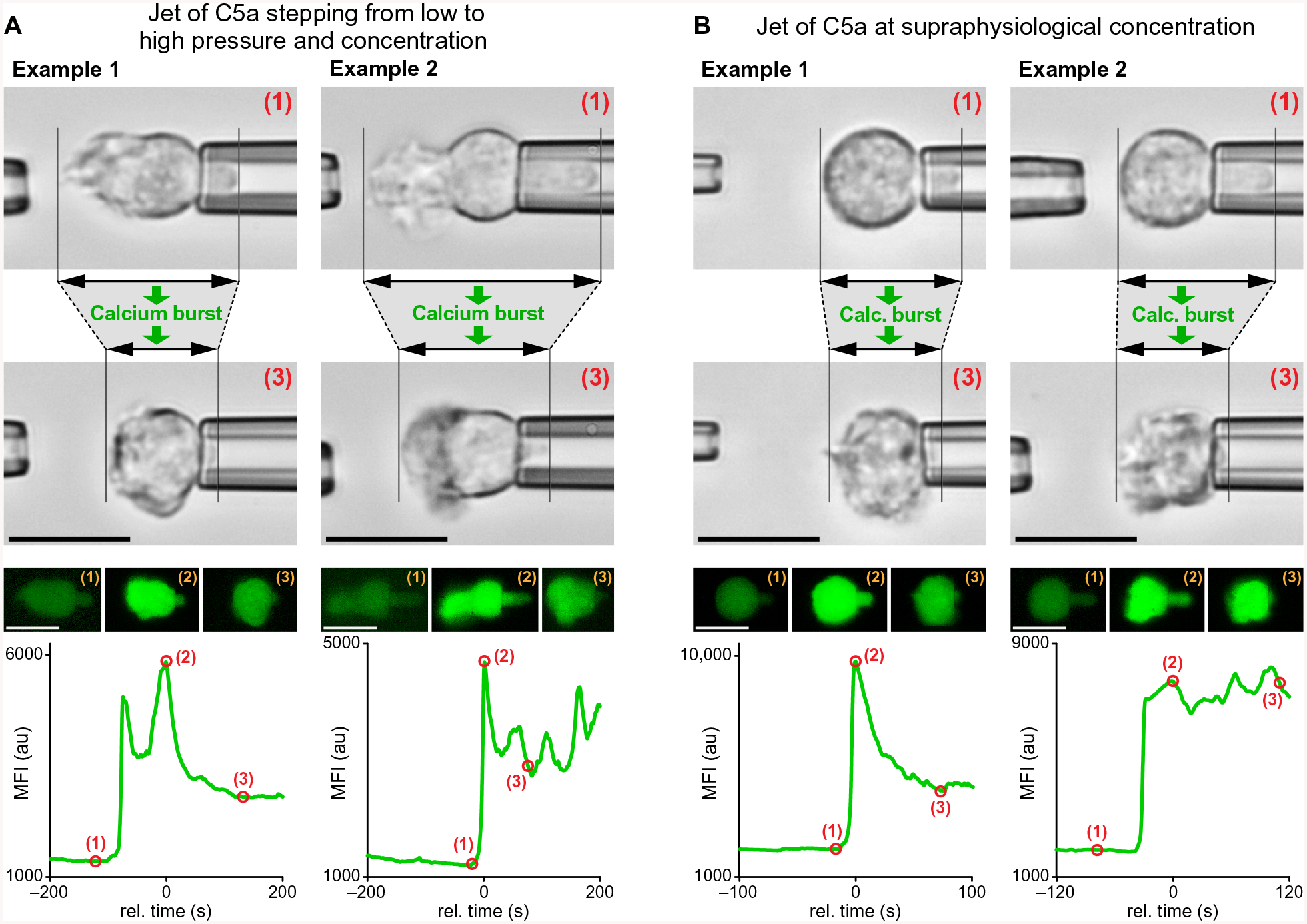
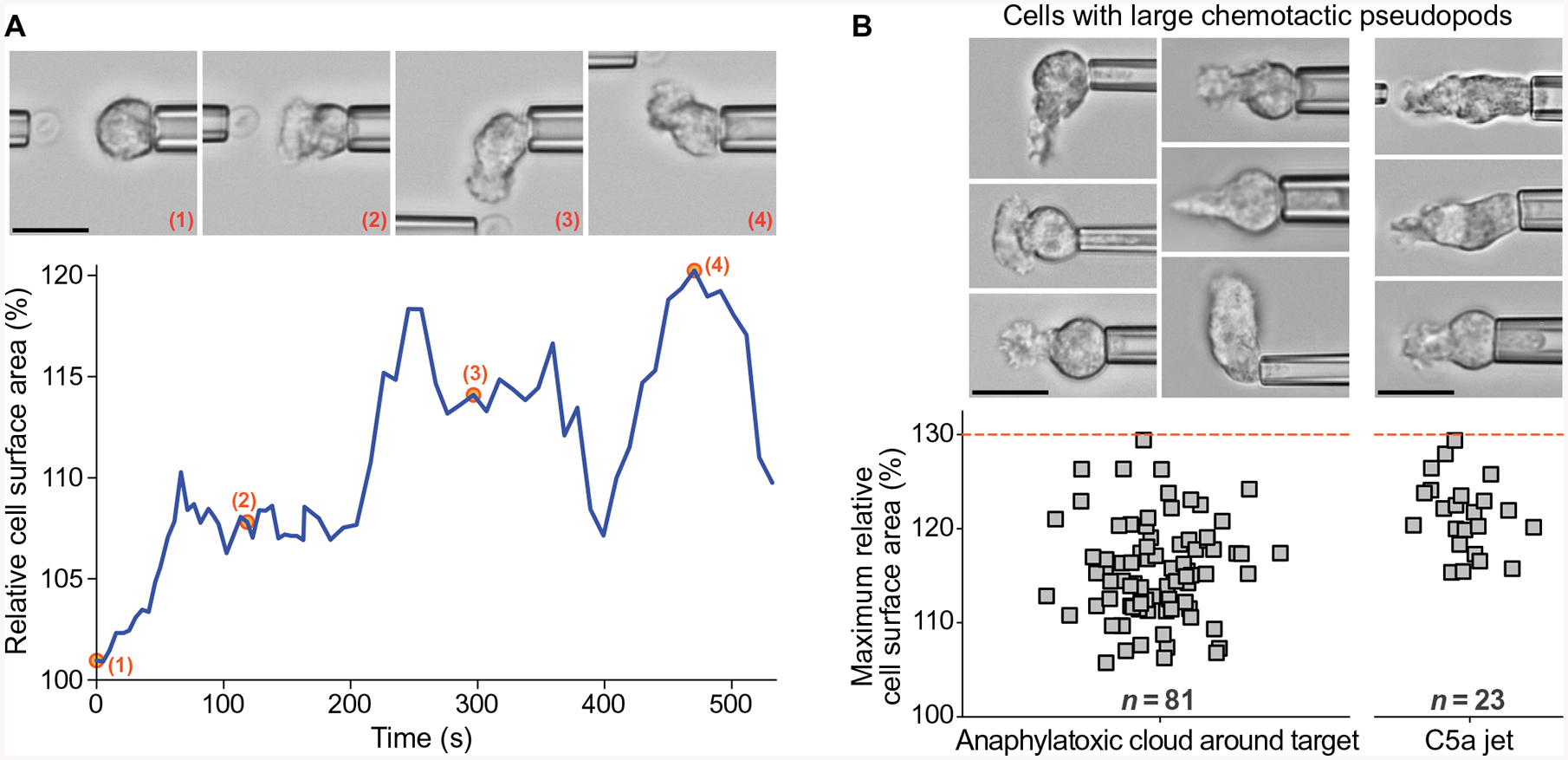
Global bursts in free intracellular calcium (Ca2+) are among the most conspicuous signaling events in immune cells. To test the common view that Ca2+ bursts mediate rearrangement of the actin cytoskeleton in response to the activation of G protein-coupled receptors, we combined single-cell manipulation with fluorescence imaging and monitored the Ca2+ concentration in individual human neutrophils during complement-mediated chemotaxis. By decoupling purely chemotactic pseudopod formation from cell-substrate adhesion, we showed that physiological concentrations of anaphylatoxins, such as C5a, induced nonadherent human neutrophils to form chemotactic pseudopods but did not elicit Ca2+ bursts. By contrast, pathological or supraphysiological concentrations of C5a often triggered Ca2+ bursts, but pseudopod protrusion stalled or reversed in such cases, effectively halting chemotaxis, similar to sepsis-associated neutrophil paralysis. The maximum increase in cell surface area during pseudopod extension in pure chemotaxis was much smaller-by a factor of 8-than the known capacity of adherent human neutrophils to expand their surface. Because the measured rise in cortical tension was not sufficient to account for this difference, we attribute the limited deformability to a reduced ability of the cytoskeleton to generate protrusive force in the absence of cell adhesion. Thus, we hypothesize that Ca2+ bursts in neutrophils control a mechanistic switch between two distinct modes of cytoskeletal organization and dynamics. A key element of this switch appears to be the expedient coordination of adhesion-dependent lock or release events of cytoskeletal membrane anchors.
Copyright © 2018 The Authors, some rights reserved; exclusive licensee American Association for the Advancement of Science. No claim to original U.S. Government Works.
Conflict of interest statement
Figures
References
-
- White JR, Naccache PH, Molski TFP, Borgeat P, Sha’afi RI, Direct demonstration of increased intracellular concentration of free calcium in rabbit and human neutrophils following stimulation by chemotactic factor. Biochem. Biophys. Res. Commun 113, 44–50 (1983). - PubMed
-
- Lew DP, Receptor signalling and intracellular calcium in neutrophil activation. Eur. J. Clin. Invest 19, 338–346 (1989). - PubMed
-
- Norgauer J, Dobos G, Kownatzki E, Dahinden C, Burger R, Kupper R, Gierschik P, Complement fragment C3a stimulates Ca2+ influx in neutrophils via a pertussis-toxin-sensitive G protein. Eur. J. Biochem 217, 289–294 (1993). - PubMed
-
- Schorr W, Swandulla D, Zeilhofer HU, Mechanisms of IL-8-induced Ca2+ signaling in human neutrophil granulocytes. Eur. J. Immunol 29, 897–904 (1999). - PubMed
-
- Ibrahim FB, Pang SJ, Melendez AJ, Anaphylatoxin signaling in human neutrophils. A key role for sphingosine kinase. J. Biol. Chem 279, 44802–44811 (2004). - PubMed
Publication types
MeSH terms
Substances
Grants and funding
LinkOut - more resources
Full Text Sources
Other Literature Sources
Miscellaneous