


Stem Cells for Cartilage Repair: Preclinical Studies and Insights in Translational Animal Models and Outcome Measures
- PMID: 29535784
- PMCID: PMC5832141
- DOI: 10.1155/2018/9079538
Stem Cells for Cartilage Repair: Preclinical Studies and Insights in Translational Animal Models and Outcome Measures
Abstract
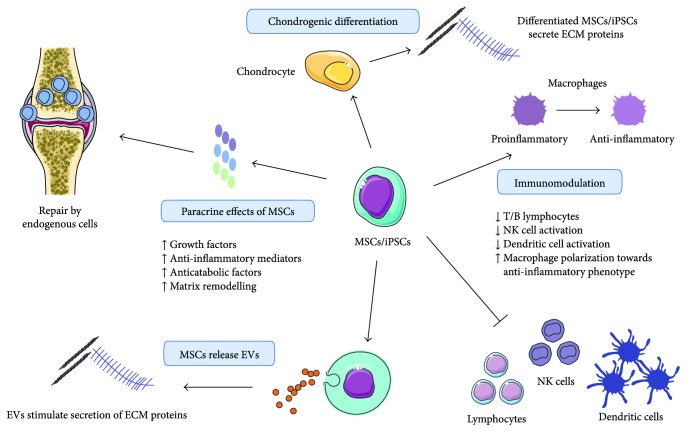
Due to the restricted intrinsic capacity of resident chondrocytes to regenerate the lost cartilage postinjury, stem cell-based therapies have been proposed as a novel therapeutic approach for cartilage repair. Moreover, stem cell-based therapies using mesenchymal stem cells (MSCs) or induced pluripotent stem cells (iPSCs) have been used successfully in preclinical and clinical settings. Despite these promising reports, the exact mechanisms underlying stem cell-mediated cartilage repair remain uncertain. Stem cells can contribute to cartilage repair via chondrogenic differentiation, via immunomodulation, or by the production of paracrine factors and extracellular vesicles. But before novel cell-based therapies for cartilage repair can be introduced into the clinic, rigorous testing in preclinical animal models is required. Preclinical models used in regenerative cartilage studies include murine, lapine, caprine, ovine, porcine, canine, and equine models, each associated with its specific advantages and limitations. This review presents a summary of recent in vitro data and from in vivo preclinical studies justifying the use of MSCs and iPSCs in cartilage tissue engineering. Moreover, the advantages and disadvantages of utilizing small and large animals will be discussed, while also describing suitable outcome measures for evaluating cartilage repair.
Figures
References
-
- Filardo G., Madry H., Jelic M., Roffi A., Cucchiarini M., Kon E. Mesenchymal stem cells for the treatment of cartilage lesions: from preclinical findings to clinical application in orthopaedics. Knee Surgery, Sports Traumatology, Arthroscopy. 2013;21(8):1717–1729. doi: 10.1007/s00167-012-2329-3. - DOI - PubMed
Publication types
Grants and funding
LinkOut - more resources
Full Text Sources
Other Literature Sources
