


Lightweight, compact, and high-performance 3T MR system for imaging the brain and extremities
- PMID: 29536587
- PMCID: PMC6107412
- DOI: 10.1002/mrm.27175
Lightweight, compact, and high-performance 3T MR system for imaging the brain and extremities
Abstract
Purpose: To build and evaluate a small-footprint, lightweight, high-performance 3T MRI scanner for advanced brain imaging with image quality that is equal to or better than conventional whole-body clinical 3T MRI scanners, while achieving substantial reductions in installation costs.
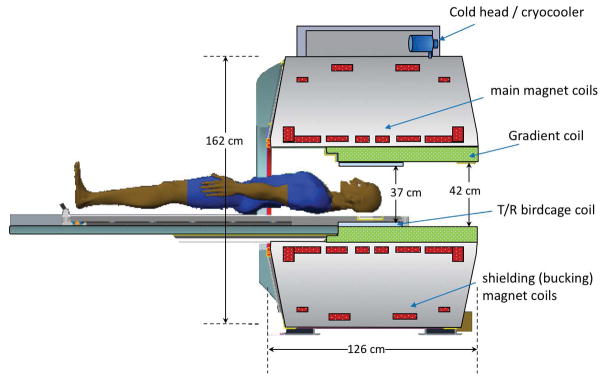
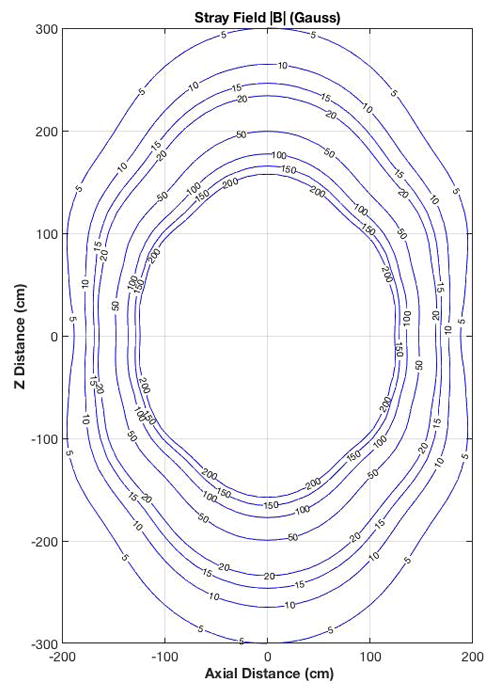
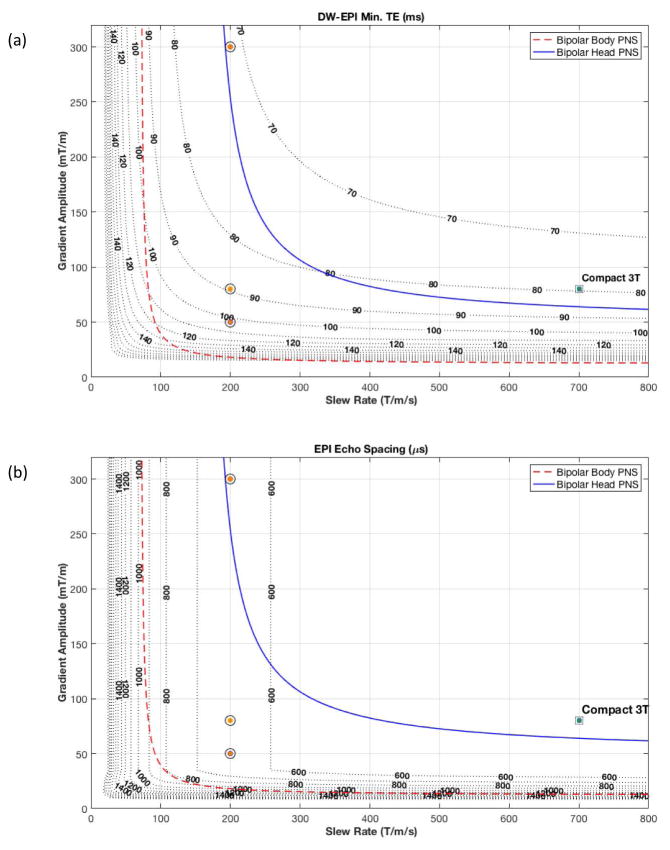
Methods: A conduction-cooled magnet was developed that uses less than 12 liters of liquid helium in a gas-charged sealed system, and standard NbTi wire, and weighs approximately 2000 kg. A 42-cm inner-diameter gradient coil with asymmetric transverse axes was developed to provide patient access for head and extremity exams, while minimizing magnet-gradient interactions that adversely affect image quality. The gradient coil was designed to achieve simultaneous operation of 80-mT/m peak gradient amplitude at a slew rate of 700 T/m/s on each gradient axis using readily available 1-MVA gradient drivers.
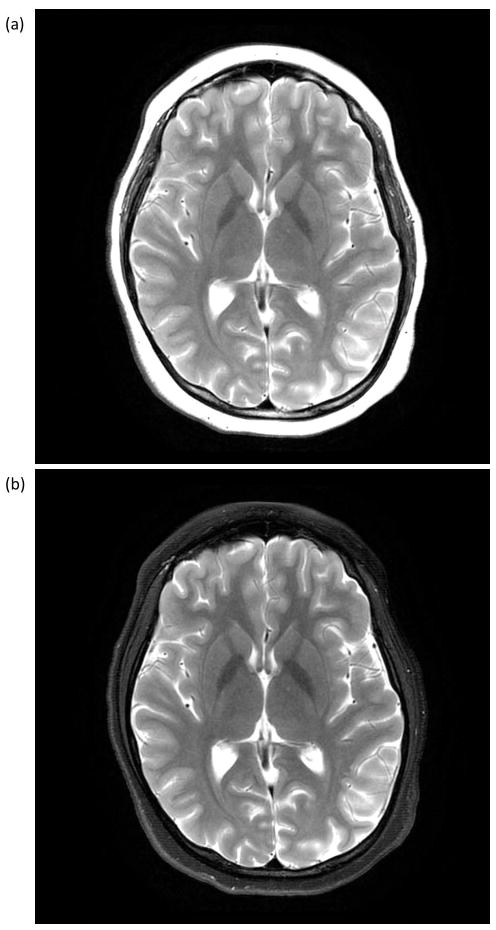
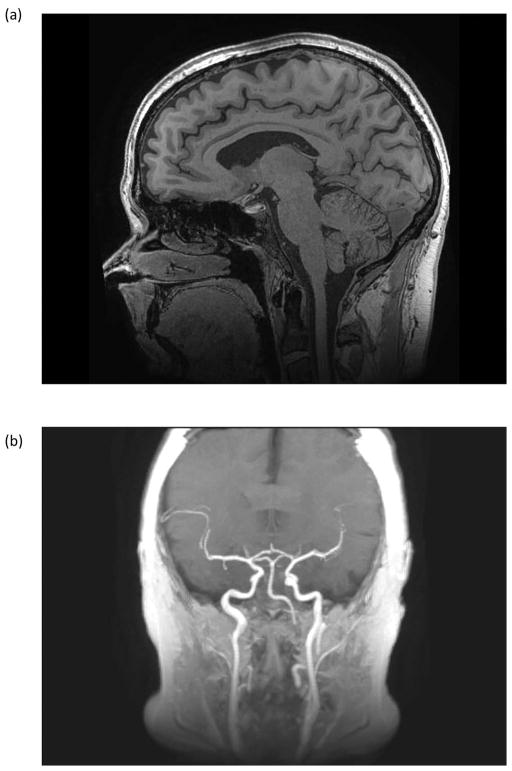
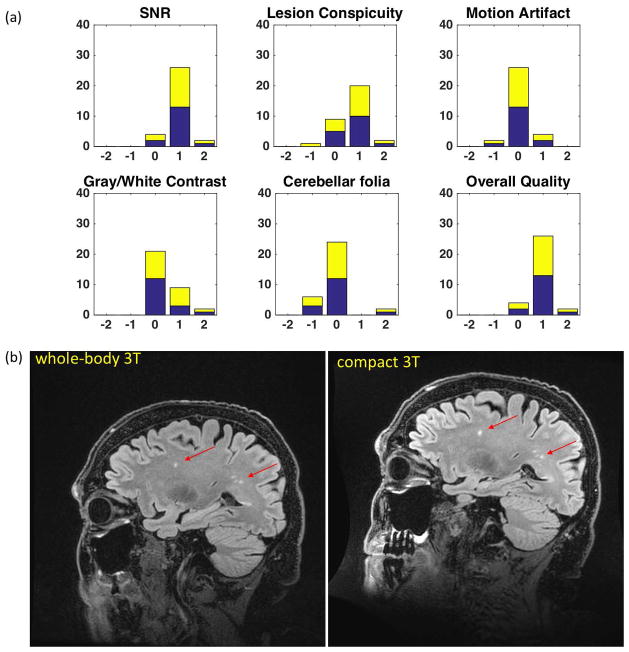
Results: In a comparison of anatomical imaging in 16 patients using T2 -weighted 3D fluid-attenuated inversion recovery (FLAIR) between the compact 3T and whole-body 3T, image quality was assessed as equivalent to or better across several metrics. The ability to fully use a high slew rate of 700 T/m/s simultaneously with 80-mT/m maximum gradient amplitude resulted in improvements in image quality across EPI, DWI, and anatomical imaging of the brain.
Conclusions: The compact 3T MRI system has been in continuous operation at the Mayo Clinic since March 2016. To date, over 200 patient studies have been completed, including 96 comparison studies with a clinical 3T whole-body MRI. The increased gradient performance has reliably resulted in consistently improved image quality.
© 2018 International Society for Magnetic Resonance in Medicine.
Figures
References
-
- Turner R. Gradient coil design: a review of methods. Magn Reson Imaging. 1993;11:903–920. - PubMed
-
- Reilly JP. Maximum pulsed electromagnetic field limits based on peripheral nerve stimulation: application to IEEE/ANSI C95.1 electromagnetic field standards. IEEE Trans Biomed Eng. 1998;45:137–141. - PubMed
-
- Reilly JP. Peripheral nerve stimulation by induced electric currents: exposure to time-varying magnetic fields. Med Biol Eng Comput. 1989;27:101–110. - PubMed
-
- Chronik BA, Rutt BK. A comparison between human magnetostimulation thresholds in whole-body and head/neck gradient coils. Magn Reson Med. 2001;46:386–394. - PubMed
Publication types
MeSH terms
Grants and funding
LinkOut - more resources
Full Text Sources
Other Literature Sources
Medical
