


Epileptiform activity in traumatic brain injury predicts post-traumatic epilepsy
- PMID: 29537656
- PMCID: PMC5912971
- DOI: 10.1002/ana.25211
Epileptiform activity in traumatic brain injury predicts post-traumatic epilepsy
Abstract
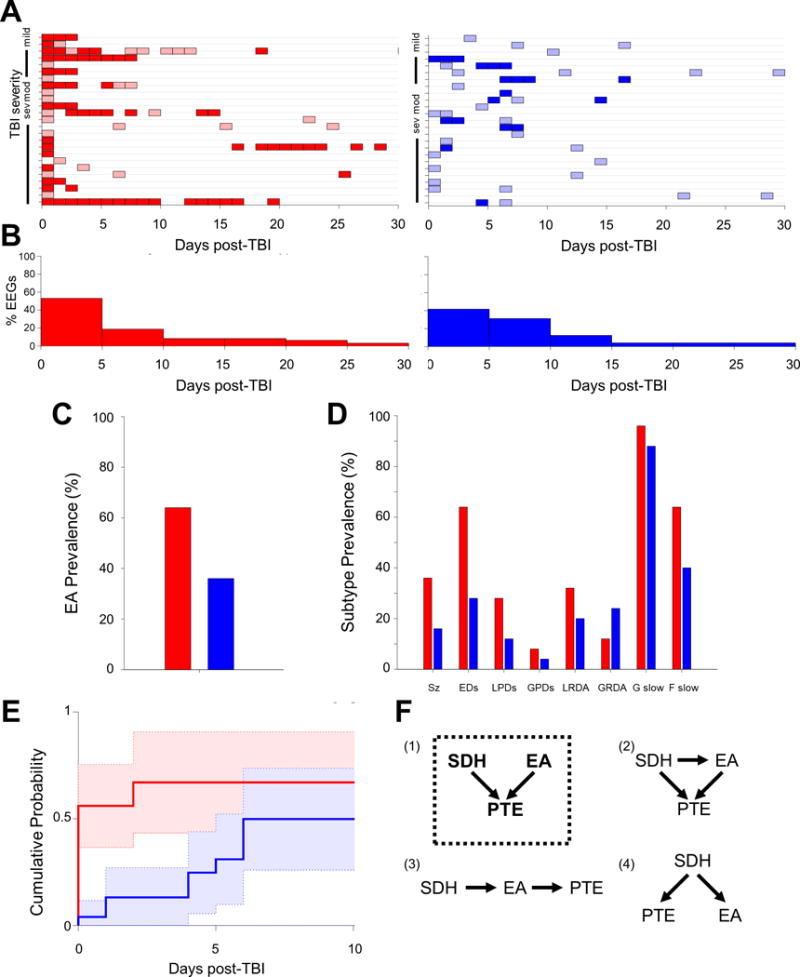
We hypothesize that epileptiform abnormalities (EAs) in the electroencephalogram (EEG) during the acute period following traumatic brain injury (TBI) independently predict first-year post-traumatic epilepsy (PTE1 ). We analyze PTE1 risk factors in two cohorts matched for TBI severity and age (n = 50). EAs independently predict risk for PTE1 (odds ratio [OR], 3.16 [0.99, 11.68]); subdural hematoma is another independent risk factor (OR, 4.13 [1.18, 39.33]). Differences in EA rates are apparent within 5 days following TBI. Our results suggest that increased EA prevalence identifies patients at increased risk for PTE1 , and that EAs acutely post-TBI can identify patients most likely to benefit from antiepileptogenesis drug trials. Ann Neurol 2018;83:858-862.
© 2018 American Neurological Association.
Conflict of interest statement
Potential Conflicts of Interest: None
Figures
References
-
- Wang ML, Li WB. Cognitive impairment after traumatic brain injury: The role of MRI and possible pathological basis. J Neurol Sci. 2016;370:244–250. - PubMed
-
- Curia G, Eastman CL, Miller JW, D’Ambrosio R. Modeling Post-Traumatic Epilepsy for Therapy Development. 2016 - PubMed
-
- Ritter AC, Wagner AK, Fabio A, et al. Incidence and risk factors of posttraumatic seizures following traumatic brain injury: A Traumatic Brain Injury Model Systems Study. Epilepsia. 2016 - PubMed
-
- Klein P, Tyrlikova I. Prevention of epilepsy: Should we be avoiding clinical trials? Epilepsy Behav. 2017;72:188–194. - PubMed
-
- Annegers J, Hauser W, Coan S, Rocca WA. Population-Based Study of Seizures after Traumatic Brain Injuries. N Engl J Med. 1998 - PubMed
Publication types
MeSH terms
Grants and funding
LinkOut - more resources
Full Text Sources
Other Literature Sources
Medical
