


Patterns of Sensitivity to Parenting and Peer Environments: Early Temperament and Adolescent Externalizing Behavior
- PMID: 29537722
- PMCID: PMC6138596
- DOI: 10.1111/jora.12382
Patterns of Sensitivity to Parenting and Peer Environments: Early Temperament and Adolescent Externalizing Behavior
Abstract
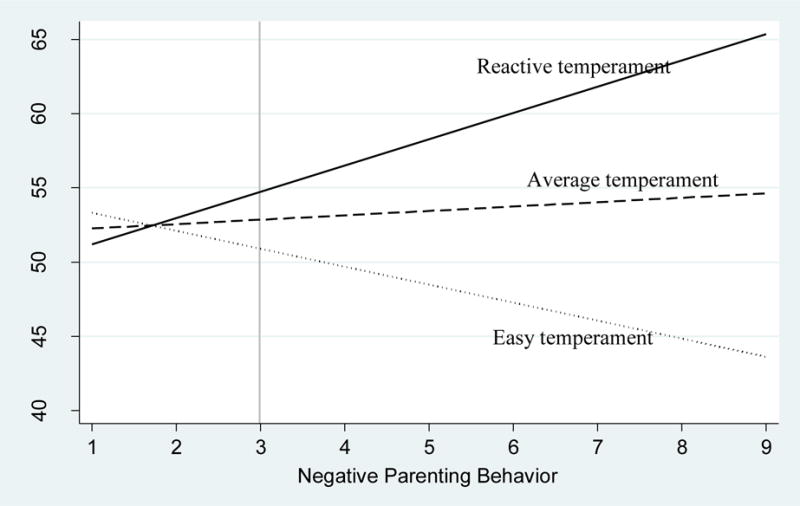
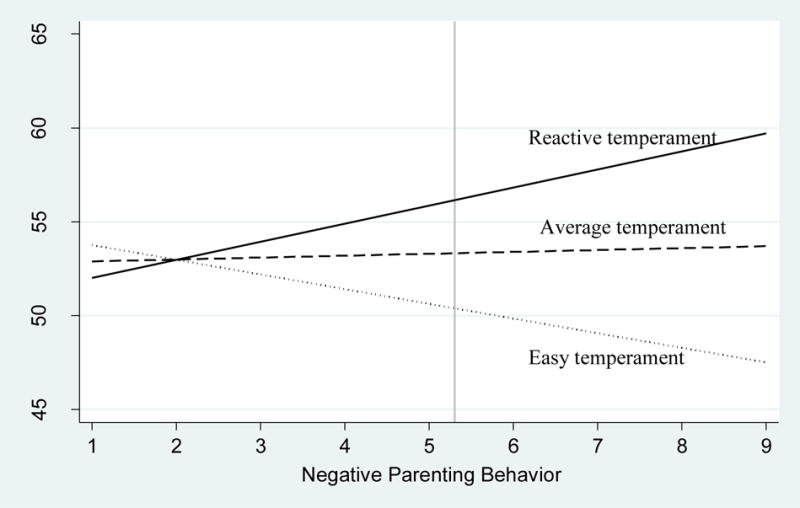
Although parenting behavior and friendship quality predict adolescent externalizing behaviors (EBs), individual differences in temperament may differentially affect susceptibility to these factors over time. In a multi-method and multi-informant study of 141 children followed prospectively from toddlerhood to adolescence, we tested the independent and interactive associations of age 3 reactive temperament (e.g., negative emotionality) and age 13 observed parenting (i.e., positive and negative behavior) and friendship (i.e., conflict and warmth), with multi-informant ratings of age 15 aggression and rule-breaking behavior. Negative parenting predicted growth in parent-rated EB, but only for adolescents with early reactive temperament. Temperament did not affect sensitivity to positive parenting or friendship. Results are discussed in the context of differential susceptibility theory and intervention implications for adolescents.
© 2018 Society for Research on Adolescence.
Figures
References
-
- Aber JL, Belsky J, Slade A, Crnic K. Stability and change in mothers’ representations of their relationship with their toddlers. Developmental Psychology. 1999;35(4):1038–1047. - PubMed
-
- Achenbach TM, Rescorla L. ASEBA School-Age Forms & Profiles. Burlington: Aseba; 2001.
Publication types
MeSH terms
Grants and funding
LinkOut - more resources
Full Text Sources
Other Literature Sources
Medical