


Does risk-adjusted payment influence primary care providers' decision on where to set up practices?
- PMID: 29540153
- PMCID: PMC5853067
- DOI: 10.1186/s12913-018-2983-3
Does risk-adjusted payment influence primary care providers' decision on where to set up practices?
Abstract
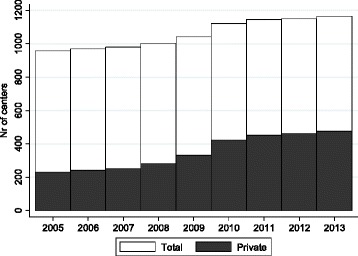
Background: Providing equal access to health care is an important objective in most health care systems. It is especially pertinent in systems like the Swedish primary care market, where private providers are free to establish themselves in any part of the country. To improve equity in access to care, 15 out 21 county councils in Sweden have implemented risk-adjusted capitation based on the Care Need Index, which increases capitation to primary care centers with a large share of patients with unfavorable socioeconomic and demographic characteristics. Our aim is to estimate the effects of using care-need adjusted capitation on the supply of private primary care centers.
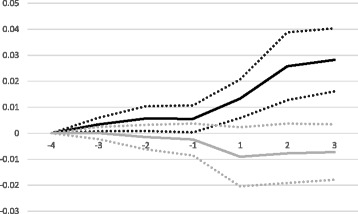
Method: We use a dataset that combines information on all primary care centers in Sweden during 2005-2013, the payment system and other conditions for establishing new primary care centers used in the county councils, and demographic, geographic, and socioeconomic variables for low-level geographic areas. To estimate the effects of care-need adjusted capitation, we use difference-in-differences models, contrasting the development over time between areas with and without risk-adjusted capitation, and with high and low Care Need Index values.
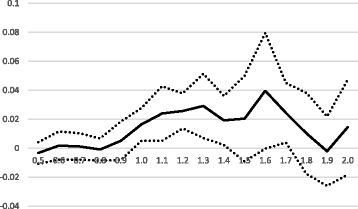
Results: Risk-adjusted capitation significantly increases the number of private primary care centers in areas with relatively high Care Need Index values. The adjustment results in a changed distribution of private centers within county councils; the total number of private centers does not increase in county councils using care-need adjusted capitation. The effects are furthermore increasing over the first three years after the implementation of such capitation, and concentrated to the lower and middle range of the group of areas with high index values.
Conclusions: Risk-adjusted capitation based on the Care Need Index increases the supply of private primary care centers in areas with unfavorable socioeconomic and demographic characteristics. More generally, this result indicates that risk-adjusted capitation can significantly affect private providers' establishment decisions.
Keywords: Equal access; Establishment; Primary health care; Private provision; Risk-adjusted capitation; Sweden.
Conflict of interest statement
Authors’ information
Not applicable.
Ethics approval and consent to participate
Not applicable.
Consent for publication
Not applicable.
Competing interests
The authors declare that they have no competing interests.
Publisher’s Note
Springer Nature remains neutral with regard to jurisdictional claims in published maps and institutional affiliations.
Figures
References
Publication types
MeSH terms
Grants and funding
LinkOut - more resources
Full Text Sources
Other Literature Sources
