


Improvement of Bartonella henselae DNA Detection in Cat Blood Samples by Combining Molecular and Culture Methods
- PMID: 29540455
- PMCID: PMC5925714
- DOI: 10.1128/JCM.01732-17
Improvement of Bartonella henselae DNA Detection in Cat Blood Samples by Combining Molecular and Culture Methods
Abstract
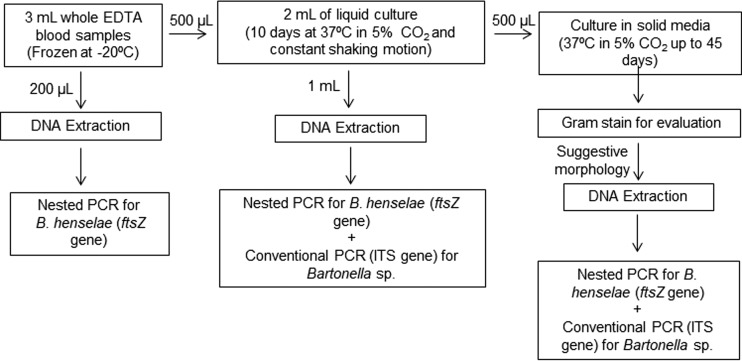
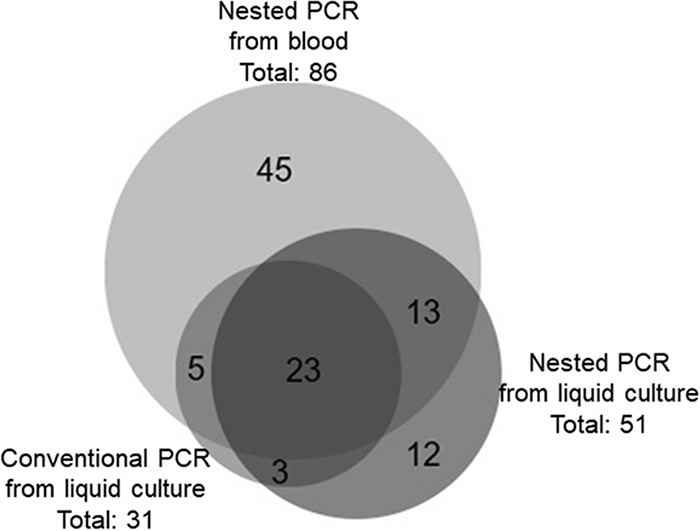
Bartonella spp. are bacteria of worldwide distribution that cause asymptomatic to fatal infections in animals and humans. The most common zoonotic species is Bartonella henselae, for which cats are the major natural reservoir host. To better understand Bartonella sp. diagnostic limitations, we determined the frequency of bloodstream infection in 112 cats by comparing and combining the results of multiple conventional and nested PCRs from blood and liquid culture samples. Using liquid culture conventional PCR, Bartonella sp. DNA was amplified from 27.7% of samples (31/112) compared to 90.2% of samples (101/112) by combining nested PCR from blood and liquid culture, indicating that PCR testing of more than one type of sample provides better sensitivity than a standalone PCR and that bloodstream infection is very frequent among cats in southeastern Brazil. This study reinforces the need for multistep testing for Bartonella sp. infection to prevent false-negative diagnostic results, even in reservoir hosts such as cats that typically maintain higher bacteremia levels.
Keywords: Bartonella; PCR; bacteremia; cats; diagnosis.
Copyright © 2018 American Society for Microbiology.
Figures
References
-
- Pitassi LH, de Paiva Diniz PP, Scorpio DG, Drummond MR, Lania BG, Barjas-Castro ML, Gilioli R, Colombo S, Sowy S, Breitschwerdt EB, Nicholson WL, Velho PE. 2015. Bartonella spp. bacteremia in blood donors from Campinas, Brazil. PLoS Negl Trop Dis 9:e0003467. doi: 10.1371/journal.pntd.0003467. - DOI - PMC - PubMed
Publication types
MeSH terms
Substances
LinkOut - more resources
Full Text Sources
Other Literature Sources
Molecular Biology Databases
Miscellaneous
