


Bidirectional coordination of actions and habits by TrkB in mice
- PMID: 29540698
- PMCID: PMC5852142
- DOI: 10.1038/s41598-018-22560-x
Bidirectional coordination of actions and habits by TrkB in mice
Abstract
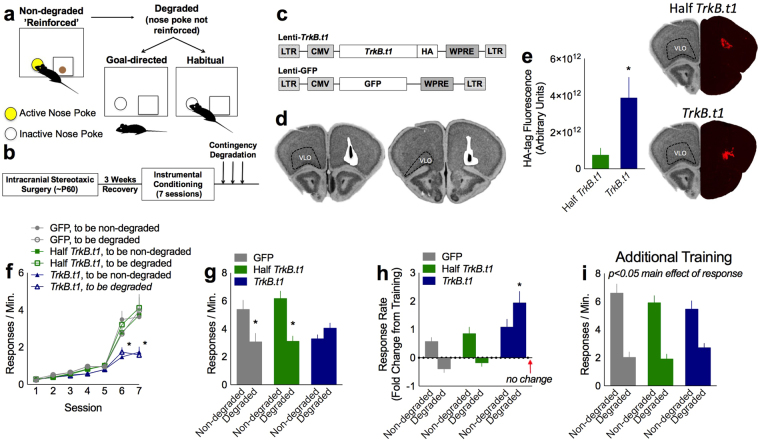
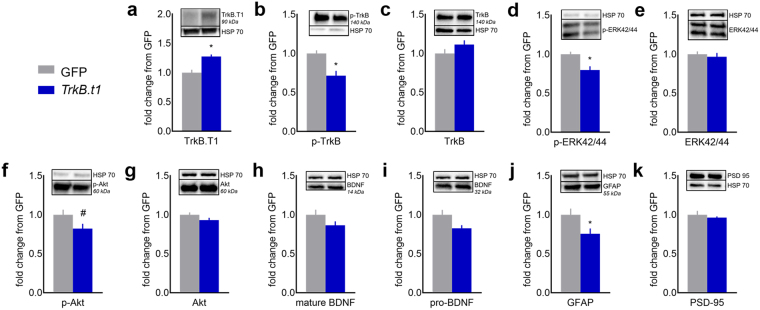
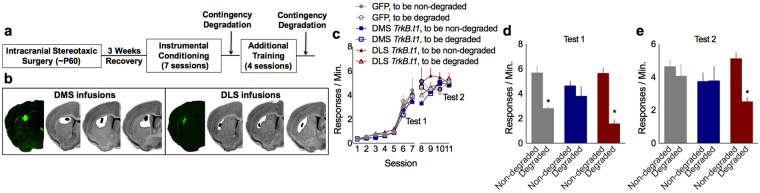
Specific corticostriatal structures and circuits are important for flexibly shifting between goal-oriented versus habitual behaviors. For example, the orbitofrontal cortex and dorsomedial striatum are critical for goal-directed action, while the dorsolateral striatum supports habits. To determine the role of neurotrophin signaling, we overexpressed a truncated, inactive form of tropomyosin receptor kinase B [also called tyrosine receptor kinase B (TrkB)], the high-affinity receptor for Brain-derived Neurotrophic Factor, in the orbitofrontal cortex, dorsomedial striatum and dorsolateral striatum. Overexpression of truncated TrkB interfered with phosphorylation of full-length TrkB and ERK42/44, as expected. In the orbitofrontal cortex and dorsomedial striatum, truncated trkB overexpression also occluded the ability of mice to select actions based on the likelihood that they would be reinforced. Meanwhile, in the dorsolateral striatum, truncated trkB blocked the development of habits. Thus, corticostriatal TrkB-mediated plasticity appears necessary for balancing actions and habits.
Conflict of interest statement
The authors declare no competing interests.
Figures
References
-
- Balleine BW, O’Doherty JP. Human and rodent homologies in action control: corticostriatal determinants of goal-directed and habitual action. Neuropsychopharmacology: official publication of the American College of Neuropsychopharmacology. 2010;35:48–69. doi: 10.1038/npp.2009.131. - DOI - PMC - PubMed
Publication types
MeSH terms
Substances
Grants and funding
LinkOut - more resources
Full Text Sources
Other Literature Sources
Molecular Biology Databases
